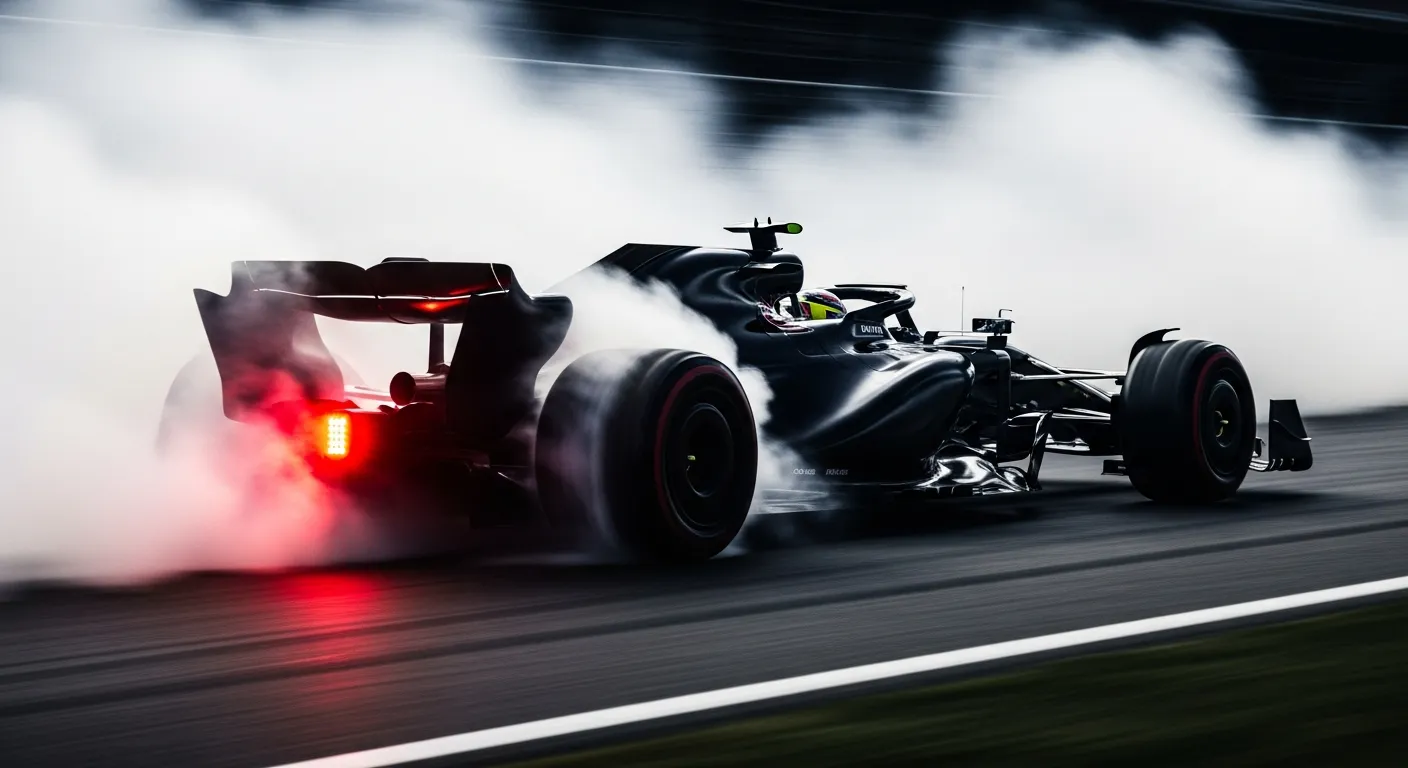
The 2022 Spanish Grand Prix at Circuit de Barcelona-Catalunya was a pivotal moment where Red Bull seized championship momentum, capitalizing on Ferrari's reliability woes and executing a strategic recovery for Max Verstappen. This race reshaped the early season narrative, demonstrating the fine margins that define a title challenge in the ground-effect era.
Qualifying Dynamics
Qualifying set the stage for a tight contest, with Charles Leclerc securing pole position for Ferrari, demonstrating the F1-75's outright pace. Max Verstappen lined up alongside him on the front row, just fractions behind. Carlos Sainz, in the second Ferrari, took third, with George Russell impressing in the Mercedes from fourth. The grid promised a direct battle between the championship contenders, a common theme at this circuit, as seen in previous years like the 2017 Spanish Grand Prix, where qualifying was equally crucial.
Race Unfolds: Drama and Strategy
The race start was eventful. Carlos Sainz dropped positions after an early off-track excursion, while Kevin Magnussen and Lewis Hamilton made contact, sending both to the rear of the field. Hamilton initially suggested retiring, but a strong recovery drive saw him climb back through the field, showcasing the W13's underlying pace. Meanwhile, Max Verstappen encountered a persistent DRS issue, a recurring problem for Red Bull, which significantly hampered his ability to overtake and defend. This forced him into a prolonged battle with George Russell, who displayed exceptional defensive driving to hold off the faster Red Bull for multiple laps, a testament to Mercedes' improving package.
The turning point arrived on lap 27 when race leader Charles Leclerc, who had been controlling the race with a comfortable margin, suddenly lost power due to a turbo failure. His retirement handed the lead to Sergio Pérez, who had executed a strong race from fifth on the grid. Red Bull then faced a strategic decision. With Verstappen struggling with his DRS but showing superior pace once clear, the team opted to switch their cars, allowing Verstappen to take the lead and ultimately the victory. Pérez, displaying team commitment, finished second, securing a crucial 1-2 for Red Bull. This kind of team-driven strategic call is often a deciding factor in tight championships, a lesson perhaps learned from intense seasons documented by the archives.