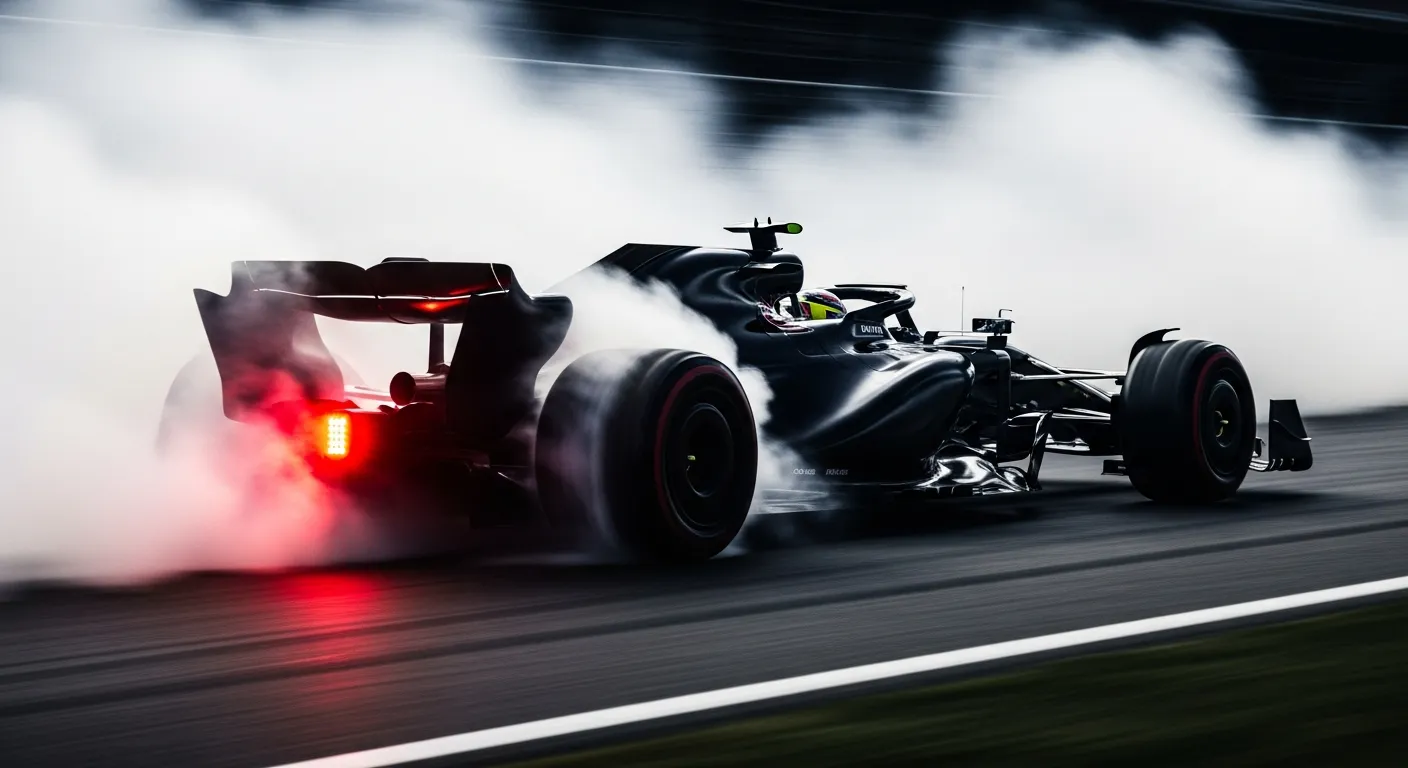
Alexander Albon's performances at the British Grand Prix, particularly since joining Williams, highlight his capacity to deliver strong race results at a circuit known for its high-speed demands.
Albon has made 7 starts at Silverstone, beginning his association with the circuit in 2019 with Scuderia Toro Rosso, where he finished 12th from a 9th-place grid start. His move to Red Bull Racing saw an improvement, securing an 8th-place finish in the 2020 British Grand Prix and a best finish of 5th in the subsequent 70th Anniversary Grand Prix held at the same venue. This period demonstrated his adaptability to high-performance machinery at a permanent circuit that rewards aerodynamic efficiency and driver confidence through its fast corners.
The transition to Williams Grand Prix Engineering in 2022 presented a different challenge. His 2022 British Grand Prix ended in a collision, marking his only DNF at the circuit. However, Albon quickly rebounded. In 2023, he started 8th and finished 8th, adding 4 points to his tally. This was followed by a 9th-place finish from 9th on the grid in 2024, securing 2 points, and another 8th-place finish in 2025, adding 4 points. These results underscore his ability to maximize the potential of the Williams package, often outperforming expectations given the car's typical competitive standing. Silverstone's fast, flowing nature demands a stable rear end and precise steering inputs, characteristics Albon often leverages well.
Albon's total of 24 points at Silverstone, with a best finish of 5th, is notable considering the machinery he has often piloted. His consistency in converting mid-grid starts into points finishes, especially with Williams, speaks to his race craft and strategic awareness. The circuit's blend of high-speed corners like Copse and Maggotts-Becketts, and slower sections, requires a nuanced approach to setup and tire management. Albon has shown a knack for navigating these challenges, often making up places during the race. This contrasts with the more street-circuit specific demands seen at events like the Las Vegas Grand Prix, where different car characteristics are prioritized.
Looking ahead, Albon's continued presence at Williams suggests a focus on incremental gains. His performances at Silverstone often provide a benchmark for the team's progress, as the circuit's demands expose both strengths and weaknesses of a car's aerodynamic package. The official Formula 1 website often highlights how drivers manage tire degradation at Silverstone, a factor Albon has consistently handled well. His track record here, particularly in the points, is a testament to his skill in extracting the maximum from his car, much like how Max Verstappen at the Japanese Grand Prix consistently dominates at a high-speed circuit that suits his car. For a deeper dive into historical F1 data, the Jolpica/Ergast 2026 season data provides a comprehensive overview of past performances and trends.
The high-speed nature of Silverstone, particularly through its iconic sector one and two, places a premium on aerodynamic efficiency and driver commitment. Albon's ability to maintain high minimum speeds through these sections, even in less competitive machinery, is a hallmark of his driving style. This commitment allows him to carry momentum, which is crucial for lap time at Silverstone, a trait similarly valued at circuits like Max Verstappen at the Chinese Grand Prix. His strong qualifying performances, often placing the Williams higher than anticipated, set the stage for his points-scoring races. The FIA's F1 World Championship regulations continually evolve, impacting car design and performance, yet Albon's fundamental approach to high-speed circuits remains effective. The evolution of Formula 1, as documented on Wikipedia: Formula One, shows how driver skill at circuits like Silverstone remains a constant in a changing technical landscape.