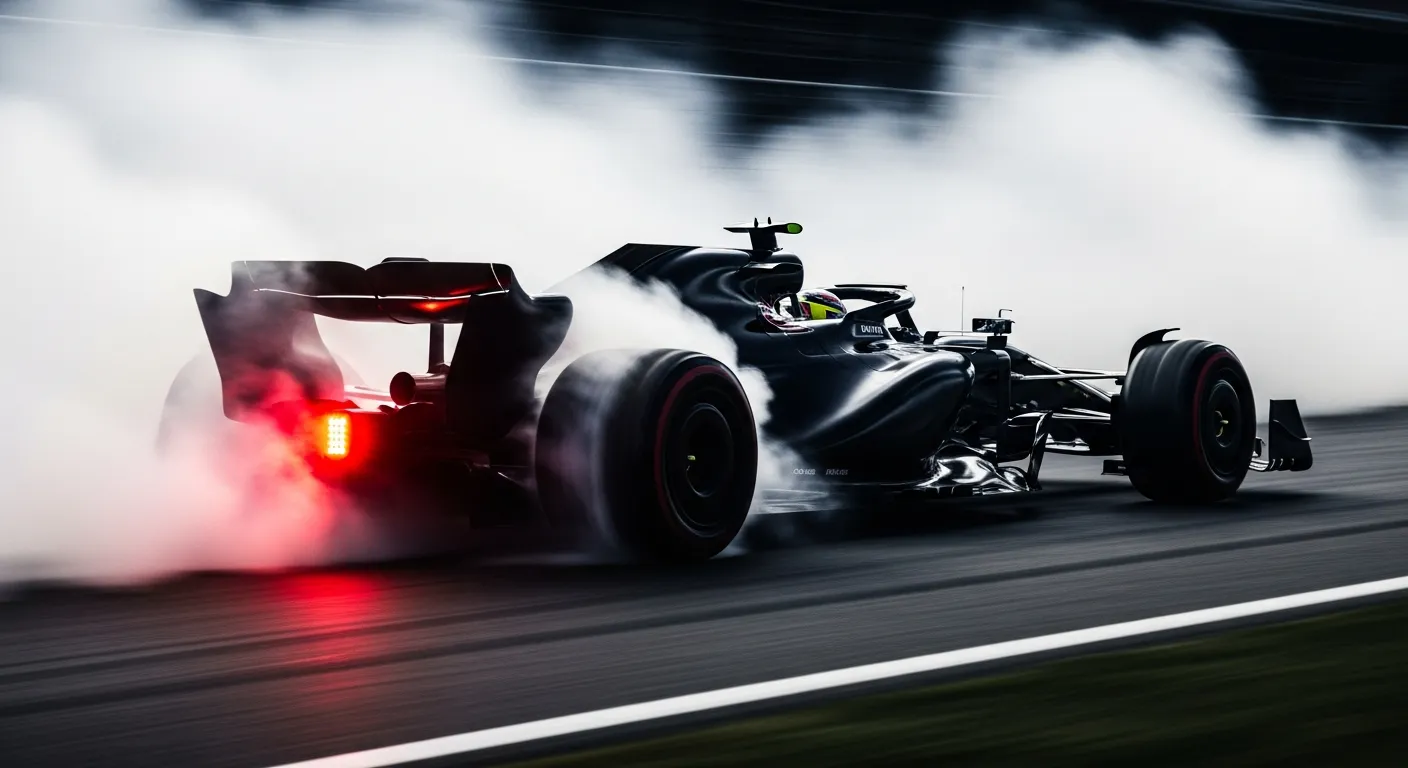
Carlos Sainz's trajectory at the Italian Grand Prix at Monza is a compelling narrative of progression, from early midfield struggles to securing pole position and multiple podium finishes, demonstrating his adaptability and growth on one of F1's most historic circuits. His eleven appearances at the permanent circuit have seen a significant shift in his competitive standing, reflecting both his development as a driver and the machinery at his disposal.
In his initial years with Scuderia Toro Rosso from 2015 to 2017, Sainz consistently found himself outside the points, with finishes of 11th, 15th, and 14th. These early outings, often starting from the lower half of the grid, highlighted the challenge of extracting performance from less competitive cars on Monza's unique high-speed layout. The circuit, known for its long straights and chicanes, demands a specific low-downforce setup, which can be unforgiving for cars lacking outright pace.
The turning point began in 2018 with Renault, where Sainz secured his first points at Monza with an 8th-place finish, starting from 7th. This marked a clear step forward. However, it was with McLaren in 2020 that he truly announced his potential at the circuit, clinching a remarkable 2nd place from 3rd on the grid – his first of two podiums at the Italian Grand Prix. This performance underscored his capability to manage high-speed demands and execute a clean race strategy, even in the chaotic environment that often characterizes Monza.
His move to Scuderia Ferrari in 2021 brought a new dimension to his Monza story. While his first year with the Italian team saw a solid 6th place, his 2022 performance was particularly impressive. Starting from 18th due to grid penalties, Sainz carved his way through the field to finish 4th, showcasing exceptional race craft and overtaking prowess on a circuit where such recoveries are often challenging. This ability to navigate traffic and maintain pace is a trait also seen in drivers like Max Verstappen at the United States Grand Prix, where strategic overtakes are crucial.
Perhaps his most notable outing came in 2023, where he secured pole position and fought valiantly to a 3rd-place podium finish. This performance, in front of the Tifosi, was a testament to his qualifying ability and race management under immense pressure, particularly against the dominant Red Bulls. While Monza's characteristics, with its heavy braking zones and rapid acceleration out of chicanes, can be demanding, Sainz demonstrated a refined understanding of how to extract maximum performance. For a broader understanding of F1's technical demands, the FIA — F1 World Championship provides detailed regulations.
Looking ahead to 2025, Sainz's move to Williams Grand Prix Engineering presents a new chapter. His 11th-place finish from 13th on the grid in 2025 with Williams indicates a return to the midfield battles he experienced in his earlier career. This transition will test his adaptability once more, as he aims to maximize the potential of a different car on a circuit that demands raw power and aerodynamic efficiency. The dynamic between driver and car on high-speed tracks can be seen in contrasts, for instance, with Max Verstappen at the Singapore Grand Prix, a circuit demanding high downforce and precision. The detailed history of F1, including driver and circuit data, can be explored further on Wikipedia: Formula One, offering context to these career shifts. For those interested in the raw statistics of F1, resources like Jolpica/Ergast — 2026 season data provide comprehensive records. Sainz's journey at Monza reflects a constant evolution, adapting to different team philosophies and car characteristics, always striving for competitive results on this iconic track.