Track record
Source: Jolpica F1 API- Starts
- 3
- Wins
- 0
- Podiums
- 1
- Best finish
- P2
- DNFs
- 0
- Points
- 42
Every appearance
| Year | Team | Grid | Finish | Pts |
|---|---|---|---|---|
| 2023 | Scuderia Ferrari | P1 |
Driver × Circuit · street
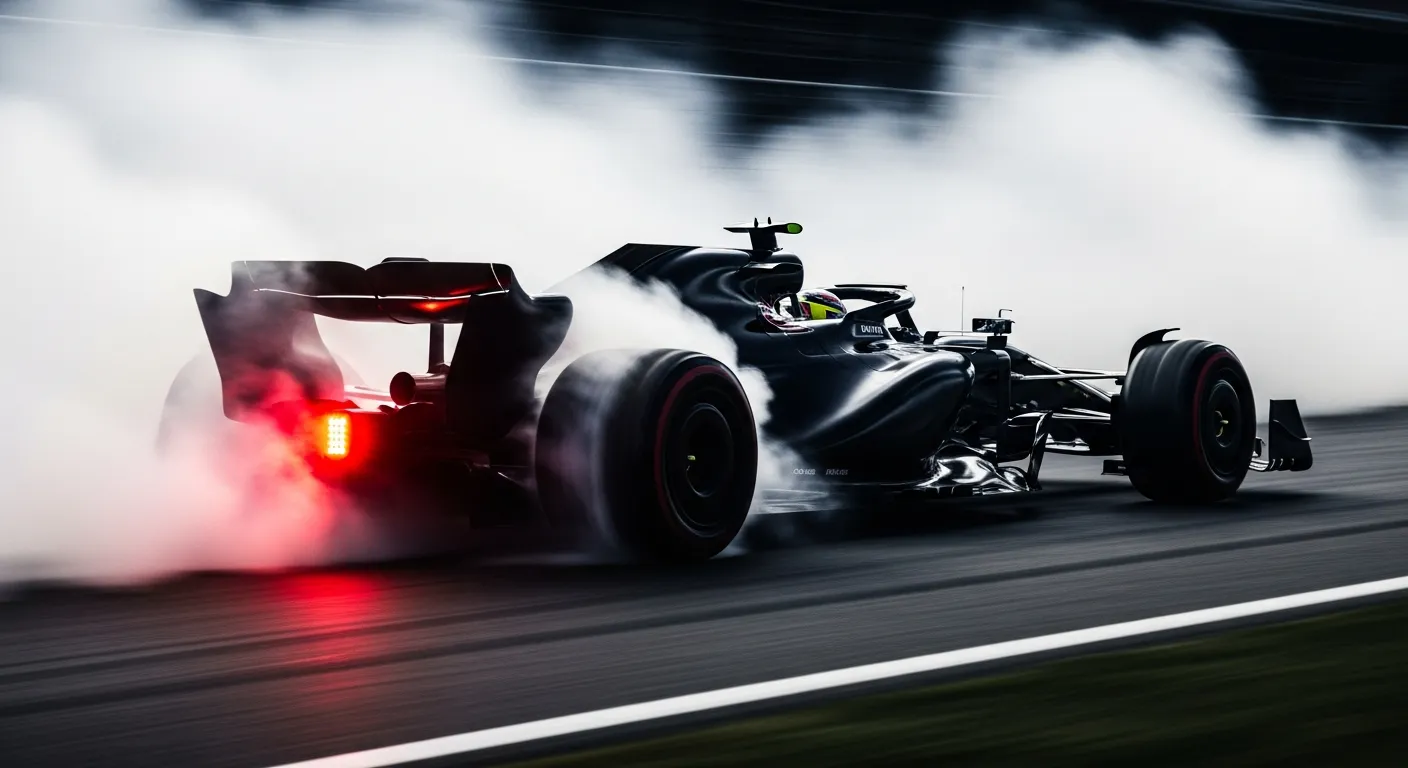
Charles Leclerc has consistently demonstrated strong qualifying pace at the Las Vegas Grand Prix, securing a pole position and a podium finish, though a victory on this unique street circuit remains elusive.
| Year | Team | Grid | Finish | Pts |
|---|---|---|---|---|
| 2023 | Scuderia Ferrari | P1 |
| P2 |
| 18 |
| 2024 | Scuderia Ferrari | P4 | P4 | 12 |
| 2025 | Scuderia Ferrari | P9 | P4 | 12 |
Charles Leclerc's outings at the Las Vegas Grand Prix have consistently highlighted his exceptional single-lap pace, securing pole position in 2023, yet translating that into a race win on this unique street circuit has proven a distinct challenge. Across his three appearances at the Las Vegas street circuit, Leclerc has recorded one podium finish, a second place in 2023, which also stands as his best result here. This performance underscores his ability to extract significant speed from the Ferrari over a single lap, a trait often crucial on temporary street circuits.
The Las Vegas Grand Prix, with its blend of high-speed straights down the Strip and tighter, technical sections, presents a unique setup conundrum. Ferrari's cars, particularly under Leclerc, often excel in qualifying, leveraging their aerodynamic efficiency and engine power for outright speed. This was evident in 2023 when Leclerc started from pole. However, the race conditions, especially the cooler night temperatures and the relatively low-grip asphalt, introduce complexities around tyre management and degradation. While Leclerc finished second in 2023, he couldn't maintain the lead against strong race pace from competitors. His subsequent appearances in 2024 and 2025 saw him qualify 4th and 9th respectively, finishing 4th in both races, demonstrating consistent points scoring but without the front-running pace seen in his debut.
Leclerc's driving style, characterized by aggressive turn-in and precise throttle application, is generally well-suited to the demands of a street circuit. Like Esteban Ocon at the Australian Grand Prix, where drivers must adapt quickly to evolving track conditions on a temporary layout, Leclerc has shown a knack for finding the limits early in the weekend at Vegas. However, the extended high-speed sections mean that outright top-end performance and drag reduction are as critical as mechanical grip in the slower corners. For a comprehensive understanding of Formula 1's technical regulations and how teams optimize their cars for such diverse tracks, the FIA — F1 World Championship provides detailed information.
The challenge for Leclerc and Ferrari at Las Vegas often revolves around balancing qualifying prowess with race-day consistency. The low-grip surface, which evolves significantly throughout the weekend, demands a car that can be kind to its tyres over a full stint without sacrificing too much ultimate pace. This dynamic often contrasts with the demands of high-speed, high-downforce circuits like Esteban Ocon at the Japanese Grand Prix, where sustained aerodynamic performance is paramount. Analysing historical F1 season data, such as that available from Jolpica/Ergast — 2026 season data, helps illustrate these performance trends across different eras of Formula One.
Ultimately, Leclerc's record at Las Vegas, with 3 starts and 1 podium, indicates a strong potential that has yet to fully materialize into a victory. His ability to adapt to new, challenging circuits, much like Jack Doohan at the Abu Dhabi Grand Prix navigating a complex night race, remains a key asset. The unique characteristics of the Las Vegas street circuit continue to test Ferrari's overall package, making Leclerc's future performances here a compelling narrative.