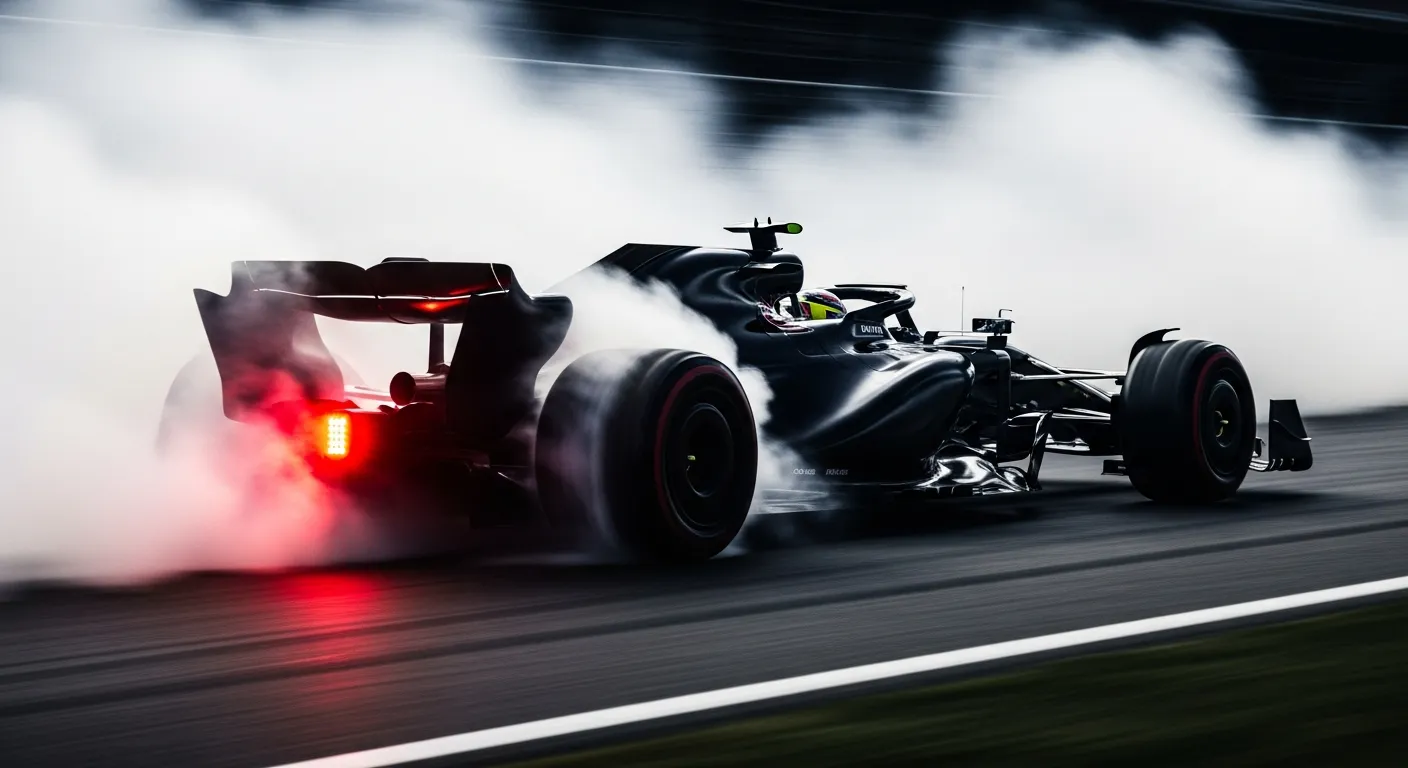
Esteban Ocon's history at the Bahrain International Circuit presents a nuanced picture of a driver capable of extracting performance, particularly evident in his earlier career and a standout podium, despite more recent struggles reflecting team performance. Across his 9 starts at this permanent circuit, Ocon has shown flashes of strong race craft. His initial appearances with Force India in 2017 and 2018 both yielded points finishes, securing 10th place in consecutive Bahrain Grand Prix events. He continued this trend with Renault in 2020, achieving a 9th place finish in the Bahrain Grand Prix. However, the true highlight of his time at Sakhir arrived later that year, during the unique 2020 Sakhir Grand Prix, where he secured a remarkable second-place podium finish. This performance remains his best at the venue and a significant moment in his career, showcasing his ability to capitalize on opportunities when the car package allows.
The Bahrain International Circuit's characteristics, with its abrasive surface and numerous heavy braking zones, demand a specific blend of car stability and driver precision. Ocon's driving style, often noted for its consistency and ability to manage race pace, has sometimes found a rhythm here. The track's layout, featuring long straights followed by tight corners, places a premium on both power unit performance and effective aerodynamic balance. This contrasts with the very different demands of a high-speed street circuit like Lando Norris at the Saudi Arabian Grand Prix, where wall proximity and ultra-fast changes of direction dominate.
More recent outings for Ocon at Sakhir, particularly with Alpine, have been less fruitful. The 2023 Bahrain Grand Prix saw him withdraw from the race, while the 2024 season opener resulted in a 17th-place finish, reflecting the competitive struggles faced by his team. These results underscore how heavily a driver's performance at a circuit like Bahrain is tied to the underlying machinery. The transition to the Haas F1 Team for 2025, with a projected 8th place finish in the data, suggests a potential shift in his competitive landscape at this specific venue, hinting at the perennial challenge of aligning driver talent with a capable car.
Tyre management is a critical factor at the Bahrain International Circuit, renowned for its high degradation, particularly on the rear tyres. The demanding nature of the track's surface and the warm desert conditions necessitate a careful approach to strategy and compound preservation. Ocon's capacity for managing his tyres has been a variable throughout his career, and it is an area that can significantly influence his race outcome at Sakhir. The intricate details of tyre regulations and usage are meticulously overseen by the FIA — F1 World Championship, highlighting their importance in modern F1. Understanding the nuances of these regulations is key to unlocking performance.
In summary, Esteban Ocon's 9 starts at the Bahrain International Circuit have yielded 0 wins, but a memorable 1 podium, achieved at the 2020 Sakhir Grand Prix. His total points accumulated at this venue stand at 32. His best finish, that second place, stands as a testament to his potential when provided with a competitive package. Comparing his journey at Sakhir to that of peers like Lando Norris at the Bahrain Grand Prix, who has also experienced a range of results at this circuit, illustrates the challenges and opportunities presented by the season-opening venue. For those keen to delve deeper into the historical context and statistical evolution of driver performance, resources such as Jolpica/Ergast — 2026 season data provide invaluable insights into the sport's rich data landscape. The broader strategic considerations of F1, including its technical foundations and historical development, are well-documented on Wikipedia: Formula One, offering further context.