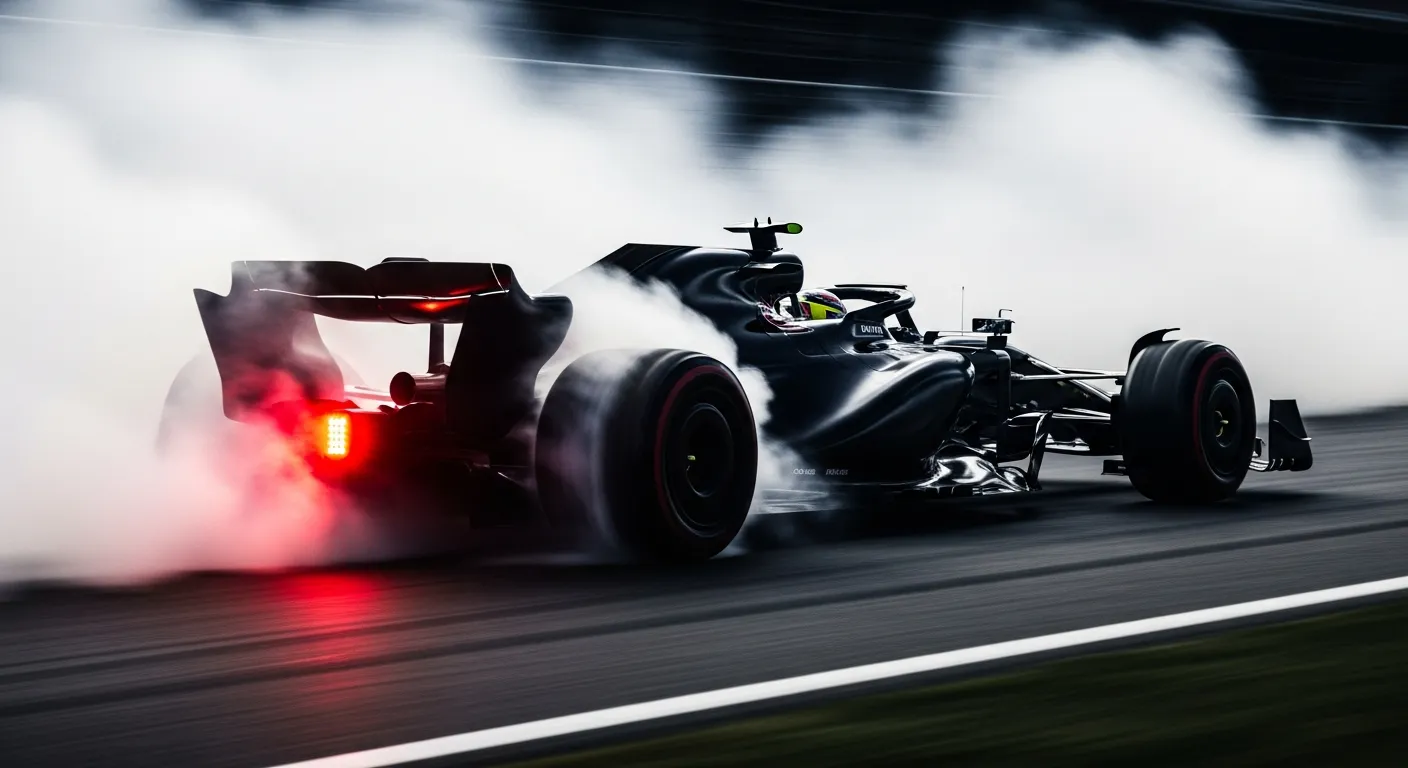
Esteban Ocon's history at the Singapore Grand Prix reflects a recurring pattern of strong qualifying potential often undermined by race-day incidents or mechanical failures on a demanding street circuit. Across his 7 starts at Marina Bay, Ocon has secured a best finish of 10th in 2017 with Force India, his sole points-scoring appearance at this particular venue. He holds 0 wins and 0 podiums here, a record that highlights the circuit's unforgiving nature and the specific challenges it has posed for him.
His debut in 2016 with Manor Racing saw him finish 18th, a respectable effort given the machinery. The 2017 season brought his best result, a P10 finish from a P14 grid slot, demonstrating his ability to navigate the chaotic conditions often present under the Singapore night sky. However, the subsequent years have been a different story. In 2018, a promising P9 grid start with Force India ended in a collision, while his returns in 2022 and 2023 with Alpine F1 Team were cut short by an engine failure and a gearbox issue, respectively. These mechanical setbacks underscore the immense strain the Marina Bay circuit places on power units and transmissions, a factor that has disproportionately affected Ocon's race finishes here.
Even in his more recent appearances, such as 2024 with Alpine and his anticipated 2025 outing with Haas F1 Team, Ocon has started from the mid-grid (P15 and P17 respectively) and finished outside the points. This consistent pattern of unfulfilled potential on race day suggests that while Ocon possesses the precision often required for street circuits, the Singapore Grand Prix has proven uniquely challenging for his race craft and reliability. The physical and mental demands of a night race in high humidity, combined with the constant threat of the walls, require a flawless execution that has eluded him here more often than not. For a broader understanding of the sport's technical demands, the Formula 1 — official site offers comprehensive insights.
Compared to how other drivers navigate similar layouts, Ocon's Singapore record stands out. While a driver like Oscar Piastri at the Azerbaijan Grand Prix might showcase a rapid adaptation to street circuits, Ocon's experience at Marina Bay presents a more complex narrative. His precision, typically a strength, seems to be tested by the specific combination of heat, humidity, and the circuit's relentless sequence of corners. The data available through resources like Jolpica/Ergast — 2026 season data consistently shows a gap between his qualifying efforts and his final race positions at this venue. The unique challenges of Formula One on street circuits, as detailed on Wikipedia: Formula One, often highlight the fine margins between success and retirement, a lesson Ocon has learned repeatedly in Singapore. This contrasts with his performances on more traditional circuits, or even other street tracks, where his consistency often yields better results, such as the varied demands seen at a track like Oscar Piastri at the United States Grand Prix. Watching how he adapts his approach to the Singapore Grand Prix will be key to understanding his evolution as a driver for Haas.