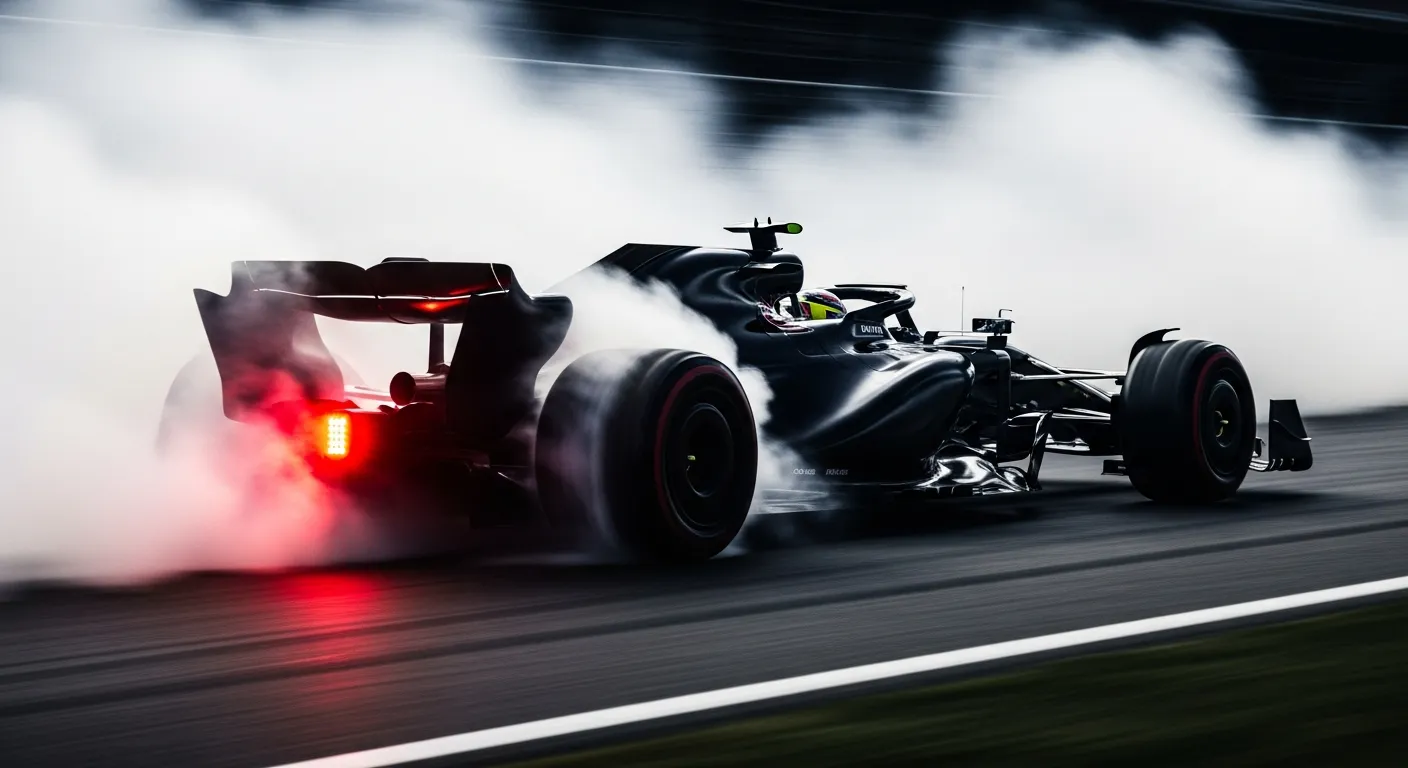
George Russell's journey at the Mexico City Grand Prix vividly illustrates his career trajectory, evolving from the back of the grid with Williams to a consistent points contender and podium threat with Mercedes. His initial appearances in 2019 and 2021, both with Williams, saw him finish 16th from grid positions 19 and 16 respectively. These early races highlighted the significant challenge of the Autódromo Hermanos Rodríguez, particularly its high-altitude environment, which severely impacts engine power and aerodynamic efficiency, making it a demanding circuit for less competitive machinery.
The transition to Mercedes in 2022 marked a significant shift in his performance at this unique permanent circuit. In that year, Russell started from an impressive 2nd on the grid and converted it into his best finish at Mexico City: a strong 4th place. This result underscored his ability to extract performance even when the car, the W13, presented its own set of challenges, particularly with balance and tyre management in the thin Mexican air. The circuit's long main straight and heavy braking zones demand a precise setup, and Russell's smooth driving style often allows him to manage tyre degradation effectively, a crucial factor on a track known for its low-grip surface and high thermal demands.
Subsequent seasons have seen Russell maintain a consistent presence in the points. He finished 6th in 2023 from an 8th-place grid start, 5th in 2024 from 5th on the grid, and 7th in 2025 from 4th on the grid. These results demonstrate a clear understanding of the circuit's nuances and an ability to adapt the Mercedes package to its specific demands. The stadium section, with its slow, technical corners, often plays to drivers who can maintain momentum and place the car accurately, a trait Russell has consistently displayed throughout his career. For a deeper dive into how drivers adapt to varied circuit characteristics, one might consider how Oscar Piastri handles the technical challenges of the Spanish Grand Prix.
Mercedes' ongoing development, as seen on the Formula 1 — official site, has progressively improved their high-altitude performance, directly benefiting Russell. His total of 6 starts, 0 wins, and 0 podiums at this venue, with a best finish of 4th, reflects a steady accumulation of points rather than outright dominance. The Mexico City Grand Prix often presents a unique challenge for all teams due to the atmospheric conditions, requiring careful consideration of downforce levels and engine mapping, as detailed in various technical analyses of Formula One on Wikipedia. Russell's consistent points finishes here, particularly since joining Mercedes, highlight his capacity to deliver solid results under demanding circumstances. This consistency, even without a podium, is a testament to his methodical approach and ability to maximize the car's potential, much like how drivers approach high-speed, permanent circuits such as Oscar Piastri at the British Grand Prix.
Looking ahead, Russell's performances at Mexico City will continue to be a benchmark for Mercedes' progress in handling high-altitude conditions. His ability to navigate the complex setup requirements and manage race strategy effectively will be key to converting strong qualifying positions into podium finishes, a goal that remains within reach given his consistent improvement. For comprehensive historical race data, resources like Jolpica/Ergast — 2026 season data provide invaluable context to driver and team trajectories.