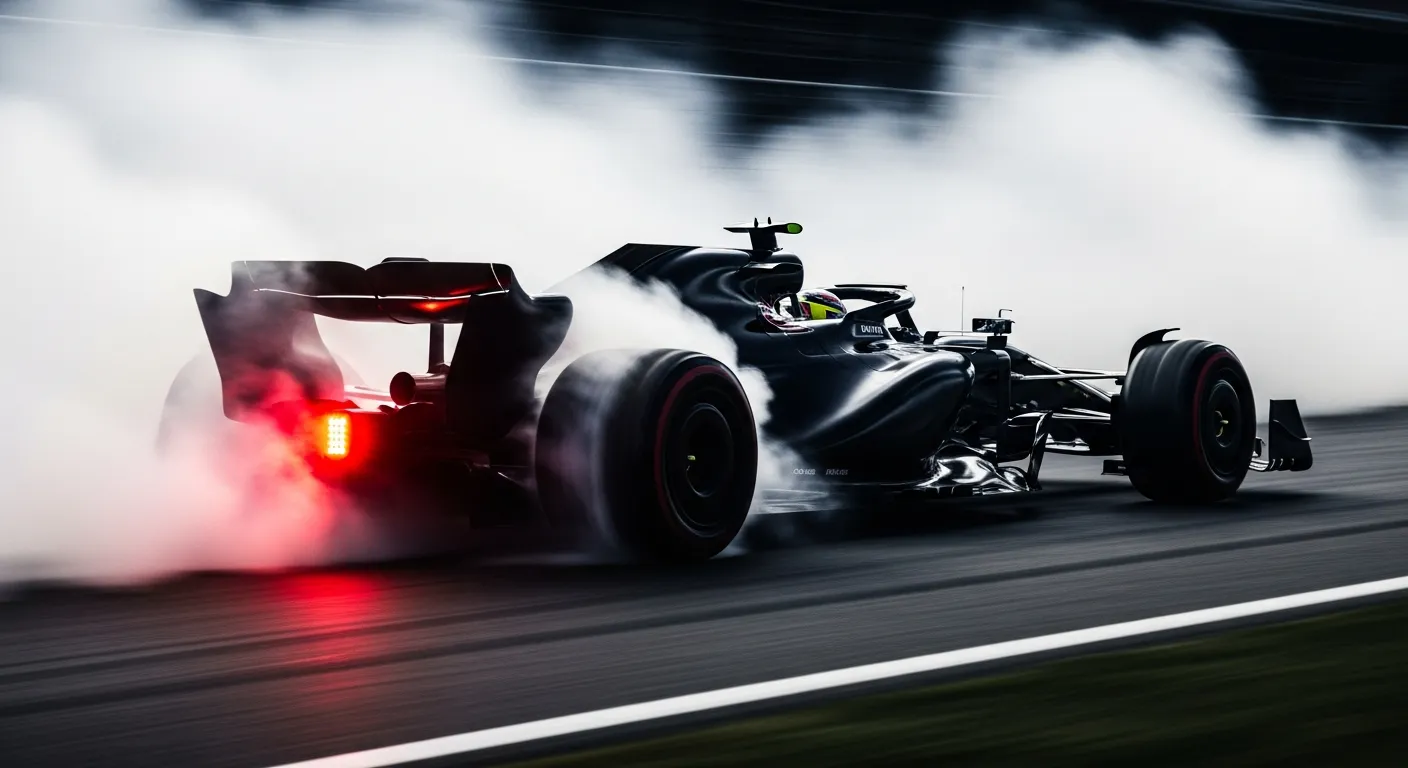
George Russell’s record at the Italian Grand Prix at Monza is a compelling narrative of a driver’s evolution, marked by a significant shift in machinery and a steady climb up the competitive order. His seven appearances at the "Temple of Speed" illustrate the profound impact of car performance on a driver's results, particularly at a circuit where outright power and straight-line speed are paramount.
Russell's initial three seasons at Monza with Williams Grand Prix Engineering, from 2019 to 2021, were characterized by the inherent limitations of his equipment. During these years, he consistently started from the mid-to-back of the grid, with grid positions of 14th, 19th, and 14th. Despite his known talent for extracting maximum performance, his race finishes of 14th, 14th, and 9th in 2021 underscored the challenge of competing with a less potent package on a track that punishes any deficit in engine power and aerodynamic efficiency. His 9th place finish in 2021, securing his first points at Monza, was a testament to his persistent race craft, navigating the high-speed chicanes and long straights to maximize every opportunity. This period provides a stark contrast to the experiences of drivers like Pierre Gasly at the Australian Grand Prix, who also saw significant performance shifts with team changes.
The transition to Mercedes AMG F1 in 2022 brought an immediate and dramatic improvement to Russell's Monza prospects. Starting from 2nd on the grid, he capitalized on the Mercedes' capabilities to secure his best finish of 3rd place, marking his first and only podium at the circuit. This result was not merely a reflection of a better car but also Russell's ability to adapt his precise driving style to the demands of a top-tier machine, managing tyre degradation and executing overtakes effectively on a track known for its heavy braking zones and high-speed corner exits. The Formula 1 — official site often highlights how critical car-driver synergy is at tracks like Monza.
Subsequent years have seen Russell maintain a strong presence, though without replicating the 2022 podium. In 2023, he started 4th and finished 5th, collecting 10 points. His 2024 appearance saw him start 3rd and finish 7th, adding 6 points, while in 2025, he started 5th and finished 5th, again securing 10 points. These consistent top-ten finishes, all without any DNFs across his seven starts, demonstrate a reliable performance ceiling with Mercedes. Monza's unique layout, with its long straights and chicanes, demands a specific car setup that balances straight-line speed with braking stability. Russell's meticulous approach to car setup and feedback, often noted by his engineers, is particularly valuable here, allowing Mercedes to fine-tune their package for the circuit's specific challenges. This consistency is a hallmark of top drivers at permanent circuits, much like the detailed analysis seen for Lance Stroll at the Abu Dhabi Grand Prix.
Russell's driving style, characterized by smooth inputs and a keen understanding of tyre management, generally suits the high-speed nature of Monza. While the circuit is often seen as a power track, the precise negotiation of chicanes like the Variante della Roggia and the Parabolica (now Curva Alboreto) requires a driver who can place the car accurately under heavy braking and carry momentum through fast corners. His ability to maintain composure under pressure, crucial for navigating the close racing often seen at Monza, has been a consistent asset. Analyzing historical data, such as that available from Jolpica/Ergast — 2026 season data, shows a clear trend in his performance trajectory.
Looking ahead, George Russell at the Italian Grand Prix remains a driver to watch. His history at Monza suggests that while a podium is achievable with a competitive Mercedes package, sustained dominance depends heavily on the car's inherent strengths against rivals. His consistent points finishes since joining Mercedes underscore his reliability, making him a strong contender for solid results. The strategic decisions around slipstreaming in qualifying and tyre choices during the race will be key factors in how he performs, echoing the strategic battles often seen at other high-speed tracks like those discussed for Pierre Gasly at the Japanese Grand Prix. The Wikipedia: Formula One page provides broader context on the sport's evolution and the technical challenges drivers face.