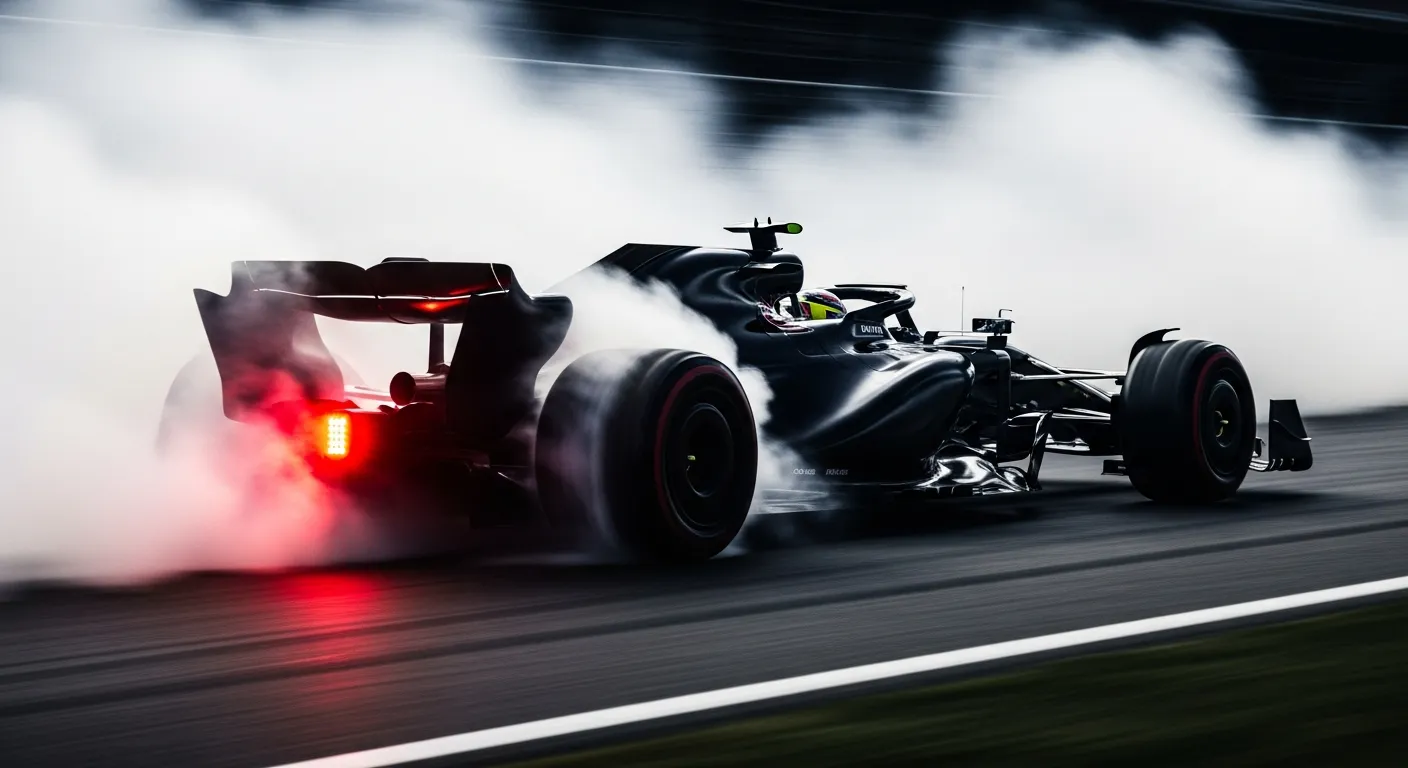
George Russell's trajectory at the Austrian Grand Prix, a permanent fixture on the F1 calendar at Spielberg, is a compelling narrative of perseverance and adaptation, culminating in his maiden victory at the circuit in 2024. His record at the Red Bull Ring truly illustrates the stark contrast between his early career challenges with Williams and his subsequent rise with Mercedes. From 2019 to 2021, Russell navigated the Spielberg circuit in a Williams, a period marked by considerable struggle. He made a total of 5 appearances across the Austrian and Styrian Grand Prix events during these years. His 2019 debut saw him finish 18th, two laps down. The 2020 season brought a DNF in the Austrian Grand Prix due to fuel pressure, followed by a 16th place finish in the Styrian Grand Prix. The 2021 season, while showing flashes of qualifying brilliance with an 8th place grid start for the Austrian Grand Prix, still ended with an 11th place finish, a lap down, after a DNF in the preceding Styrian Grand Prix. These years were crucial for Russell's development, honing his ability to extract performance from challenging machinery, a trait often observed in drivers who later transition to front-running teams.
The move to Mercedes in 2022 marked a significant turning point for Russell at Spielberg. In his first outing with the Silver Arrows at the Austrian Grand Prix, he secured a strong 4th place finish from a 4th place grid start, collecting 12 points. This performance immediately demonstrated his capability to contend at the sharp end of the grid when provided with competitive equipment. The circuit itself, known for its short lap, significant elevation changes, and distinct braking zones, demands a precise driving style and effective tyre management, particularly in its high-speed corners and the crucial Turn 3. Russell's meticulous approach to data analysis and setup has often been cited as a strength, allowing him to adapt quickly to varying track conditions, a skill that is particularly valuable at the Red Bull Ring where grip levels can evolve rapidly.
His progress continued in 2023, where he finished 7th, adding another 6 points to his tally. However, it was the 2024 Austrian Grand Prix that truly solidified his standing at this circuit. Starting from 3rd on the grid, Russell delivered a commanding performance to secure his first win at Spielberg, earning 25 points and marking his best finish to date. This victory was not just a personal milestone but also a testament to Mercedes' development efforts and Russell's consistent ability to capitalize on opportunities. The Red Bull Ring, with its blend of fast straights and technical sections, often leads to intense battles, and Russell's strategic acumen, combined with his car control, proved decisive. For a deeper dive into the intricacies of Formula 1 racing and its regulations, the official Formula 1 site offers extensive resources.
Russell's overall record at the Austrian Grand Prix now stands at 9 starts, 1 win, and 1 podium, all achieved in 2024. His total points accumulated at this circuit amount to 53, with a best finish of 1st. This evolution from consistent back-marker finishes to a race winner underscores his growth as a driver. The Red Bull Ring's layout, which features distinct heavy braking zones into Turns 1 and 3, coupled with high-speed sections, plays into the hands of drivers who can balance aggression with precision. Russell's ability to maintain strong pace through these varied sections, particularly in the latter half of the lap, has been a key factor in his recent successes here. Understanding the historical context of such achievements often involves consulting detailed records, as found on platforms like Jolpica/Ergast — 2026 season data. His performance here can be contrasted with other European permanent circuits like the Hungaroring, where drivers like Gabriel Bortoleto at the Hungarian Grand Prix also face unique challenges with high downforce demands. Similarly, the high-speed nature of circuits like Monza, where Gabriel Bortoleto at the Italian Grand Prix would need to prioritize straight-line speed, presents a different set of engineering and driving compromises compared to Spielberg. The elevation changes at Spielberg also draw parallels with circuits like Spa-Francorchamps, a track where Gabriel Bortoleto at the Belgian Grand Prix would encounter similar dynamic challenges. The evolution of Formula One itself, from its early days to the modern era, is a rich topic explored on Wikipedia: Formula One, providing context for driver achievements across different eras.