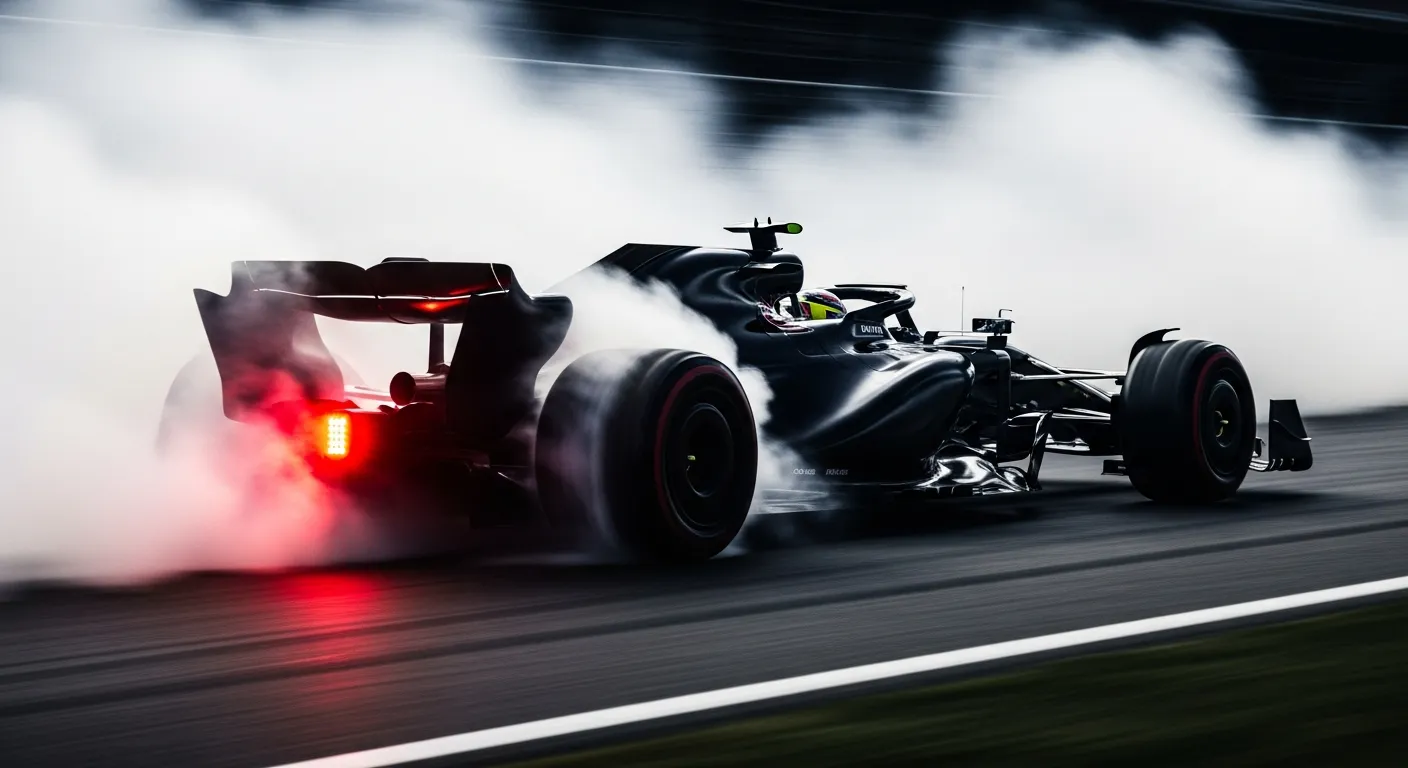
George Russell's history at the Belgian Grand Prix on the permanent Spa-Francorchamps circuit presents a narrative of remarkable individual performance, particularly evident in his 2021 podium, alongside the fluctuating fortunes tied to car competitiveness. Across his 7 starts at this iconic venue, Russell has demonstrated an ability to extract significant performance, even in challenging conditions.
His early appearances with Williams Grand Prix Engineering saw him navigate the midfield, with a P15 finish in 2019 and a collision-induced DNF in 2020. However, the 2021 Belgian Grand Prix stands as a pivotal moment. In a rain-affected event that was ultimately shortened, Russell qualified an extraordinary 2nd on the grid and secured his first career podium, finishing 2nd. This performance, while controversial due to the nature of the 'race' itself, underscored his potential to deliver under pressure and maximize opportunities, even in machinery not typically contending for the front.
Upon moving to Mercedes AMG F1, Russell's performances at Spa have maintained a level of consistency, securing points in every completed race. In 2022, he finished 4th from a 5th-place grid start, followed by a 6th-place finish in 2023 after starting 8th. His 2025 appearance saw him convert a 6th-place grid slot into a 5th-place finish, adding to his total of 39 points at this circuit. The 2024 race, however, saw a DNF due to a 'Car underweight' status, a rare technical infringement for the Mercedes team, highlighting that even top teams can face unexpected challenges, as detailed by official Formula 1 sources on their website.
Spa-Francorchamps, with its blend of high-speed straights and technical corners, demands a versatile driving style. Russell's capacity for precise car placement through sections like Eau Rouge and Raidillon, combined with his ability to manage tire degradation over long, fast stints, typically suits the circuit's demands. This contrasts with the very different requirements of a street circuit like the one Liam Lawson faced at the Singapore Grand Prix, where precision in tight confines is paramount. Russell's adaptability to varying grip levels, often a factor in the Ardennes, has allowed him to maintain strong race pace.
The circuit's unique characteristics, including its significant elevation changes and the notorious Kemmel Straight, necessitate a careful setup compromise between outright top speed and downforce for the flowing middle sector. Russell's engineering-focused approach, often discussed within the broader context of Formula One's technical evolution, plays a crucial role in optimizing the Mercedes package for these demands. His consistent points finishes since joining Mercedes, despite the team's varying competitiveness, reflect his ability to extract the maximum from the car, much like how a driver adapts to the high-speed challenges of a track like Liam Lawson at the United States Grand Prix. Understanding these nuances is key to appreciating a driver's performance at specific venues, a level of detail often found in comprehensive data archives such as those provided by Jolpica/Ergast. His ability to perform under pressure, even in less-than-ideal circumstances, has been a hallmark of his career, a trait that serves him well at demanding permanent circuits like Spa, distinct from the unique altitude challenges seen at a venue like Liam Lawson at the Mexico City Grand Prix.