Track record
Source: Jolpica F1 API- Starts
- 1
- Wins
- 0
- Podiums
- 0
- Best finish
- P10
- DNFs
- 0
- Points
- 1
Every appearance
| Year | Team | Grid | Finish | Pts |
|---|---|---|---|---|
| 2025 | Racing Bulls | P14 |
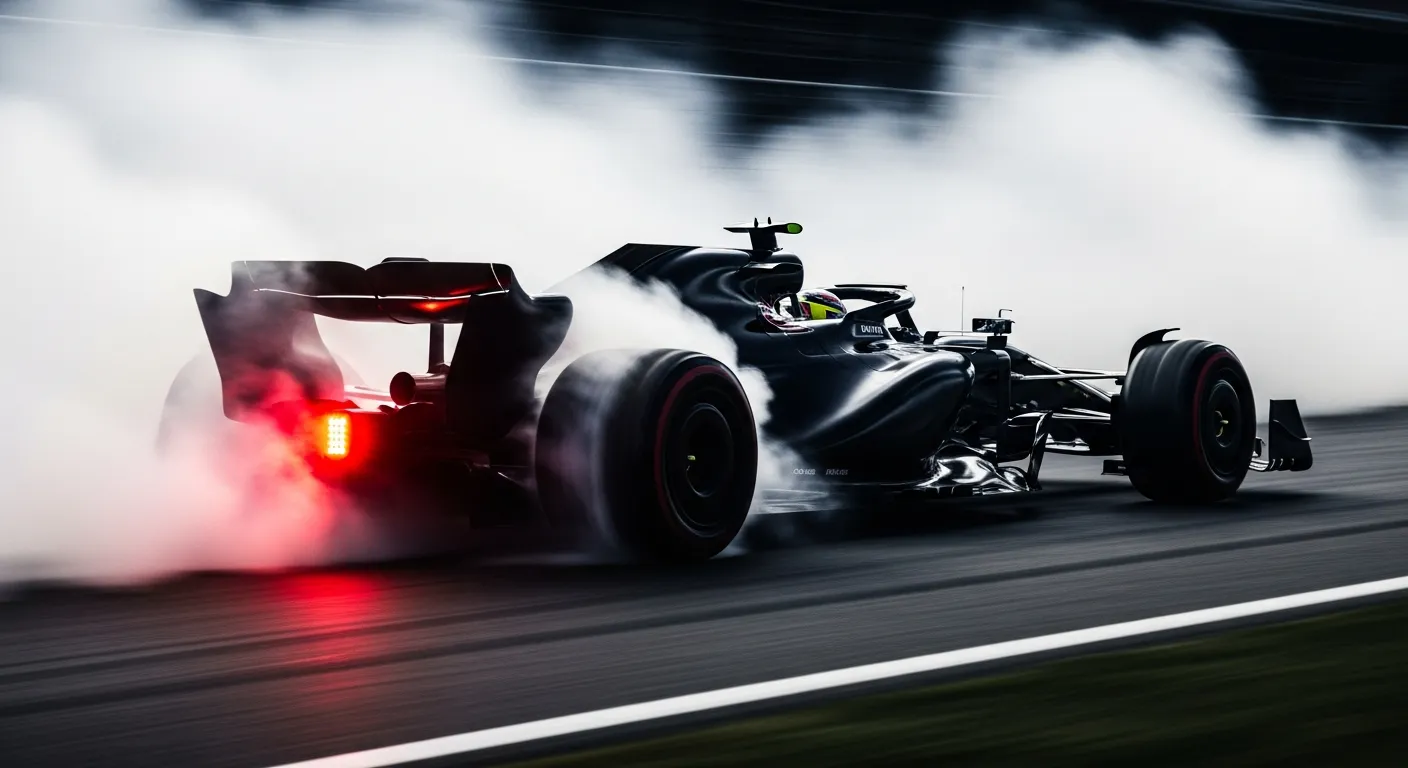
Driver × Circuit · street
Isack Hadjar's single appearance at the Saudi Arabian Grand Prix saw him secure his first career point with a tenth-place finish on the challenging Jeddah street circuit.
| Year | Team | Grid | Finish | Pts |
|---|---|---|---|---|
| 2025 | Racing Bulls | P14 |
| P10 |
| 1 |
Isack Hadjar's sole Formula 1 appearance at the Saudi Arabian Grand Prix in 2025 resulted in a points finish, a notable achievement on a circuit known for its unforgiving nature and high-speed demands. This single outing saw him navigate the Jeddah Corniche Circuit to a tenth-place finish, securing his first career point. The circuit, a 6.174-kilometer street track, presents a unique challenge with its rapid succession of high-speed corners and close proximity to the walls, demanding absolute precision and confidence from drivers. For a relatively new driver like Hadjar, this initial success suggests a fundamental adaptability to complex street circuits, a trait that will be crucial for future performances.
The Jeddah circuit's layout, characterized by its numerous blind corners and high average speed, places a significant emphasis on car setup and driver commitment. Hadjar's ability to extract a point from his debut here, starting from 14th on the grid, speaks to a measured approach under pressure. Unlike traditional circuits, the margin for error at Jeddah is minimal; any lapse in concentration can lead to significant consequences, as seen by many experienced drivers over the years. This environment often favors drivers who can quickly build confidence in the car and push the limits without overstepping them. Further insights into the sport's technical regulations can be found on the FIA — F1 World Championship site.
His performance in 2025 indicates a capacity to manage the delicate balance between aggression and preservation, a critical skill on a circuit where tire degradation can be a factor despite the high speeds. The Racing Bulls car, with its specific aerodynamic package, would have played a role, but the driver's input in maintaining pace and avoiding incidents is paramount. Comparing this to other challenging street circuits, such as those faced by Oliver Bearman at the Australian Grand Prix, the learning curve is steep, and Hadjar's immediate points finish is a testament to his preparation and raw talent.
The strategic nuances of Jeddah also include managing potential safety car periods, which are not uncommon given the circuit's tight confines. Hadjar's 2025 race was relatively clean, allowing him to execute a straightforward strategy, but future appearances will test his ability to react to evolving race conditions. Understanding the intricacies of the track and the car's behavior over a race distance is key, and his prior experience provides a valuable baseline. For a broader understanding of how such circuits test drivers, one might look at how Esteban Ocon at the Las Vegas Grand Prix navigates similar high-speed, wall-lined environments.
Looking ahead, Hadjar's return to Jeddah will be scrutinized. His best finish of 10th in 2025 sets a benchmark. The challenge will be to build on that foundation, potentially pushing for higher grid positions and more substantial points hauls. The evolution of the Racing Bulls car and Hadjar's continued development as a Formula 1 driver will dictate his potential. Fans can follow the latest news and updates on Formula 1 — official site to track his progress. The detailed data for past and future seasons, including Hadjar's 2025 result, is meticulously archived by sources like Jolpica/Ergast's F1 data archive, providing a comprehensive view of driver and team performances. For a general overview of the sport's history and evolution, Wikipedia's overview of Formula One offers a rich resource, detailing the context of such challenging urban races.