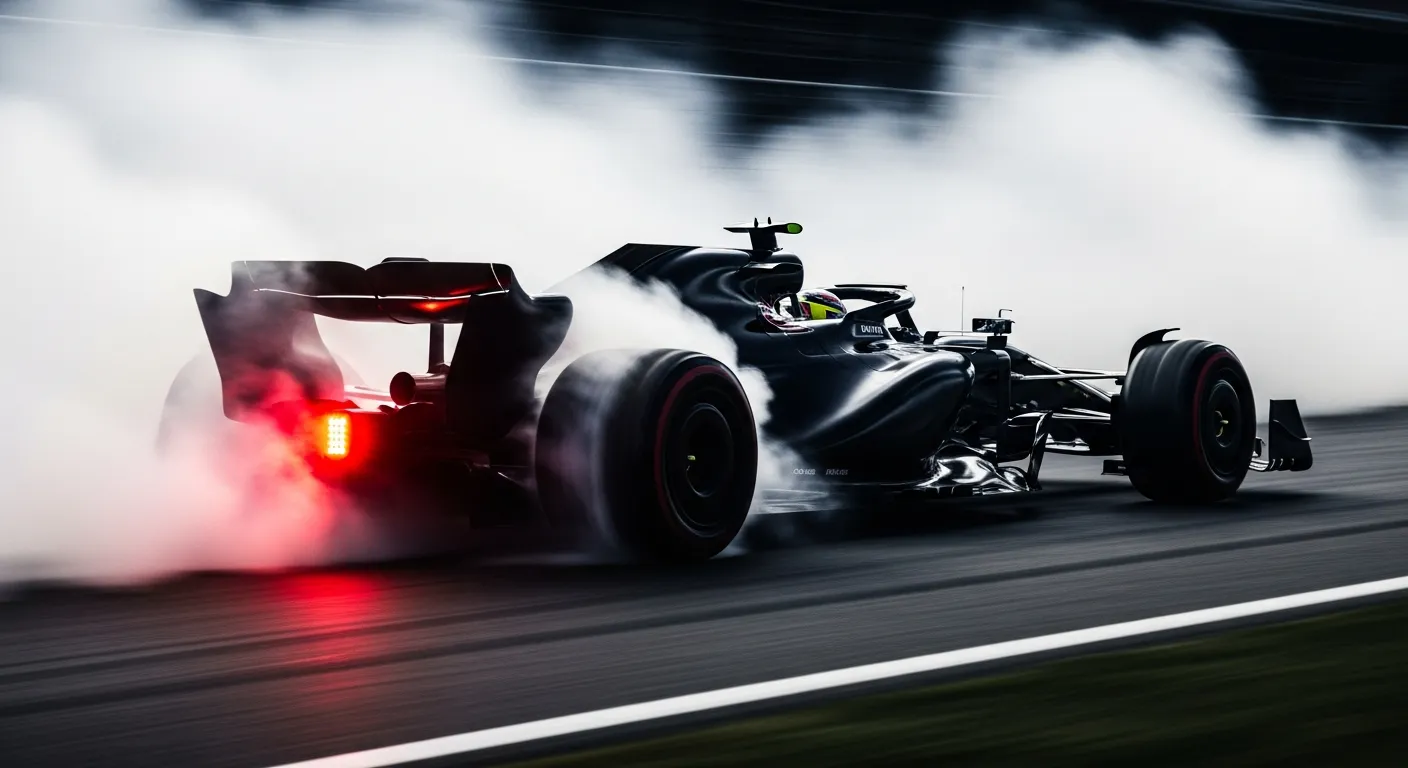
Lance Stroll's journey at the Bahrain International Circuit has been a distinctive one, showcasing a progression from early career challenges to securing a memorable podium and more recent consistent points finishes. Across his 10 starts at Sakhir, Stroll has navigated the circuit's demanding characteristics, which blend long straights with heavy braking zones and a low-grip surface, often under the unique conditions of a night race.
His initial appearances in Bahrain were challenging. In 2017, driving for Williams, his race ended in a collision, preventing him from scoring points. The following year, he finished 14th, a lap down. This pattern of struggle continued into 2019 and the first Bahrain Grand Prix of 2020, where another collision prematurely ended his race. However, the 2020 season also presented a significant turning point: at the Sakhir Grand Prix, held on the outer loop of the same circuit, Stroll delivered his best finish to date, securing a third-place podium from a tenth-place grid start. This performance underscored his capability to capitalize on opportunities when the car and race conditions aligned, a trait sometimes seen at circuits demanding adaptability, much like Oscar Piastri at the Belgian Grand Prix might experience.
Since that breakthrough, Stroll's performances at the Bahrain Grand Prix have shown greater consistency. In 2021, his first year with Aston Martin, he secured a point with a tenth-place finish. While 2022 saw him finish 12th, outside the points, the 2023 season opener was a strong outing, where he converted an eighth-place grid slot into a sixth-place finish, adding 8 points to his tally. This demonstrated a solid understanding of the circuit's nuances, particularly in managing tire degradation on the abrasive surface. The Formula 1 — official site often highlights how crucial tire management is at this venue.
The Bahrain International Circuit's permanent nature, with its blend of high-speed sections and technical corners, requires a car that is stable under braking and offers strong traction. Stroll's ability to extract performance in these conditions, especially in race trim, has been a defining feature of his better results here. His 2020 podium, for instance, came on a variant of the track that amplified the need for quick decision-making and precise car placement, much like the demands placed on drivers at the Red Bull Ring, a circuit where Oscar Piastri at the Austrian Grand Prix would face similar challenges. The evolution of Formula One cars, as detailed on Wikipedia: Formula One, continually shifts the balance of power, but fundamental circuit demands remain.
Looking ahead, Stroll's recent results, including another point-scoring finish in 2024, suggest he has found a more consistent rhythm at Sakhir. While he has yet to achieve a win at this circuit, his single podium and total of 25 points from 10 starts indicate a growing proficiency. The data from sources like Jolpica/Ergast — 2026 season data provides a detailed look at these trends over time. Drivers who can adapt to varying grip levels and manage their tires effectively, much like the requirements at a circuit such as Silverstone, where Oscar Piastri at the British Grand Prix would need a well-balanced car for its high-speed corners, tend to fare well here. Stroll's continued development with Aston Martin will be key to converting strong qualifying performances into consistent race results at this season-opening venue.