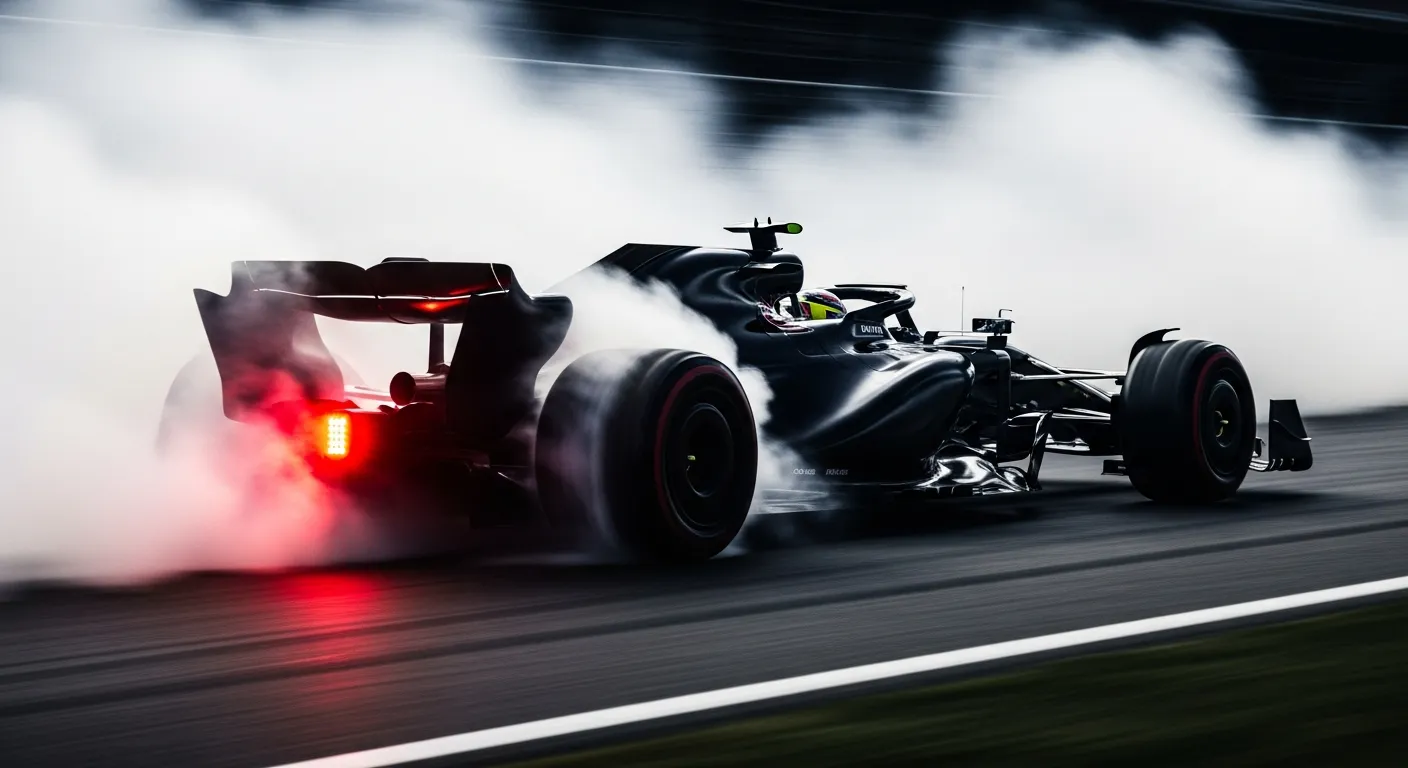
Lando Norris's journey at the Miami Grand Prix stands as a compelling narrative of adaptation and breakthrough, evolving from initial challenges to a defining victory and subsequent consistent podium presence. His early appearances at the Miami International Autodrome, a circuit that blends the demands of a street track with some high-speed sections, were marked by misfortune and struggle. In 2022, his race ended prematurely due to a collision, resulting in a DNF. The 2023 event saw him finish 17th, a performance that reflected McLaren's broader struggles at the time and highlighted the difficulty in extracting pace from the MCL60 on this particular layout. These initial outings suggested a circuit that didn't immediately play to Norris's strengths or McLaren's car characteristics.
However, the 2024 Miami Grand Prix marked a dramatic shift. Starting from fifth on the grid, Norris capitalized on strategic timing and exceptional pace, particularly after a safety car period. Once in clean air, he demonstrated a commanding performance, securing his first Formula 1 victory. This win was not merely a stroke of luck; it underscored significant developments within McLaren's car package and Norris's growing maturity in managing race dynamics, especially on a circuit with varied grip levels and distinct high-speed and technical sectors. The official Formula 1 — official site archives highlight this race as a pivotal moment in his career.
Following this breakthrough, Norris has maintained a strong record in Miami. The verified data from Jolpica/Ergast — 2026 season data shows he secured second-place finishes in both the 2025 and 2026 editions of the race. This consistency, amounting to 1 win and 3 podiums from 5 starts, suggests that Norris and McLaren have found a strong setup philosophy for the Miami circuit. The track's combination of long straights, which reward engine power and aerodynamic efficiency, and its intricate, slower sections, demanding precise steering and good mechanical grip, now appears to align well with Norris's driving style. His ability to manage tire degradation, a critical factor on the often-abrasive street surface, has also become a hallmark of his Miami performances.
The evolution of Norris's performance at Miami offers an interesting comparison to how other drivers adapt to new or challenging venues. For instance, the demands of a circuit like Oscar Piastri at the Canadian Grand Prix, another semi-street track with high-speed elements, present a similar test of a driver's ability to balance aggression with precision. Similarly, understanding the nuances of tire management and car balance on a technical layout like Oscar Piastri at the Hungarian Grand Prix can inform how Norris approaches the varied sectors in Miami. The FIA's technical regulations, detailed on the FIA — F1 World Championship site, often influence car design choices that can impact performance on specific track types, including street circuits. Norris's continued success here speaks to a comprehensive understanding of both the circuit's demands and his machinery's capabilities. His performances at Miami now stand as a testament to his growth as a top-tier competitor in Formula 1, consistently delivering at a venue that once proved challenging. The circuit's unique character, as discussed on Wikipedia: Formula One, requires a specific approach that Norris has clearly mastered.