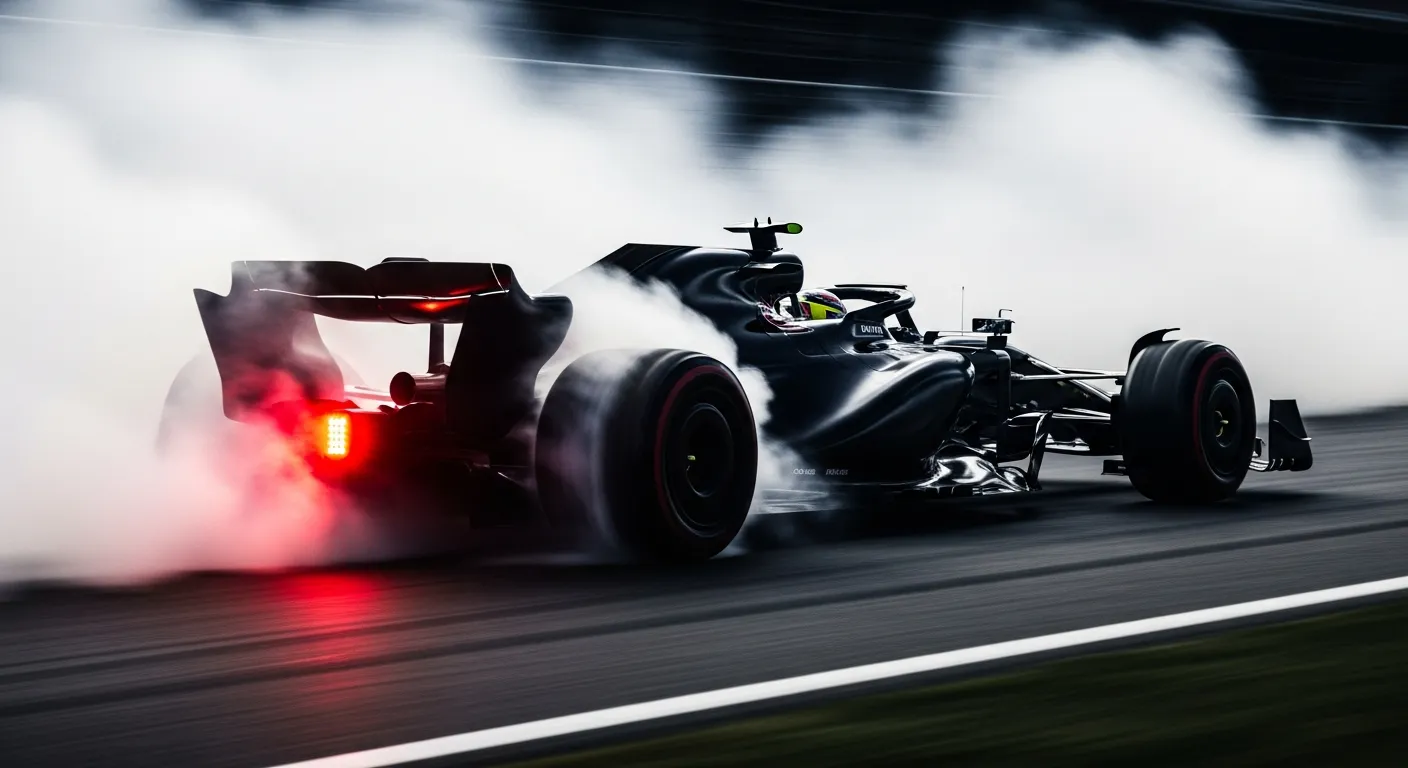
Lando Norris's journey at the Monaco Grand Prix illustrates a compelling narrative of driver evolution on one of Formula 1's most demanding circuits. With 6 starts under his belt, Norris has steadily built his understanding and performance on the principality's tight streets, culminating in a significant victory in 2025. This progression is not merely about raw speed, but a testament to the nuanced car control and strategic acumen required to excel where margins for error are virtually non-existent.
His debut in 2019 saw him finish 11th, a respectable but unspectacular start for a rookie navigating the unforgiving street circuit. The breakthrough arrived in 2021, where Norris secured his first podium finish at Monaco, crossing the line in 3rd position. This performance underscored his growing confidence and the McLaren team's improving package, demonstrating a clear step forward in his ability to manage the delicate balance between aggression and precision required on this unique track. The 2022 and 2023 races, yielding 6th and 9th respectively, offered further lessons in the fine art of Monaco racing, where qualifying position often dictates the race outcome and overtaking opportunities are scarce.
The 2025 season marked a pivotal moment for Norris at Monaco, as he claimed his first win at the circuit. This victory, alongside his 2021 podium, brings his total podium count at Monaco to 2, and establishes his best finish as 1st. Such a result on a circuit known for its historical significance and technical challenge is a strong indicator of a driver's complete skill set. Mastering Monaco requires exceptional spatial awareness, precise throttle application out of slow corners, and a deep understanding of tire degradation on a low-grip surface—qualities Norris has consistently refined throughout his career. For a deeper dive into the technical intricacies of F1 racing, the FIA's official F1 World Championship site offers comprehensive regulations and insights.
Norris's performances at Monaco offer a fascinating comparison to other young talents navigating challenging circuits. While a driver like Oliver Bearman at the Spanish Grand Prix might focus on high-speed cornering and aerodynamic efficiency, Monaco demands a different kind of finesse. The narrow confines and lack of run-off areas mean that every millisecond of a lap is a test of nerve and precision. The data from various seasons, including detailed race results, can be explored through resources like Jolpica/Ergast's 2026 season data, which provides a granular view of driver and team performances. This kind of detailed analysis helps contextualize how a driver's style, particularly one known for smooth inputs and strong car control, can translate into success on a circuit that punishes even minor errors.
His ability to extract performance from the McLaren on a track that demands peak mechanical grip and driver confidence has been a hallmark of his career. The Monaco Grand Prix, often considered the jewel in the F1 crown, is a circuit where the driver's input is arguably more critical than at almost any other venue. Norris's journey from a midfield finish to a race winner here underscores his growth and potential, positioning him as a formidable competitor on any street circuit, much like the challenges faced by drivers at events such as the Oliver Bearman at the Canadian Grand Prix or even a potential future outing for Oliver Bearman at the Monaco Grand Prix itself. His consistent presence near the front of the grid in recent years, particularly in 2024 with a 4th place finish, further solidifies his reputation as a driver capable of delivering strong results under immense pressure. For general information about the sport, Wikipedia's Formula One page offers a broad overview of its history and technical aspects.