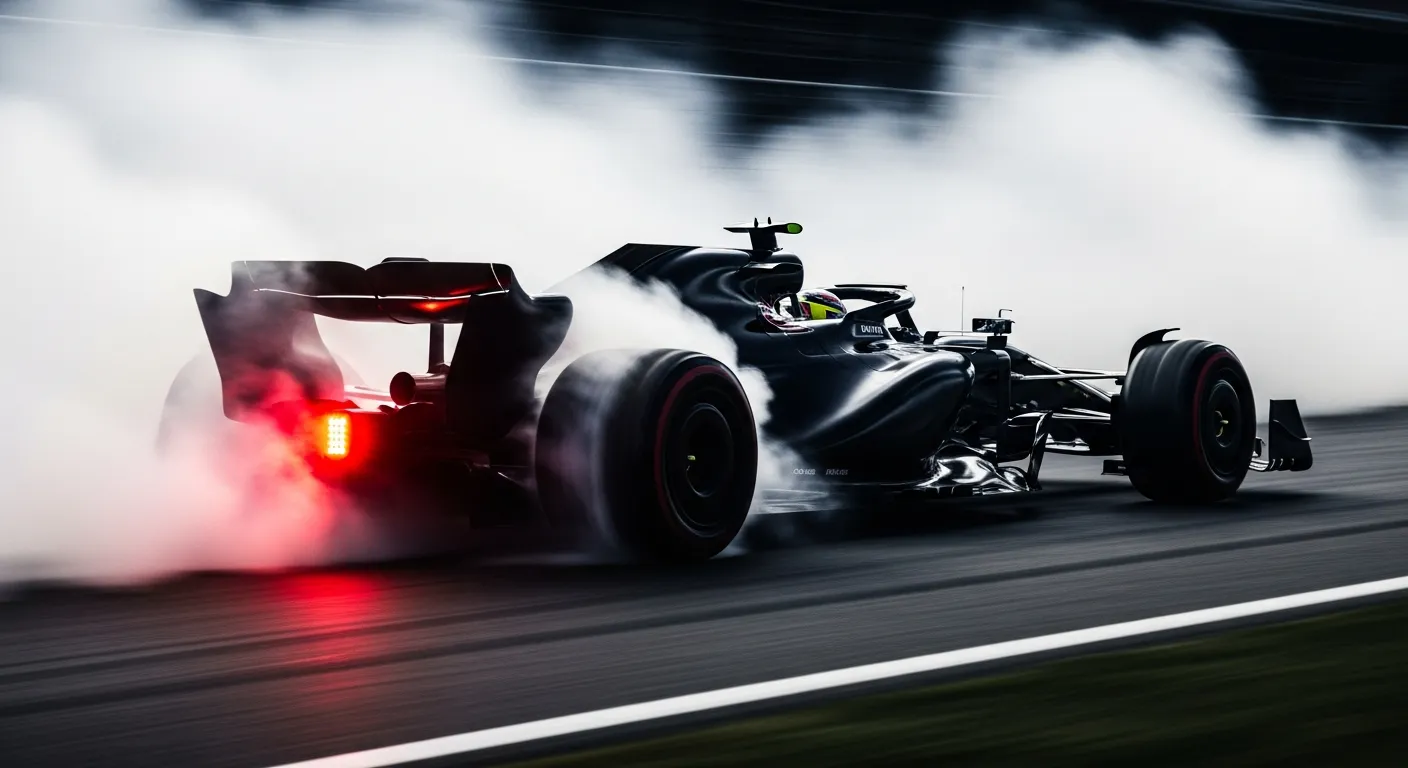
Lando Norris's performance trajectory at the Canadian Grand Prix vividly illustrates a significant evolution, moving from initial retirements and mid-field finishes to securing his first podium at the circuit in 2024. Across his 6 starts, Norris's early appearances at Circuit Gilles Villeneuve were challenging; he retired in 2019 due to suspension issues and finished 15th and 13th in 2022 and 2023 respectively. A collision in 2025 and a gearbox failure in 2026 further underscore the circuit's demanding nature. However, the 2024 season marked a turning point, where he achieved his best finish of 2nd place, securing his sole podium at this event.
The Circuit Gilles Villeneuve, a hybrid street circuit, presents a unique set of challenges. Its blend of long straights, heavy braking zones, and tight chicanes requires a car with both strong straight-line speed and excellent stability under braking. The low-grip surface, particularly early in the weekend, often tests drivers' adaptability, demanding precise car placement and nuanced throttle control. For McLaren, particularly in earlier years, finding this balance proved difficult, contributing to Norris's struggles to convert strong qualifying positions into consistent race finishes. The 2019 DNF from an 8th-place grid start, for instance, speaks to the circuit's unforgiving character.
Norris's driving style, characterized by his smooth inputs and strong tire management, has historically been well-suited to circuits that reward precision. However, Montreal's specific demands — particularly the need for aggressive braking and rapid direction changes through sections like the Wall of Champions chicane — required a car that could provide the necessary confidence. The significant strides McLaren made in their car development, especially evident from mid-2023 onwards, clearly played a pivotal role in unlocking Norris's potential here. This evolution mirrors how drivers must adapt to diverse challenges, much like the precision required at a track such as Oliver Bearman at the Monaco Grand Prix.
The 2024 Canadian Grand Prix demonstrated how Norris, supported by a more competitive McLaren package, could thrive in these conditions. His ability to manage tire degradation, often a critical factor on the Montreal asphalt, combined with the car's improved traction out of slow corners, allowed him to capitalize on strategic opportunities and maintain pace. This contrasts sharply with the high-downforce demands of circuits like Oliver Bearman at the Japanese Grand Prix, where a different set of car characteristics are prioritized. The official Formula 1 website often highlights how team development cycles impact driver performance at specific venues.
Looking ahead, despite the 2024 success, the circuit remains a test. The 2025 collision and 2026 gearbox issue in the verified record indicate that even with a strong car, the margins for error are slim. Norris's continued development and McLaren's ability to provide a consistently competitive car will be key to building on his 2024 podium. Understanding the nuances of driver performance across different track types is essential for any F1 fan, and resources like Wikipedia's Formula One overview provide valuable context for these analyses. For detailed race-by-race data, platforms like Jolpica/Ergast offer a comprehensive look at historical outcomes, including those challenging early years for Norris in Montreal.