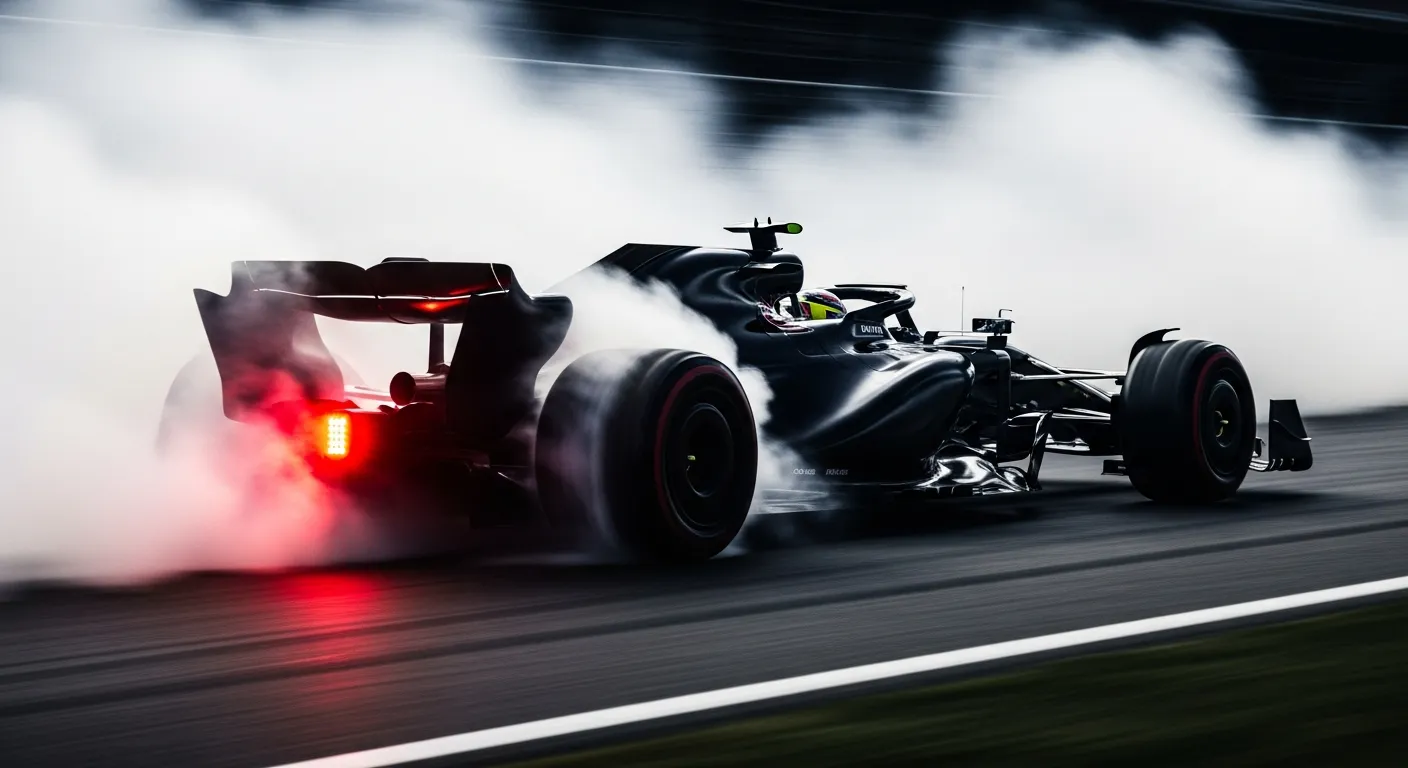
Lando Norris's journey at the Chinese Grand Prix illustrates a compelling narrative of progression, marked by a significant shift from a difficult debut to consistent podium finishes in recent years. His initial appearance at the Shanghai International Circuit in 2019, his rookie season, saw him starting 15th and finishing 18th due to collision damage, a stark contrast to his more recent performances. This early experience on the permanent circuit, known for its unique 'snail' turn 1-4 complex and long back straight, offered a steep learning curve for the young Briton.
The circuit's blend of high-speed corners, heavy braking zones, and technical sections demands a well-balanced car and precise driving. Norris, known for his smooth, precise style and ability to extract performance from the front end of the car, has increasingly found a rhythm here as McLaren's machinery has improved. His record now stands at 4 starts, with an impressive 2 podiums, and a best finish of 2nd in 2024. This consistent performance underscores his adaptability and the team's engineering progress, particularly in managing tire degradation over long runs and optimizing setup for the circuit's diverse demands. For a deeper dive into how drivers adapt to varied track layouts, consider the analysis of Jack Doohan at the Hungarian Grand Prix, a circuit with its own unique technical challenges.
The 2024 and 2025 seasons saw Norris secure back-to-back second-place finishes, accumulating 36 points in total at Shanghai. These results highlight a significant step forward from his 2019 outing and even the electrical retirement in 2026. Such consistency on a track that punishes even minor errors speaks volumes about his race craft and McLaren's strategic execution. The long, sweeping corners, particularly the demanding Turn 7-8 complex, require a driver to carry immense speed while managing tire wear, a trait Norris has honed over his career. This is a different kind of challenge compared to the high-speed demands of circuits like Jack Doohan at the Italian Grand Prix, which prioritizes outright top speed.
Norris's ability to navigate the unique challenges of the Shanghai circuit, from the low-speed technical sections to the high-speed straights, has become a hallmark of his performance here. The permanent nature of the track allows for consistent data collection and setup refinement, which McLaren has clearly leveraged. Understanding the nuances of different circuits is crucial, as explored in discussions around drivers like Jack Doohan at the Dutch Grand Prix, where elevation changes and banked corners present distinct obstacles. For more official statistics and historical race data, the Formula 1 — official site provides comprehensive archives, while detailed season data, including that for 2026, can be found via sources like Jolpica/Ergast — 2026 season data. The broader context of Formula One's evolution and its technical regulations, as outlined on Wikipedia: Formula One, further illuminates the engineering challenges teams face at venues like Shanghai.