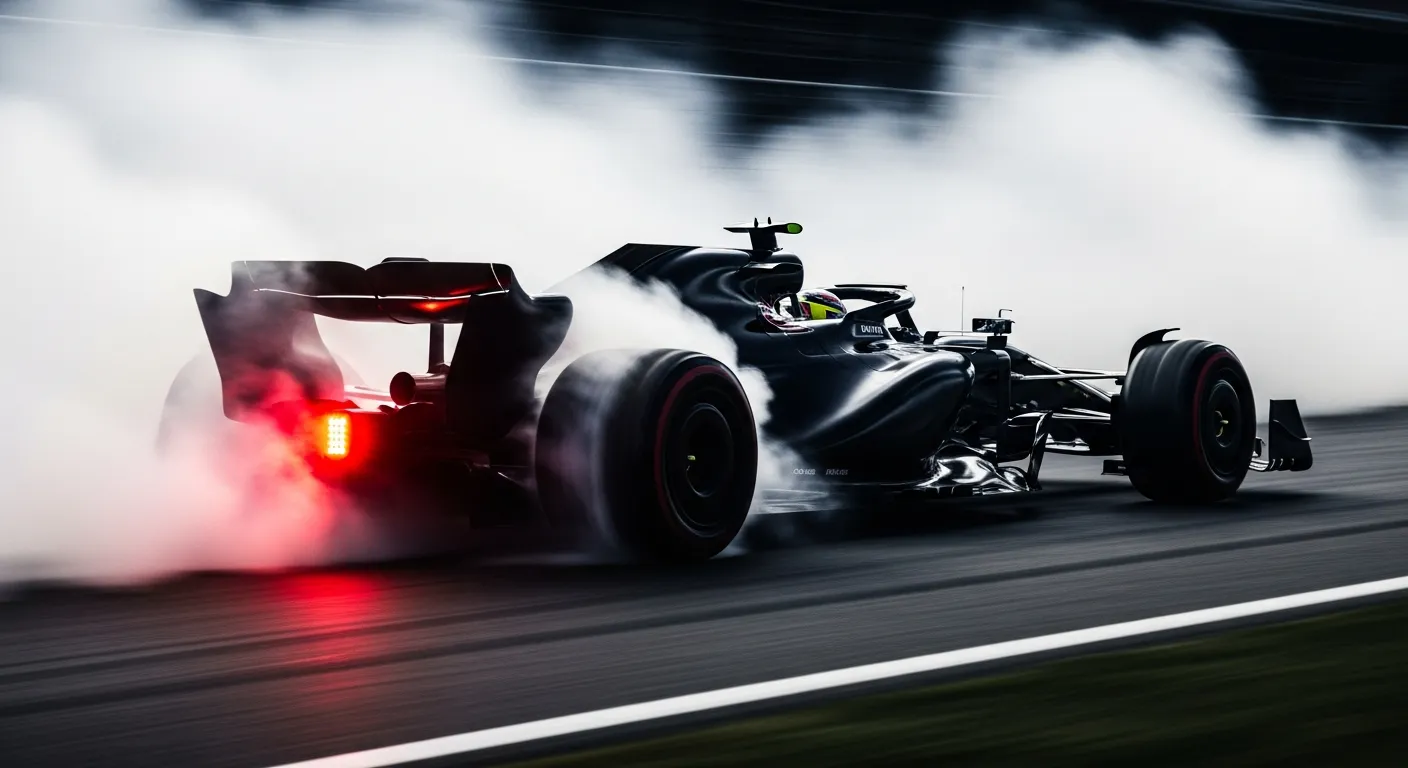
Lewis Hamilton's unparalleled eight victories at the Hungarian Grand Prix underscore a profound synergy between his driving style and the Hungaroring's technical characteristics, making it a circuit where he has consistently extracted maximum performance. Across his nineteen starts at this permanent circuit, Hamilton has not only secured a remarkable eight wins but also twelve podium finishes, a record that speaks to his enduring mastery of this unique venue. His debut victory here in 2007 with McLaren set an early precedent, demonstrating an immediate affinity for the circuit's demands.
The Hungaroring, often likened to Monaco without the confines of street walls, is a tight, twisty track with a premium on precision and mechanical grip. Its succession of low-speed corners and limited overtaking zones means qualifying performance is paramount. Hamilton has consistently excelled in this regard, securing multiple pole positions, which have often been the foundation for his race-day successes. His ability to manage tire degradation on this demanding surface, particularly in the critical middle sector, has been a recurring theme throughout his victories. This strategic acumen, combined with his natural car control, allows him to maintain a consistent pace that few can match over a full race distance.
Memorable performances abound in Hamilton's Hungarian Grand Prix history. The 2014 race saw him recover from a pitlane start to claim a third-place finish, a testament to his relentless pursuit of points even when victory was out of reach. In 2019, he delivered a strategic masterpiece, hunting down and passing Max Verstappen in the closing laps after a late pit stop for fresh tires, showcasing his tactical intelligence and raw pace. His dominant 2020 victory further cemented his status as the "King of the Hungaroring," a performance that was almost flawless from pole position. While his record is overwhelmingly positive, his single DNF in 2010 due to a gearbox issue serves as a reminder that even the most dominant pairings can face unexpected challenges.
In recent years, even as Mercedes faced stiffer competition, Hamilton continued to demonstrate his affinity for the circuit. He secured podiums in both 2021 and 2022, and remarkably took pole position in 2023 before finishing fourth. The 2024 event saw him on the podium again, finishing third. Looking ahead, his transition to Ferrari in 2025 introduces a new chapter. The data for 2025, which shows a P12 finish, suggests the challenge of adapting to a new car and team at a circuit where he has historically thrived will be significant. Fans often look to the Formula 1 — official site for updates on team and driver performance, and it will be fascinating to observe how this dynamic plays out.
Hamilton's consistent success at the Hungaroring highlights a driver who thrives on circuits demanding technical prowess and strategic depth. His approach here often mirrors the meticulous preparation seen at other technically challenging tracks, such as the Circuit de Monaco, where precision is key, or the Autodromo Enzo e Dino Ferrari for the Lance Stroll at the Emilia Romagna Grand Prix, which also demands a high degree of driver skill. His capacity to extract maximum performance, even when the car might not be the outright fastest, has been a hallmark of his career, enabling him to consistently contend for top positions. This is a characteristic that sets him apart, much like the detailed analysis of driver capabilities found on Wikipedia: Formula One. The detailed historical data, available through sources like Jolpica/Ergast — 2026 season data, clearly illustrates his consistent top-tier performances at this particular venue, offering a rich tapestry of strategic battles and driving masterclasses. This track, with its unique flow, seems to perfectly align with his driving instincts, a trait also observed in drivers who excel at the Lance Stroll at the Spanish Grand Prix or the demanding Lance Stroll at the Monaco Grand Prix, where driver input is paramount.