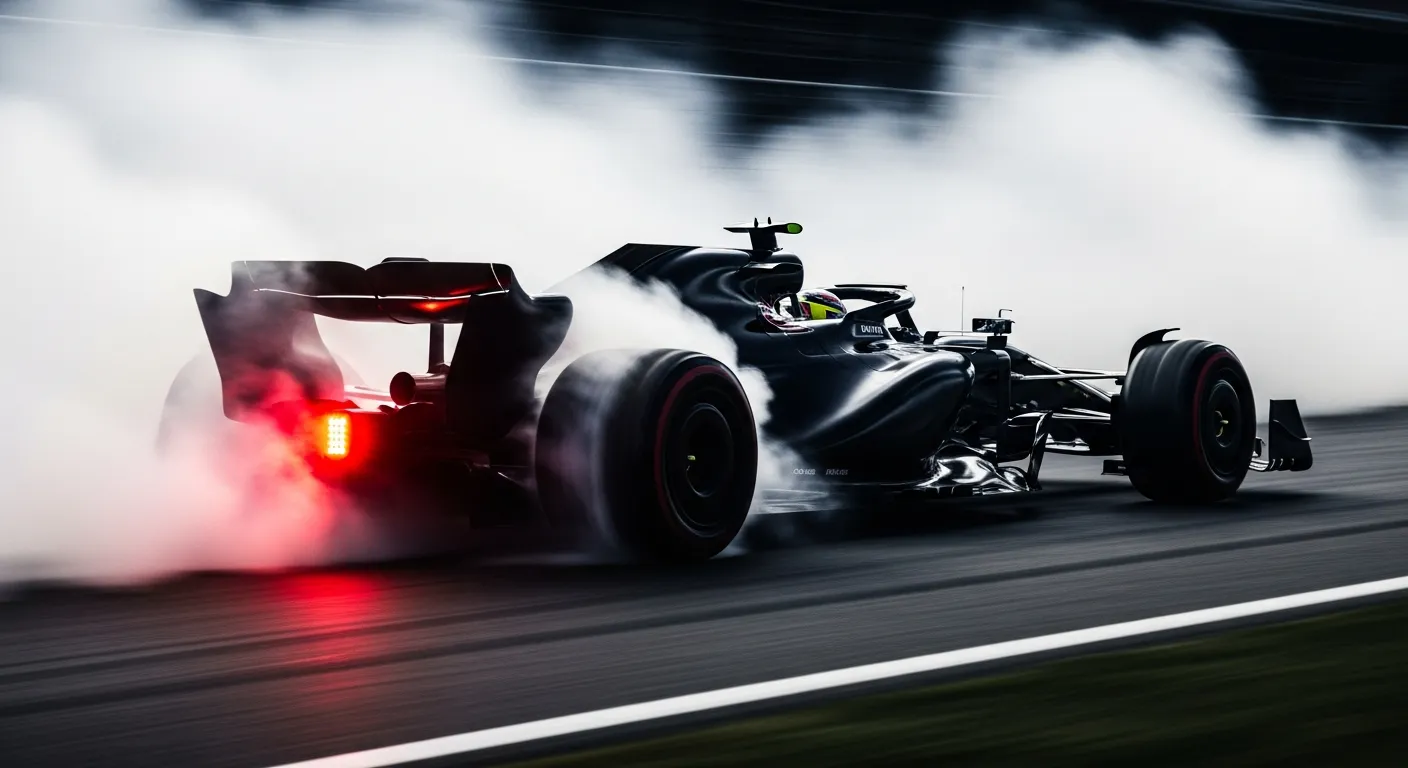
Lewis Hamilton's extensive history at the Abu Dhabi Grand Prix at Yas Marina charts a remarkable journey, from his early career successes with McLaren to a period of sustained dominance with Mercedes, culminating in five wins and ten podium finishes across 17 starts. This permanent circuit has often served as a critical juncture in his championship campaigns, reflecting both his peak performance and the challenges of evolving F1 regulations. His first victory here in 2011 with McLaren, starting from second on the grid, set a precedent for his future prowess, demonstrating an early mastery of the circuit's unique demands.
The Mercedes era saw Hamilton truly unlock the potential of Yas Marina. His win in 2014 was particularly significant, securing his second world championship in a double-points finale. He followed this with further victories in 2016, 2018, and 2019, often from pole position or the front row. These years underscored his ability to manage tyre degradation and execute precise overtaking maneuvers on a circuit that, despite its modern design, can be notoriously difficult for passing. The circuit's blend of flowing sections and tight chicanes, particularly before the 2021 layout changes, played into Hamilton's strengths for carrying speed through corners and optimizing exit traction. For a broader view of the sport's evolution, the Formula 1 — official site offers comprehensive historical context.
While Hamilton's record includes an impressive run of podiums through 2021, his more recent appearances have presented a different narrative. The 2022 and 2023 races, for instance, saw him finish outside the top five, with a DNF in 2022 due to a gearbox issue and a ninth-place finish in 2023 from an eleventh-place start. These results contrast sharply with his earlier form, reflecting the shifting competitive landscape and the specific aerodynamic characteristics of the newer generation cars. The Yas Marina circuit, with its demanding final sector and reliance on strong front-end grip, has proven challenging for Mercedes in recent seasons. This mirrors some of the difficulties faced by drivers like Charles Leclerc at the Bahrain Grand Prix, where car balance and tyre management on a permanent circuit are paramount.
The Abu Dhabi Grand Prix has frequently been the season finale, adding immense strategic pressure. Hamilton's experience in these high-stakes environments, including the controversial 2021 race, is unparalleled. His approach to qualifying, often prioritizing race pace over a single-lap glory, has been a hallmark of his strategy here. As he prepares for his move to Ferrari, his performances at circuits requiring precision and strategic depth, much like Charles Leclerc at the Monaco Grand Prix, will be closely observed. The detailed historical data, such as that found on Jolpica/Ergast — 2026 season data, provides a granular look at how driver and car performance intertwine across seasons. His 2 DNFs at this circuit, one in his debut year and another later in his Mercedes tenure, serve as reminders that even the most dominant careers are not without their mechanical vulnerabilities.
The 2021 track modifications at Yas Marina, which aimed to create more overtaking opportunities, have subtly altered the circuit's character. The removal of the chicane before the long back straight and the widening of the hairpin have shifted the emphasis, potentially favoring cars with strong straight-line speed and efficient DRS usage. Hamilton's adaptability, a trait that has defined his career, will be crucial as he navigates these changes with his new team. His ability to extract performance from various car philosophies, even on high-speed sections akin to parts of Charles Leclerc at the Saudi Arabian Grand Prix, will be a key factor in his future endeavors at this venue. For a deeper understanding of Formula 1's technical regulations and their impact, the Wikipedia: Formula One entry offers a valuable resource.