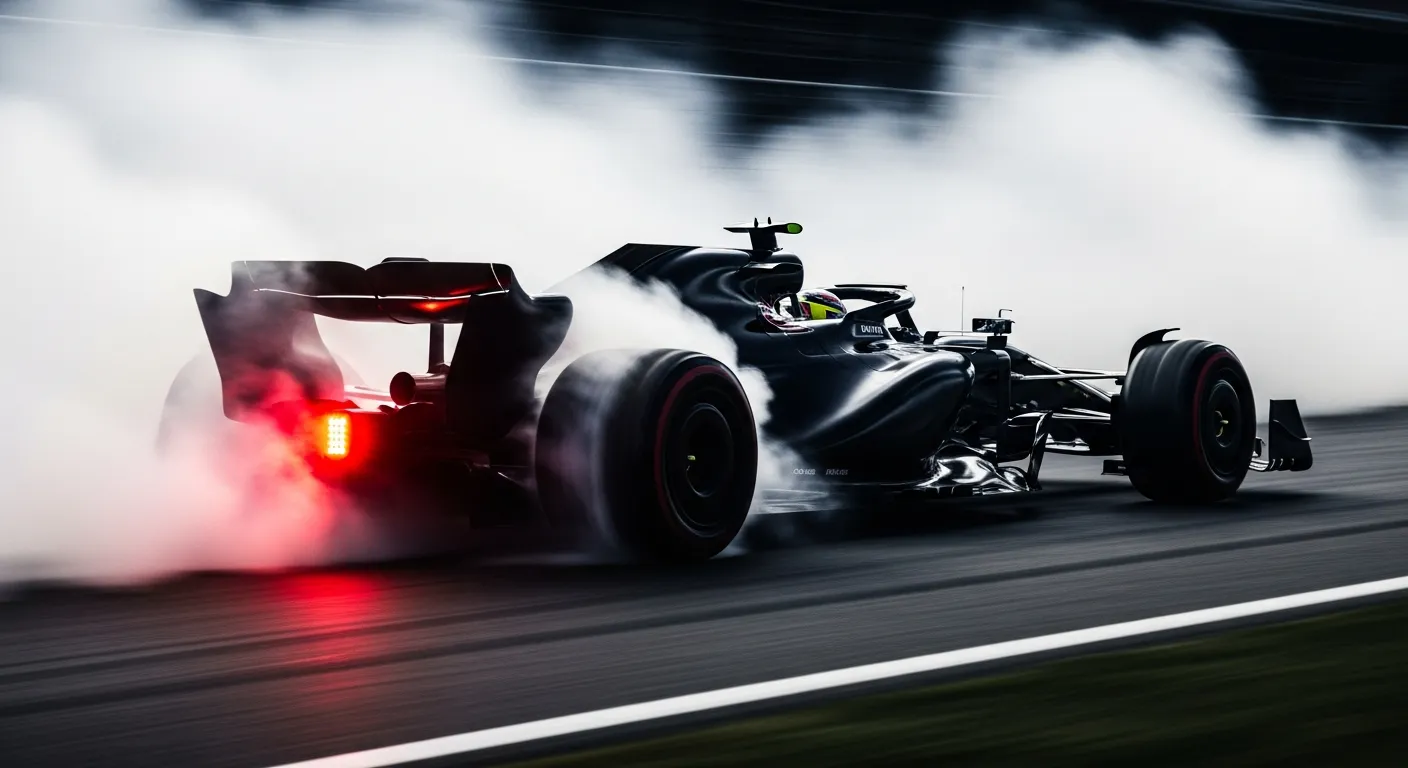
Max Verstappen's relationship with the Circuit de Barcelona-Catalunya is distinctive, marked by a pivotal moment early in his Red Bull Racing career. His very first race with the team in 2016 at the Spanish Grand Prix culminated in a victory, making him the youngest-ever Grand Prix winner at just 18 years old. This incredible start set the tone for his subsequent performances at this permanent circuit, a venue where he has now made 11 starts.
The Circuit de Barcelona-Catalunya, known for its demanding blend of high-speed corners, technical sections, and abrasive track surface, often serves as a benchmark for car performance due to its extensive use in pre-season testing. Verstappen's consistent ability to extract performance here, even when the Red Bull chassis wasn't the outright dominant package, speaks volumes. His early appearances with Scuderia Toro Rosso in 2015, where he finished 11th, contrasted sharply with his immediate success upon joining Red Bull, demonstrating a rapid adaptation to the new machinery and team dynamics.
Over his 11 appearances, Verstappen has secured an impressive 4 wins and 8 podium finishes. Beyond his maiden win in 2016, he has clinched victories in 2022, 2023, and 2024, cementing his dominance in recent years. This consistency is further highlighted by his consecutive podiums from 2018 through 2024, with his only DNF occurring in 2017 due to collision damage. Such a record underscores his precision and ability to manage races effectively on a circuit that demands both outright pace and strategic tire management. The Formula 1 official site provides comprehensive historical data that illustrates the evolution of his career at this specific venue.
Verstappen's driving style, characterized by aggressive turn-in and exceptional car control, particularly suits the high-speed corners of Catalunya, such as Turn 3 and the sweeping Turn 9. His ability to maintain momentum through these sections, combined with precise braking into the slower chicanes, has consistently given him an edge. This contrasts with the approach of other drivers, like Carlos Sainz at the Spanish Grand Prix, who often face immense pressure at their home event. Understanding the broader context of Formula One's evolution helps frame these individual performances within the sport's history.
The changes to the circuit layout, particularly the removal of the final sector chicane in recent years, have arguably played into Verstappen's strengths, favoring cars with strong aerodynamic efficiency and drivers confident in high-speed corners. His total of 169 points at this Grand Prix attests to a sustained period of high performance. Detailed race results and statistics, often found via Jolpica/Ergast data, underscore this consistency, making the Spanish Grand Prix a reliable indicator of his championship potential each season. His performances here often draw comparisons to his strong showings at other European permanent circuits, like those seen in battles at the British Grand Prix or the strategic challenges of the Hungarian Grand Prix.