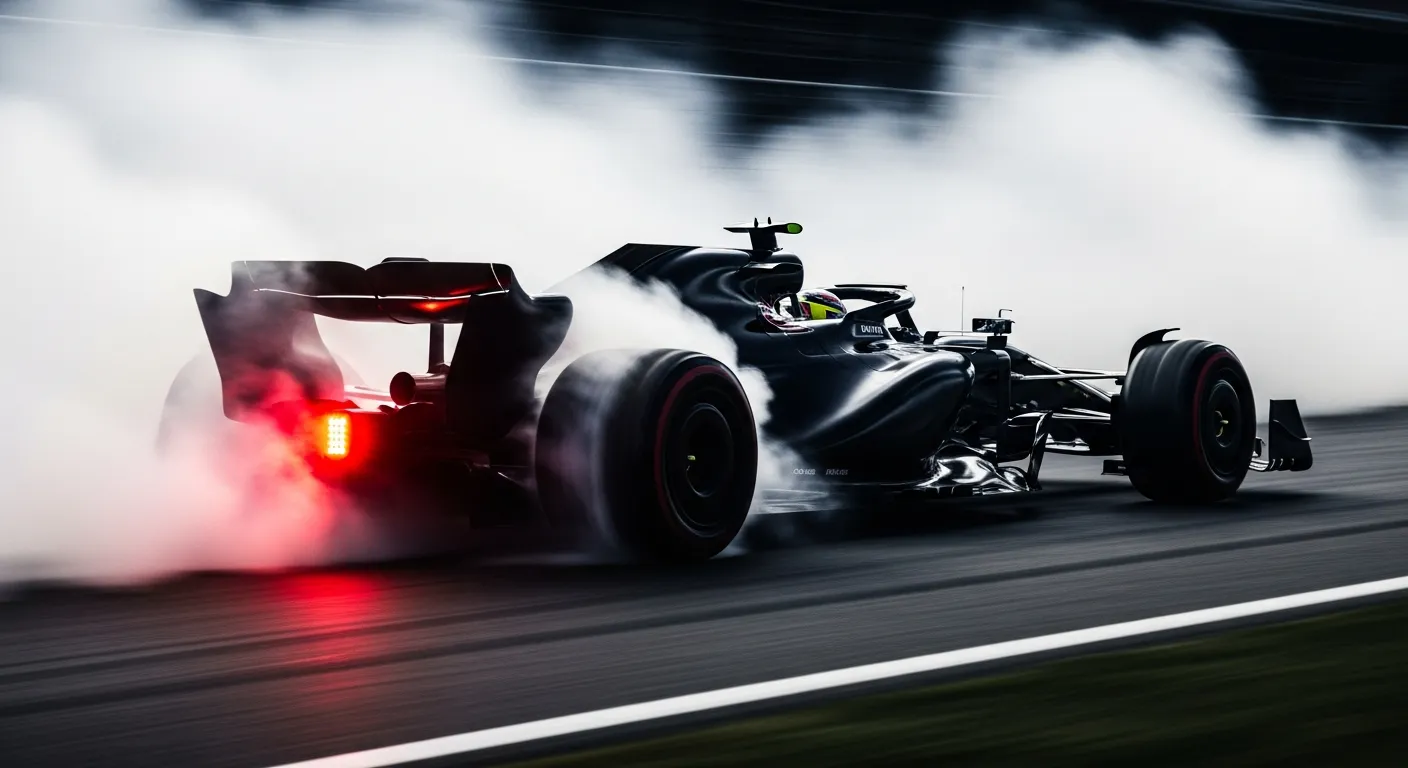
Nico Hülkenberg's history at the Mexico City Grand Prix is characterized by a notable ability to extract performance from midfield machinery on a demanding, high-altitude permanent circuit, particularly evident in his earlier appearances.
Hülkenberg has made eight starts at the Autódromo Hermanos Rodríguez, a circuit known for its unique challenges stemming from its elevation. Despite never securing a win or a podium finish, his best result remains a 6th place in 2018. Across his initial five appearances, from 2015 to 2019, Hülkenberg consistently brought his car home in the points, securing a 7th place twice with Force India (2015, 2016), a 6th with Renault in 2018, and a 10th in 2019. This period highlights his capacity to adapt to the circuit's specific demands, often outperforming the raw pace of his machinery. The high altitude significantly impacts engine power and aerodynamic downforce, requiring a precise setup and driver input to manage the reduced grip and increased braking distances, a challenge unique to certain events on the Formula One calendar. For a deeper understanding of how drivers tackle similar high-altitude challenges, one might look at Alexander Albon at the São Paulo Grand Prix, another circuit where atmospheric conditions play a crucial role.
The Mexico City circuit, a permanent fixture on the F1 calendar, presents a complex blend of long straights and a tight, technical stadium section. The thin air at over 2,200 meters (7,300 feet) above sea level reduces the effectiveness of aerodynamic elements, meaning teams run maximum downforce settings yet still experience less actual downforce than at sea-level tracks. This makes braking zones particularly treacherous and cornering speeds lower than expected for the wing levels. Hülkenberg's driving style, often described as precise and adaptable, has historically served him well here. His ability to manage tire degradation, a critical factor on the low-grip surface, and his consistent braking technique have allowed him to maintain strong race pace. His 2018 performance, where he finished 6th for Renault, stands out as a testament to this, navigating the race with strategic consistency.
More recently, Hülkenberg's fortunes at Mexico City have shifted. His return to the circuit in 2023 with Haas saw him finish 13th, outside the points, and the 2024 race yielded a 9th place finish. The 2017 race also saw a DNF due to a power unit issue, and a "handling" related DNF in 2025 further illustrates the mechanical stresses and setup sensitivities the altitude places on the cars. As he transitions to Kick Sauber, the challenge will be to recapture the consistent points-scoring form he demonstrated in his earlier career at this venue. The team's performance trajectory will be critical, as the circuit's unique demands often amplify any underlying car weaknesses. For a broader perspective on team and driver dynamics on permanent circuits, examining Carlos Sainz at the Australian Grand Prix offers insights into how different setups can influence race outcomes. The official Formula 1 — official site provides comprehensive data on historical race results and technical specifications that underscore these challenges.
The Autódromo Hermanos Rodríguez demands a nuanced approach to strategy, particularly concerning tire management and engine modes, given the reduced cooling efficiency in the thin air. Drivers must balance aggressive overtaking opportunities on the long main straight with the need for precision through the slower, twisty sections. Hülkenberg's experience, accumulated over eight starts, gives him a distinct advantage in understanding these compromises. His capacity to deliver consistent lap times under pressure is a hallmark of his career, a trait that remains valuable on a circuit where small errors can be costly. The FIA — F1 World Championship regulations often influence car design and performance specific to such challenging environments, impacting how teams prepare for events like Mexico City. His ability to adapt to varying car characteristics, as seen across his stints with Force India, Renault, and Haas, will be crucial. For context on how other experienced drivers manage diverse permanent circuits, consider Alexander Albon at the Abu Dhabi Grand Prix, another track with a mix of high-speed and technical sections.
Analyzing performance trends at Mexico City requires looking beyond raw speed, considering factors like reliability and strategic execution, which are heavily influenced by the altitude. The data available through resources like Jolpica/Ergast — 2026 season data allows for a detailed examination of how driver and constructor performance evolves over seasons at specific venues. Hülkenberg's total of 23 points at this circuit, amassed without a podium, speaks to a career defined by consistent, solid performances rather than headline-grabbing results. As he prepares for future appearances, his focus will undoubtedly be on leveraging his experience to maximize the potential of his machinery, aiming to return to the points-scoring form that marked his early years at this distinctive Grand Prix.