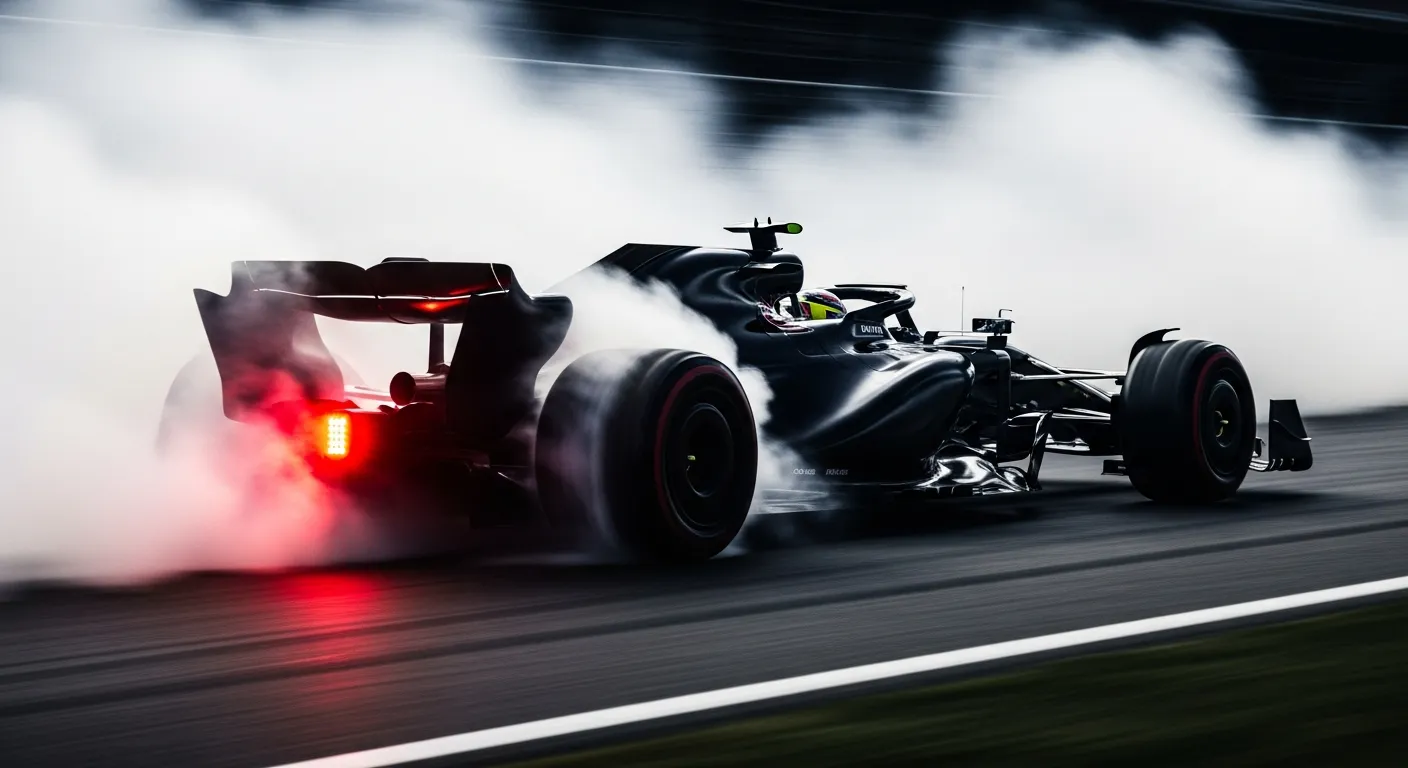
Pierre Gasly's record at the Saudi Arabian Grand Prix at Jeddah presents a study in contrasts, beginning with strong points finishes before encountering more challenging outcomes in recent seasons. Across his 5 starts at this demanding high-speed street circuit, Gasly has yet to secure a win or a podium, but his initial appearances showcased a driver capable of extracting significant performance on tracks that reward precision and commitment.
His debut at Jeddah in 2021, driving for Scuderia AlphaTauri, was particularly strong. He qualified sixth and maintained that position to finish the race, securing 8 points. This performance underscored his ability to navigate the circuit's relentless sequence of fast corners and tight walls, a characteristic that often suits drivers with a keen sense of car placement and confidence in high-speed sections. The following year, still with AlphaTauri, he again finished in the points, taking an 8th place finish. These early results demonstrated a clear affinity for the unique challenges of the Jeddah Corniche Circuit, a track known for its high average speeds and unforgiving nature, as detailed on the Formula 1 — official site.
The transition to Alpine F1 Team in 2023 saw a slight dip in his Jeddah performance, though he still managed to finish 9th, adding 2 points to his tally. This marked his third consecutive points finish at the circuit. However, the subsequent seasons brought a shift. In 2024, his race ended prematurely due to a gearbox issue, and in 2025, a collision led to another DNF. These incidents highlight the fine margins at Jeddah; even a minor misstep or reliability concern can quickly derail a promising weekend. The circuit's tight confines and high-speed nature mean that any loss of control or mechanical failure often leads to significant consequences, a factor that can be particularly punishing for teams battling in the midfield, much like Alpine. This emphasizes the critical importance of avoiding incidents on street circuits, a challenge also faced by drivers at other demanding venues like Oliver Bearman at the Spanish Grand Prix.
Jeddah's layout, with its long flat-out sections punctuated by quick changes of direction, demands a car with excellent aerodynamic efficiency and a stable rear end. Gasly's driving style, which often thrives on a front-limited car that he can aggressively turn into corners, can be well-suited to such demands when the car's balance is optimal. However, if the Alpine A52x series struggles with rear stability or overall grip, as has sometimes been the case, it can compromise his ability to push through the fast sweeps, making it harder to replicate the strong qualifying and race pace seen in his AlphaTauri years. This interplay between driver style and car characteristics is a constant theme in F1, much like how Oliver Bearman at the British Grand Prix navigates the high-speed demands of Silverstone.
For Gasly to return to his earlier form at Jeddah, a combination of a more competitive Alpine package and flawless execution will be essential. The unforgiving nature of a street circuit means that qualifying well is paramount, as overtaking opportunities, while present, are challenging. Drivers like Gasly, who can extract a strong single lap, often benefit greatly from a good grid position here. Understanding the intricate balance between aggression and preservation is key, especially when considering tyre management over a full race distance, a factor that can often separate contenders from the rest, similar to the strategic considerations at a track like Oliver Bearman at the Canadian Grand Prix. The overall history and regulations of the sport, which dictate these competitive dynamics, are well-documented by the FIA — F1 World Championship. For a deeper dive into historical race data, resources like Jolpica/Ergast — 2026 season data provide comprehensive records that underscore these trends. The broader context of Formula 1 as a global racing series can be explored on Wikipedia: Formula One.