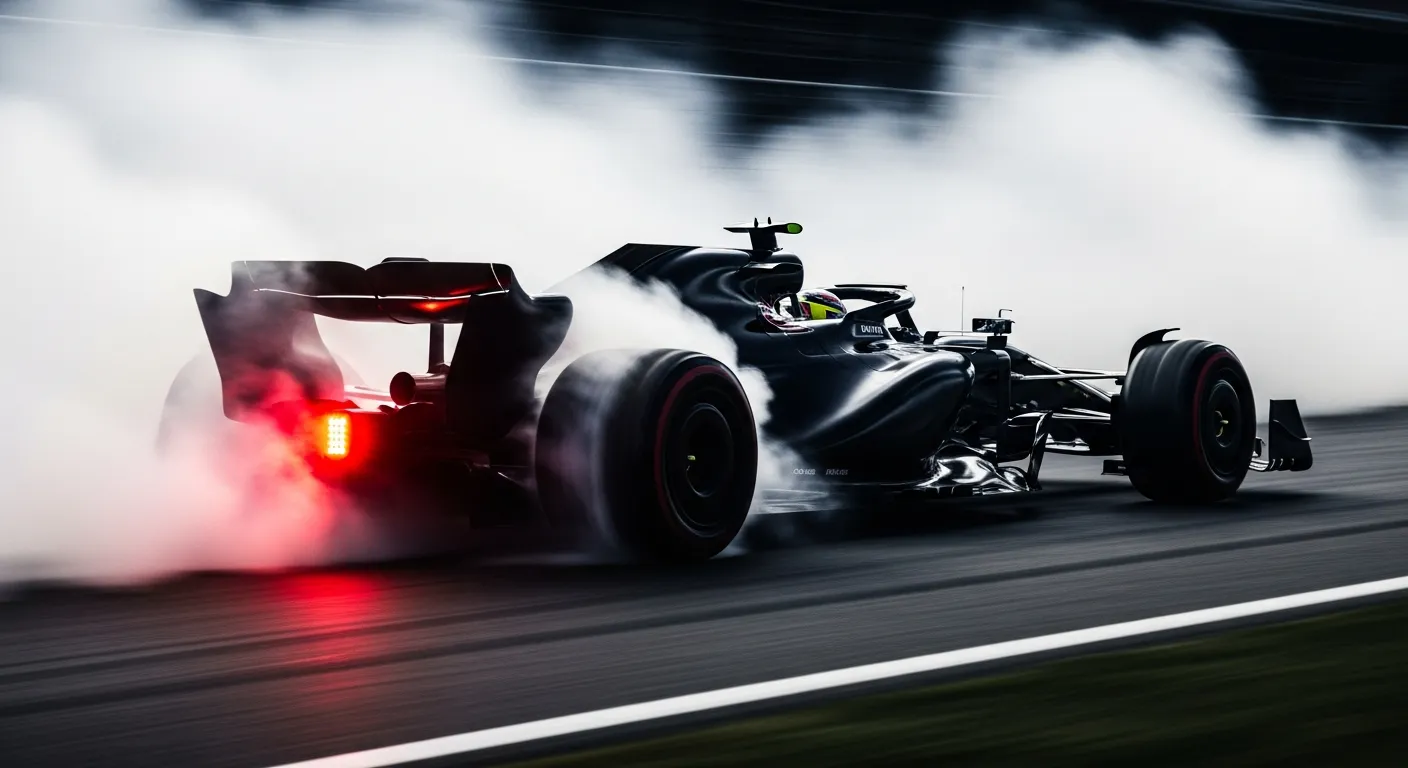
Yuki Tsunoda's appearances at the Mexico City Grand Prix have historically presented a complex challenge, marked by both promising qualifying efforts and a series of race-day setbacks that have prevented him from converting pace into points. Across his five starts at the Autódromo Hermanos Rodríguez, Tsunoda has yet to score championship points, with his best finish recorded as 11th in 2025. This contrasts with his qualifying performances, which have seen him start as high as 10th on the grid in 2025, suggesting that the raw speed is often present, but race execution at this unique venue has proven difficult.
The Mexico City Grand Prix, held at over 2,200 meters (7,200 feet) above sea level, is an anomaly on the Formula 1 calendar. The thin air significantly impacts engine power, cooling, and, crucially, aerodynamic downforce. Teams run maximum downforce configurations, yet the cars still slide more than at sea-level tracks. This reduced grip, particularly in the heavy braking zones and slower stadium section, demands a nuanced driving approach. For a driver like Tsunoda, known for his aggressive style and late braking, adapting to these conditions without overdriving the car is paramount. His three retirements in 2021, 2022, and 2024, all attributed to collisions or damage, underscore the fine line between pushing the limits and exceeding them at a circuit where grip is at a premium. This need for precise car placement and controlled aggression is a skill tested rigorously at permanent circuits, much like how Gabriel Bortoleto at the Spanish Grand Prix demands fundamental car control.
While Tsunoda has shown flashes of brilliance in qualifying, maintaining that performance over a full race distance in Mexico City has been a consistent hurdle. The circuit's long main straight, followed by heavy braking into Turn 1, often leads to intense midfield battles where incidents can easily occur. His 2023 finish of 12th marked his first time completing the race at this venue, a step towards understanding the race's demands, followed by his 11th place in 2025. The challenge here is not just raw speed but also strategic race management, tire preservation, and avoiding contact in the close quarters of the midfield. This aspect of race management is crucial across the calendar, from the tight streets of Gabriel Bortoleto at the Monaco Grand Prix to the high-speed sections of Imola, where Gabriel Bortoleto at the Emilia Romagna Grand Prix also demands precision.
The transition to Red Bull Racing in 2025, as reflected in his latest appearance data, could offer a different dynamic, potentially with a more stable and competitive car. However, the inherent characteristics of the Mexico City circuit will always present a unique test. The ability to manage tire degradation, particularly with the reduced downforce making the tires work harder, and to navigate the challenging braking zones without locking up, will remain critical. Fans can follow the latest news and race results on the Formula 1 — official site to track driver performance throughout the season. Understanding the nuances of driver performance at specific tracks often requires delving into detailed race data, which can be found through resources like Jolpica/Ergast — 2026 season data, complementing the general information available on Wikipedia: Formula One. For Tsunoda, Mexico City represents an ongoing quest to marry his undeniable qualifying speed with consistent, incident-free race execution.