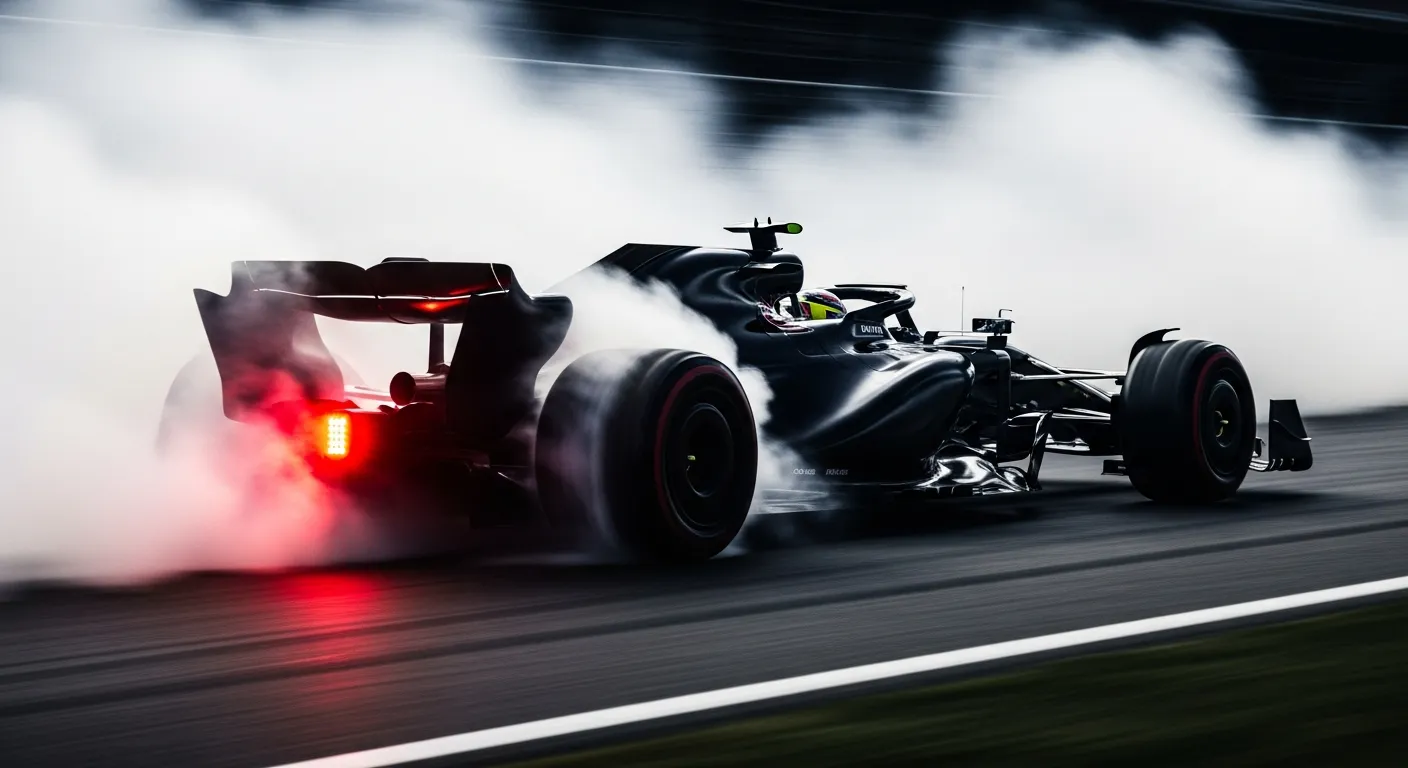
Yuki Tsunoda's record at the British Grand Prix presents a nuanced picture of a driver consistently pushing the limits within the machinery available to him. Across five starts at the demanding Silverstone circuit, Tsunoda has secured points finishes twice, achieving his best finish of 10th in both 2021 with AlphaTauri and 2024 with Racing Bulls. This outcome, while modest, underscores his capacity to extract performance on a track that unforgivingly exposes any car's aerodynamic deficiencies and rewards precise, high-speed commitment.
Silverstone, a permanent circuit renowned for its relentless sequence of high-speed corners like Copse, Maggotts, and Becketts, places a premium on aerodynamic stability and driver confidence. For Tsunoda, whose driving style often features an aggressive approach to braking and corner entry, adapting to Silverstone's flowing nature has been a continuous process. His initial outing in 2021 saw him convert a 16th-place grid start into a valuable point, demonstrating early promise. However, the subsequent years of 2022 and 2023, where he finished 14th and 16th respectively, illustrate the challenges faced by mid-field teams in maintaining competitiveness at a venue where top-tier aerodynamic packages typically dominate.
The 2024 season saw a resurgence, again securing a 10th place from 13th on the grid, hinting at improved understanding or car development. His 2025 appearance with Red Bull Racing, though resulting in a 15th-place finish, marks a significant shift in his career trajectory, placing him in a car with championship-winning pedigree. While the result itself wasn't stellar, the experience gained in a front-running machine at such a demanding circuit will be invaluable. This mirrors the kind of consistent, analytical approach seen from drivers like Nico Hülkenberg at the Spanish Grand Prix, where understanding the car's limits on fast, sweeping corners is paramount.
The British Grand Prix has historically been a proving ground for both drivers and constructors, often highlighting the strengths and weaknesses of a season's technical regulations. For a deeper dive into the sport's evolution, the Wikipedia: Formula One page offers comprehensive historical context. Tsunoda's journey at Silverstone reflects the broader competitive landscape of Formula 1 — official site, where every tenth of a second in qualifying and every strategic decision in the race can alter outcomes dramatically. His ability to manage tire degradation through Silverstone's high-energy corners, a crucial aspect of race strategy, will be a key factor in future performances. This demanding environment, much like the technical challenges presented at circuits such as Nico Hülkenberg at the Canadian Grand Prix, requires a blend of raw pace and strategic acumen.
Analyzing historical race data, such as that available from Jolpica/Ergast — 2026 season data, reveals the consistent challenge Silverstone poses. Drivers must balance outright pace with tire preservation, a skill that Tsunoda has been refining throughout his career. His performances here, particularly in the mid-field, offer a valuable benchmark for his development as a driver capable of competing at the highest level. Comparing his trajectory to that of Nico Hülkenberg at the British Grand Prix can also provide insights into how different driving styles navigate the unique demands of this iconic circuit.