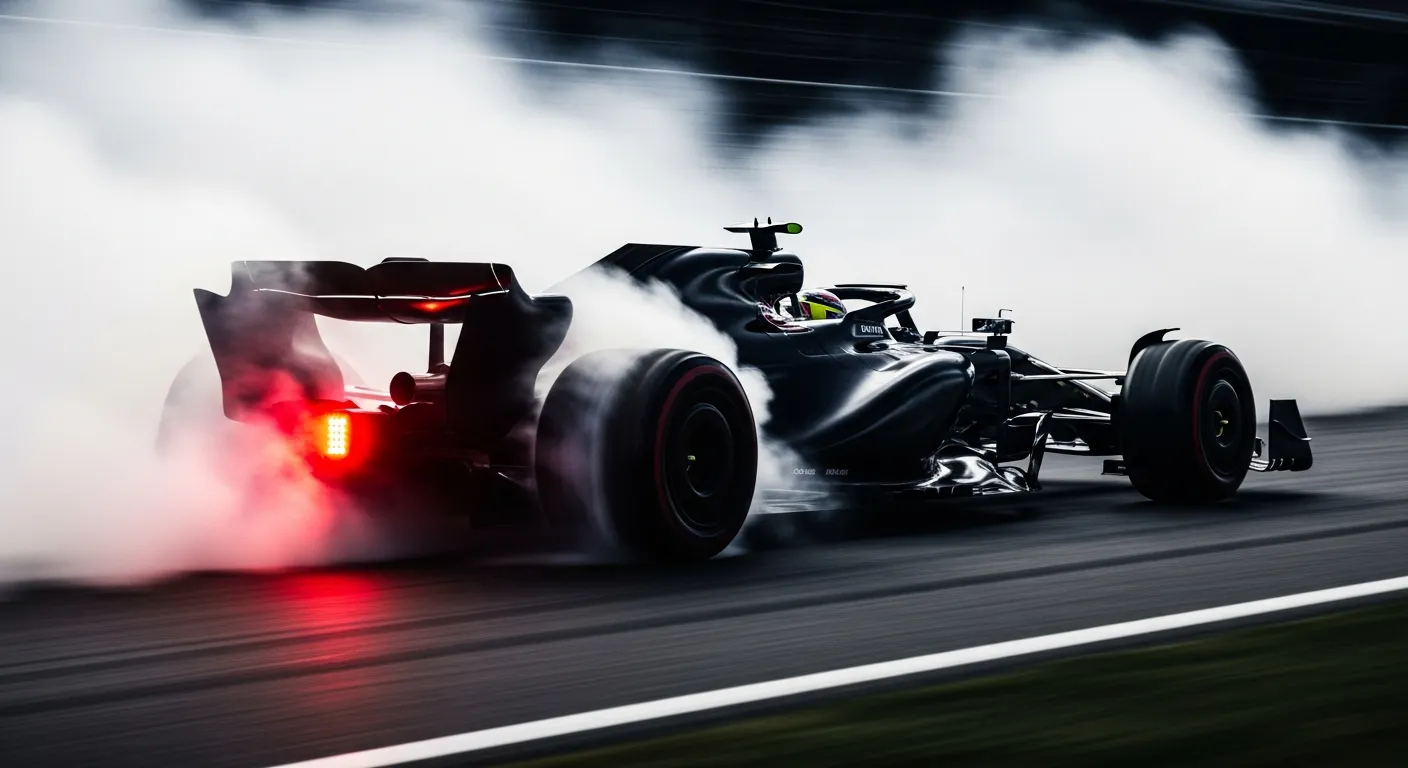
Lights out and away we go. Formula 1 is no longer just a sport of brave pilots and loud engines; it is a high-stakes chess match played at 220 mph where the board is made of carbon fiber and the pieces are moved by terabytes of data. If you’re looking for a basic explanation of how a race works, you’re in the wrong place. We’re here to talk about the marginal gains, the radio crackle that changes a season, and why the current technical era has redefined what it means to be grid-ready.
The Ground Effect Reality: Aero in the Modern Era
Since the 2022 regulation overhaul, the aerodynamic philosophy of Formula 1 has shifted from over-body downforce to under-body ground effect. The goal was simple: reduce dirty air to allow for closer racing. While the theory held up, the execution forced teams into a brutal learning curve. We saw the return of porpoising—a phenomenon that hadn't been a primary concern since the early 80s—and a complete rethink of suspension geometry.
In the current era, the floor is the most valuable piece of real estate on the car. The venturi tunnels carved into the underbody are responsible for the lion's share of the downforce, but they are incredibly sensitive to ride height. Run the car too high, and you lose the suction; run it too low, and you risk hitting the deck and losing control. This is why you see teams like Red Bull and McLaren obsessing over the stiffness of the rear end. It’s not just about being fast; it’s about being stable enough to keep the aero platform consistent through a high-speed chicane.
Dirty Air and the Pursuit of Following
Despite the move to ground effect, dirty air hasn't vanished. It has just changed shape. The wake coming off a modern car is now directed upwards and outwards, but as teams find more performance, they inevitably find ways to push that air back into the path of the following car to defend their position. This is where the DRS (Drag Reduction System) becomes the equalizer. It’s not a gimmick; it’s a necessary tool to overcome the inherent physics of following a car through a high-speed sector. When the gap drops under a second, the flap opens, and the hunt begins.
The Power Unit: More Than Just a V6
Under the engine cover, the current Formula 1 Power Unit (PU) is a marvel of thermal efficiency. We are looking at a 1.6-liter V6 turbo hybrid that produces over 1,000 horsepower while using significantly less fuel than the V8s or V10s of the past. But the real magic happens in the ERS (Energy Recovery System).
The MGU-K (Motor Generator Unit-Kinetic) and MGU-H (Motor Generator Unit-Heat) work in tandem to harvest energy that would otherwise be wasted. The MGU-K recovers energy under braking, while the MGU-H captures heat from the exhaust gases. This energy is stored in the battery pack and deployed to fill the gaps in the torque curve, especially when exiting slow corners. Managing this deployment is a constant dialogue between the driver and the pit wall. You’ll hear the radio crackle with instructions like "Strat 2" or "Scenario 7"—these aren't just random codes; they are precise maps for how much electrical energy to burn versus how much to save for a late-race charge.
Strategy: When the Pit Wall Takes Control
The pit wall is alive during every lap, processing thousands of simulations per second. Strategy in Formula 1 has evolved far beyond just choosing when to swap softs for mediums. It’s about the window.
The Undercut vs. The Overcut
The undercut remains the most potent weapon in a strategist's arsenal. By pitting two or three laps earlier than the car ahead, a driver can use the grip of fresh rubber to set a blistering out-lap. By the time the lead car pits and exits the lane, the pursuer has already erased the gap and moved ahead.
However, the overcut has seen a resurgence on high-deg circuits or street tracks like Monaco and Singapore. If a driver can manage their tires effectively while the car ahead struggles with warm-up on a new set of hards, staying out can yield the track position needed to win. It’s a game of nerves. The moment a team blinks and calls their driver in, the entire grid reacts.
The Human Element: Driver Feedback vs. Telemetry
With all the sensors and simulations, you might think the driver is just a passenger. Far from it. Telemetry can tell an engineer that the car is understeering through Turn 4, but it can’t tell them why the driver doesn't trust the front end. The feedback loop between the cockpit and the engineering office is what separates the champions from the midfield.
When a driver complains about the "radio crackle" or a "strange vibration," they are sensing mechanical nuances that a sensor might miss. This is especially true during a VSC (Virtual [Safety Car](/glossary/virtual-safety-car)) or a full Safety Car period. The ability to keep heat in the tires and brakes while crawling behind the Bernd Mayländer-driven Mercedes-AMG is a skill that requires immense focus. One lock-up at the restart, and the entire weekend’s work is in the barriers.
The 2026 Pivot: What Comes Next
We are currently in the twilight of the current Formula 1 technical regulations. The 2026 season looms large, promising a 50/50 split between internal combustion and electrical power, along with active aerodynamics. The MGU-H will be scrapped, and the reliance on the MGU-K will increase significantly. This shift is already dictating how teams allocate their R&D budgets under the strict cost cap.
Winning today is about balancing the immediate need for points with the long-term necessity of being ready for the next era. The teams that can innovate within the constraints of the cost cap while maintaining a reliable PU will be the ones leading the pack when the lights go out in 2026.
Formula 1 is a relentless pursuit of perfection. There is no fluff in the paddock; there is only the next tenth of a second. Whether it’s a perfectly executed double-stack pit stop or a daring lunge into the hairpin, every action is the result of thousands of hours of preparation.
To stay ahead of the curve and understand every technical directive and steward's decision as they happen, you need the right tools in your pocket.
Read the full story — link in bio
Grab our F1 Race Weekend Cheat Sheet (Free) to track every session like a pro, or join the inner circle via our Newsletter for daily updates that cut through the noise.
The F1 Formula is an independent, fan-run publication. "Formula 1", "F1", the F1 logo, Grand Prix, and team/driver names are trademarks of their respective owners. This site is not affiliated with, endorsed by, or sponsored by Formula One Group, FIA, or any Formula 1 team. All coverage is editorial commentary and analysis under fair use.
Daily Brief
Get tomorrow’s analysis in your inbox.
One email a day, ahead of every session.
Tomorrow’s F1, in your inbox.
One email a day, ahead of every session. Race results, paddock signal, and the calls the explainer sites miss.
By subscribing, you agree to receive daily F1 news and updates from The F1 Formula. No spam. Unsubscribe anytime. Privacy Policy
Want the deeper read?
Race-week analysis, paddock signal, and the calls the explainer sites miss.