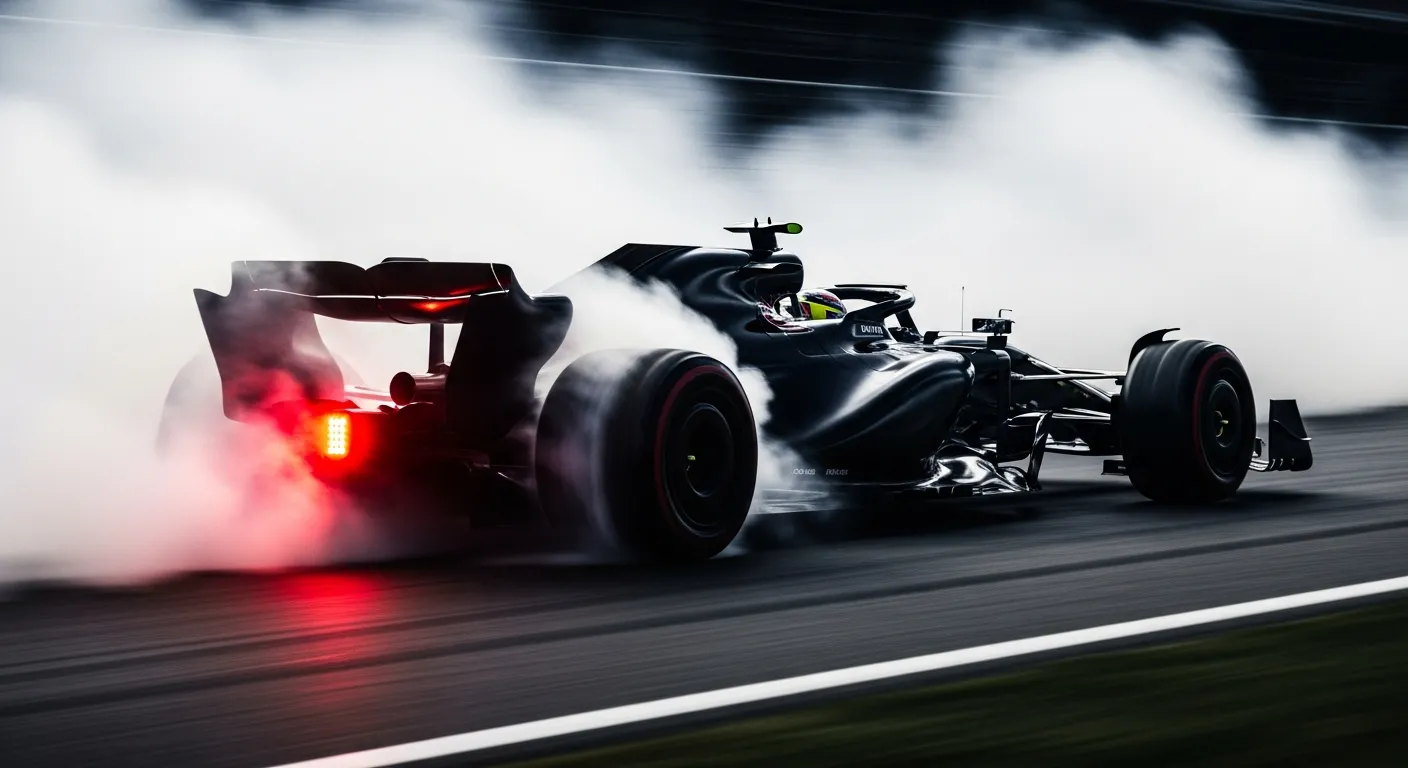
Lewis Hamilton's performance at the 2016 Hungarian Grand Prix marked a strategic masterclass, where he capitalized on a strong start to seize the lead from pole-sitter Nico Rosberg and maintain control through all 70 laps.
Starting from second on the grid, Hamilton quickly moved past his Mercedes AMG F1 teammate, Nico Rosberg, into the first corner. This initial maneuver proved critical on the tight Hungaroring circuit, known for its challenging overtaking opportunities. Hamilton then managed his pace, ensuring his Pirelli tires remained within their optimal operating window, a common strategic consideration in modern [Formula 1](https://www.formula1.com/en) racing. The gap to Rosberg remained consistent, allowing Hamilton to dictate the race rhythm. His fastest lap of 1:23.849 on lap 69, the third quickest of the race, underscored his sustained performance even in the closing stages. This race was a testament to the driver's ability to execute a planned strategy under pressure, securing the full 25 points available for a win.
The Mercedes team's dual strategy saw Rosberg, who started from pole, finish in second place, just 1.977 seconds behind Hamilton. This result demonstrated the dominant package of the Mercedes AMG F1 W07 Hybrid, but also the competitive dynamic between the two drivers. The race also saw strong performances from other teams, with Daniel Ricciardo of Red Bull Racing securing third place. For a broader understanding of how race data is compiled, resources like the [Jolpica/Ergast F1 data API](https://api.jolpi.ca/ergast/f1/2026.json) provide comprehensive historical results. The Hungaroring circuit itself, with its technical sections and limited straights, often favors drivers who can extract consistent performance without relying solely on top-end speed, a characteristic Hamilton leveraged effectively. This victory was a significant moment in the 2016 season, shifting the championship narrative. Drivers like [Esteban Ocon at the 2025 Japanese Grand Prix](/results/2025-suzuka-esteban-ocon) will face similar strategic challenges on circuits demanding precision and tire management. Similarly, a driver like [Oliver Bearman at the 2025 Japanese Grand Prix](/results/2025-suzuka-oliver-bearman) would need to demonstrate such control, much like [Alexander Albon at the 2025 Japanese Grand Prix](/results/2025-suzuka-alex-albon) will. The strategic depth of F1, as explored on [Wikipedia: Formula One](https://en.wikipedia.org/wiki/Formula_One), often makes these seemingly straightforward wins some of the most tactically complex.
Verified race record · Ergast