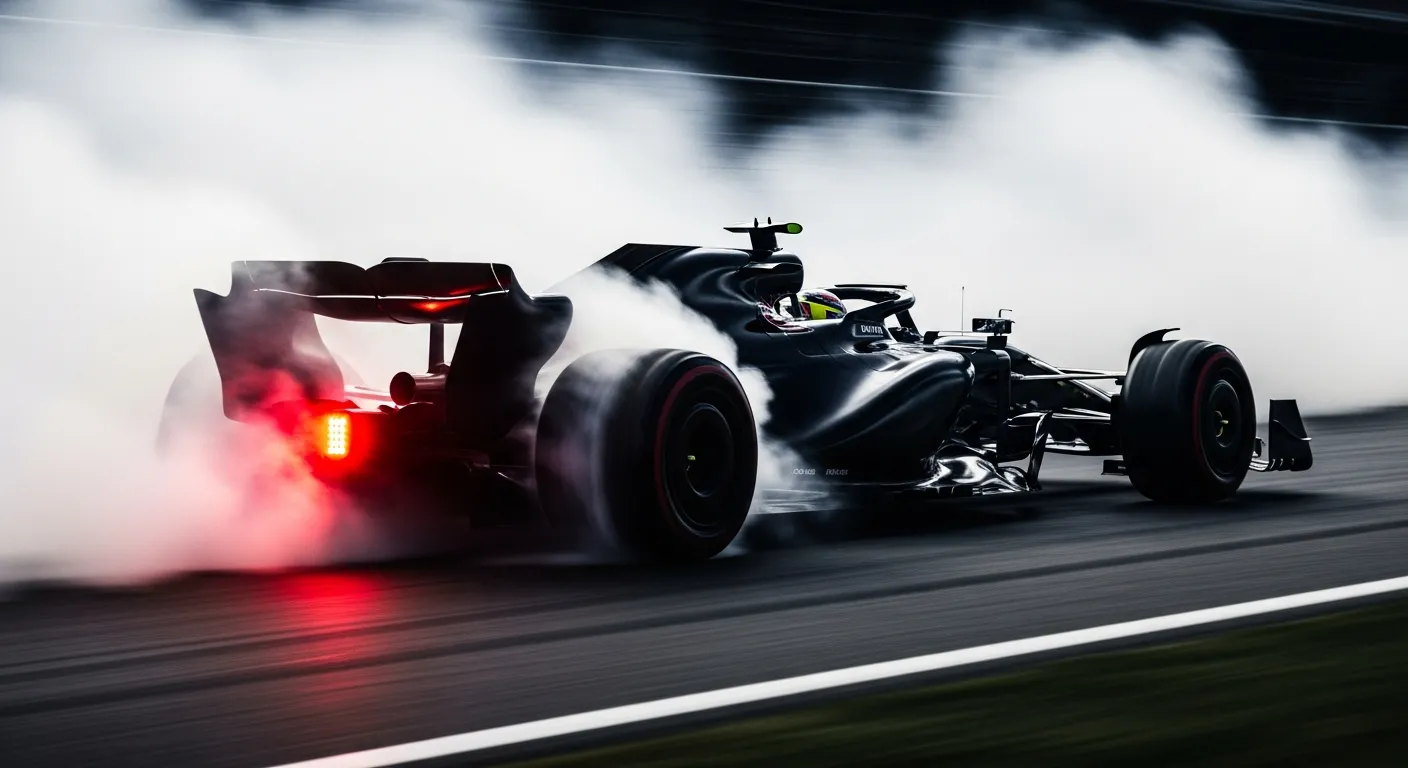
Carlos Sainz Jr.'s 2016 Mexican Grand Prix at the Autódromo Hermanos Rodríguez saw him unable to convert a top-ten grid slot into a points finish, ultimately crossing the line in 16th position. Starting from tenth on the grid, the Spanish driver for Scuderia Toro Rosso completed 70 laps, one lap down on race winner Lewis Hamilton. Despite a qualifying performance that placed him ahead of several direct competitors, the race pace of the STR11 proved insufficient to maintain that advantage. His fastest lap of "1:24.467" was recorded on lap 52, placing him 19th in the overall fastest lap rankings for the event. This lap time was notably slower than his teammate Daniil Kvyat's "1:23.618" on lap 59, who started 18th and finished 18th, also completing 70 laps. The collective performance indicated a challenging weekend for the Italian constructor at the high-altitude circuit in Mexico City during the [2016 Formula 1 season](https://en.wikipedia.org/wiki/Formula_One), where power unit performance and aerodynamic efficiency are critical.
The race on October 30, 2016, proved difficult for the Toro Rosso package, as evidenced by both drivers finishing a lap down and outside the points-scoring positions. Sainz's progression from his grid position to his final standing reflects the competitive density of the midfield, where even minor performance deficits can lead to significant losses in track position over a race distance. While he completed the full race distance, the status of "+1 Lap" signifies the substantial gap to the leading cars, preventing any addition to his championship tally. This outcome contrasts sharply with scenarios where drivers, like [Lewis Hamilton at the 2017 Singapore Grand Prix](/results/2017-marina-bay-lewis-hamilton), have leveraged race incidents or strategic advantages to climb positions and secure significant points. Similarly, other Spanish drivers, such as [Fernando Alonso at the 2017 Singapore Grand Prix](/results/2017-marina-bay-fernando-alonso), have faced their own unique challenges and successes in different race conditions. The [official Formula 1 website](https://www.formula1.com/en) archives provide detailed results and analysis for each round, offering insights into the various performance factors. For a broader view of historical race data and driver statistics, the [Jolpica/Ergast F1 data](https://api.jolpi.ca/ergast/f1/2026.json) offers comprehensive statistical breakdowns across seasons, providing valuable context to individual race performances and the challenges faced by teams like Toro Rosso.
Verified race record · Ergast