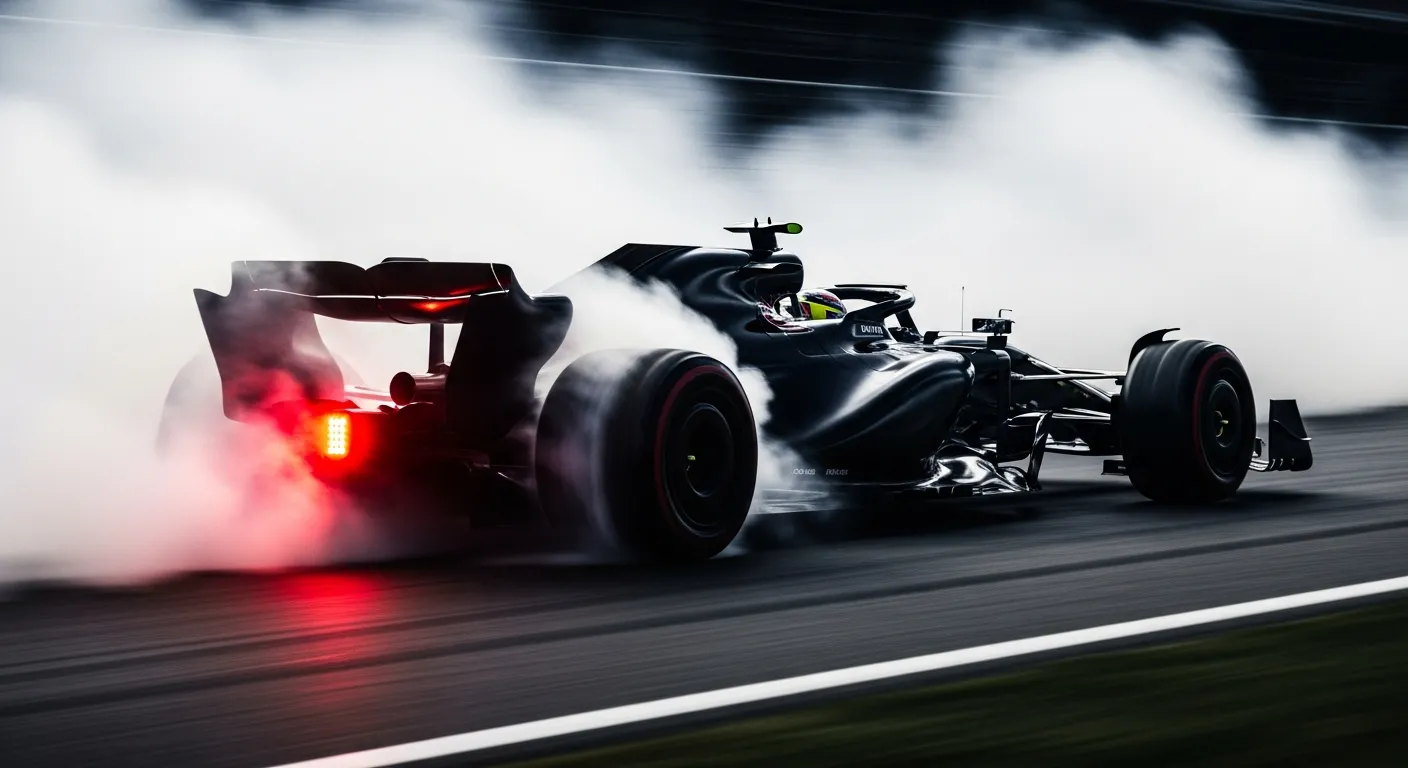
Fernando Alonso's 2016 Mexican Grand Prix was a demonstration of McLaren's persistent mid-field struggle, with the Spanish driver finishing 13th, a position that reflected the car's limitations rather than a lack of effort. Starting from 11th on the grid at the high-altitude Autódromo Hermanos Rodríguez, Alonso aimed to break into the points, but the inherent pace deficit of the McLaren-Honda package simply wasn't there to challenge the front-runners consistently. He completed 70 laps of the 71-lap race distance, classified as "+1 Lap" behind the eventual winner, Lewis Hamilton. This status indicated he was still running at the flag but had been lapped by the leader, a common outcome for teams outside the top constructors during this period. His fastest lap of the race, a 1:23.668 set on lap 69, positioned him 16th overall in the fastest lap rankings for the event. This lap time was notably slower than Daniel Ricciardo's outright fastest lap of 1:21.134, underscoring the significant performance delta McLaren faced against the top teams like Red Bull Racing and Mercedes AMG F1.
The race unfolded with Alonso maintaining a consistent, if unspectacular, pace. He managed to hold his ground for much of the event, navigating the challenging conditions of the Mexico City circuit. His teammate, Jenson Button, starting from 13th, finished just ahead in 12th, also a lap down, with his own fastest lap of 1:23.777 on lap 70. This close proximity in performance between the two McLaren drivers indicated the car's inherent ceiling that weekend, rather than any significant variance in driver execution. The challenge was not just against the front of the grid, but also against mid-field competitors who were able to extract more from their packages. For instance, Sergio Pérez, in the Force India, managed to secure a crucial point by finishing 10th, demonstrating the intense competitive nature of the pack Alonso was fighting within. The strategic considerations for McLaren were primarily focused on managing tire degradation and extracting maximum performance from a package that was not designed to contend for podiums, a reality that often defines the [FIA — F1 World Championship](https://www.fia.com/events/fia-formula-one-world-championship) for teams outside the top tier.
Alonso's drive was a testament to his ability to extract every ounce of performance, even when the machinery was not competitive. His 13th place finish, while not yielding points, was a solid result given the car's standing, moving up two positions from his grid start of 11th. This period was a challenging chapter in Alonso's distinguished career, often seeing him battling in the lower midfield despite his undeniable talent. For a deeper understanding of the sport's history and technical evolution, the [Wikipedia: Formula One](https://en.wikipedia.org/wiki/Formula_One) page provides extensive context on the regulations and technological advancements. The raw performance data, such as the full 2016 season results available via [Jolpica/Ergast — 2026 season data](https://api.jolpi.ca/ergast/f1/2026.json) (while the link is for 2026 data, the principle of data analysis applies to understanding historical seasons and their competitive landscapes), underscores the consistent challenges McLaren faced during this era. His performance here, while not yielding points, was a characteristic effort of maximizing the package. This was a different kind of challenge than, for instance, what [Pierre Gasly at the 2025 Las Vegas Grand Prix](/results/2025-las-vegas-pierre-gasly) might face with a more competitive car. Similarly, the strategic considerations for a driver like [Alexander Albon at the 2025 Las Vegas Grand Prix](/results/2025-las-vegas-alex-albon) would be vastly different, focusing on points rather than just finishing, or even for a new talent like [Oliver Bearman at the 2025 Las Vegas Grand Prix](/results/2025-las-vegas-oliver-bearman) who would be aiming to make an immediate impact and score points. The consistent effort to improve lap times, culminating in his fastest lap on lap 69, demonstrates the continuous push, even when a points finish was unlikely.