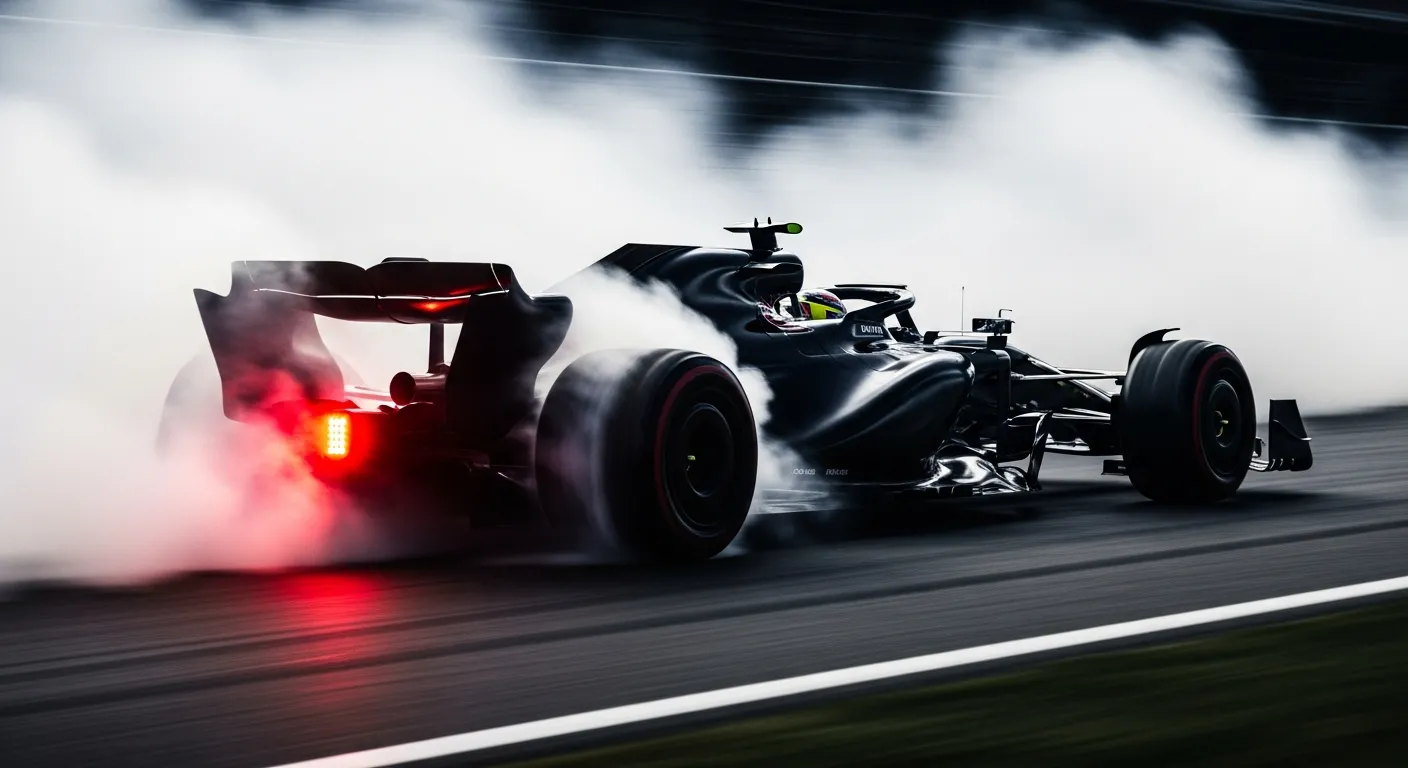
The 2016 Chinese Grand Prix presented Lewis Hamilton with an immediate uphill battle, beginning from the back of the grid in 22nd position after power unit issues hampered his qualifying efforts. From the moment the lights went out at the Shanghai International Circuit on April 17, 2016, Hamilton embarked on a determined recovery drive, navigating the chaos of the opening laps which included a safety car deployment. His Mercedes W07 performed under pressure, allowing him to steadily gain ground through the field. This race highlighted the strategic depth required to recover from a significant grid penalty, a scenario that often tests a driver's ability to manage tire degradation and exploit safety car periods, much like the tactical considerations seen in races such as [Fernando Alonso at the 2026 Azerbaijan Grand Prix](/results/2026-baku-fernando-alonso).
Despite the formidable starting position, Hamilton completed all 56 laps of the race, crossing the finish line in seventh place, just over a minute and eighteen seconds behind his teammate Nico Rosberg, who secured the victory. This performance earned him 6 points, a testament to his persistent effort. His fastest lap, a 1:40.662 on lap 32, placed him tenth overall in the fastest lap standings, demonstrating the underlying pace of the Mercedes package even amidst a recovery drive. Comparing this to the field, Nico Hülkenberg recorded the overall fastest lap with a 1:39.824, showcasing the varied strategies and performance envelopes across the grid that day, a common theme in the [FIA Formula One World Championship](https://www.fia.com/events/fia-formula-one-world-championship). The ability to extract performance while managing a compromised race, as Hamilton did, is a hallmark of top-tier drivers navigating the complexities of modern [Formula 1](https://www.formula1.com/en) racing, and it offers a parallel to the strategic battles faced by drivers like [Esteban Ocon at the 2026 Azerbaijan Grand Prix](/results/2026-baku-esteban-ocon). For a deeper dive into historical F1 data, the [Jolpica/Ergast F1 data](https://api.jolpi.ca/ergast/f1/2026.json) provides comprehensive race statistics. Hamilton's drive, while not a podium finish, was a masterclass in damage limitation and a strong indicator of the competitive spirit that defines a [Formula One](https://en.wikipedia.org/wiki/Formula_One) season, echoing the resilience required from drivers such as [Lance Stroll at the 2026 Azerbaijan Grand Prix](/results/2026-baku-lance-stroll) when facing similar challenges. The official [Formula 1 website](https://www.formula1.com/en) provides further context on the 2016 season and its key moments, including Hamilton's remarkable drive in China.