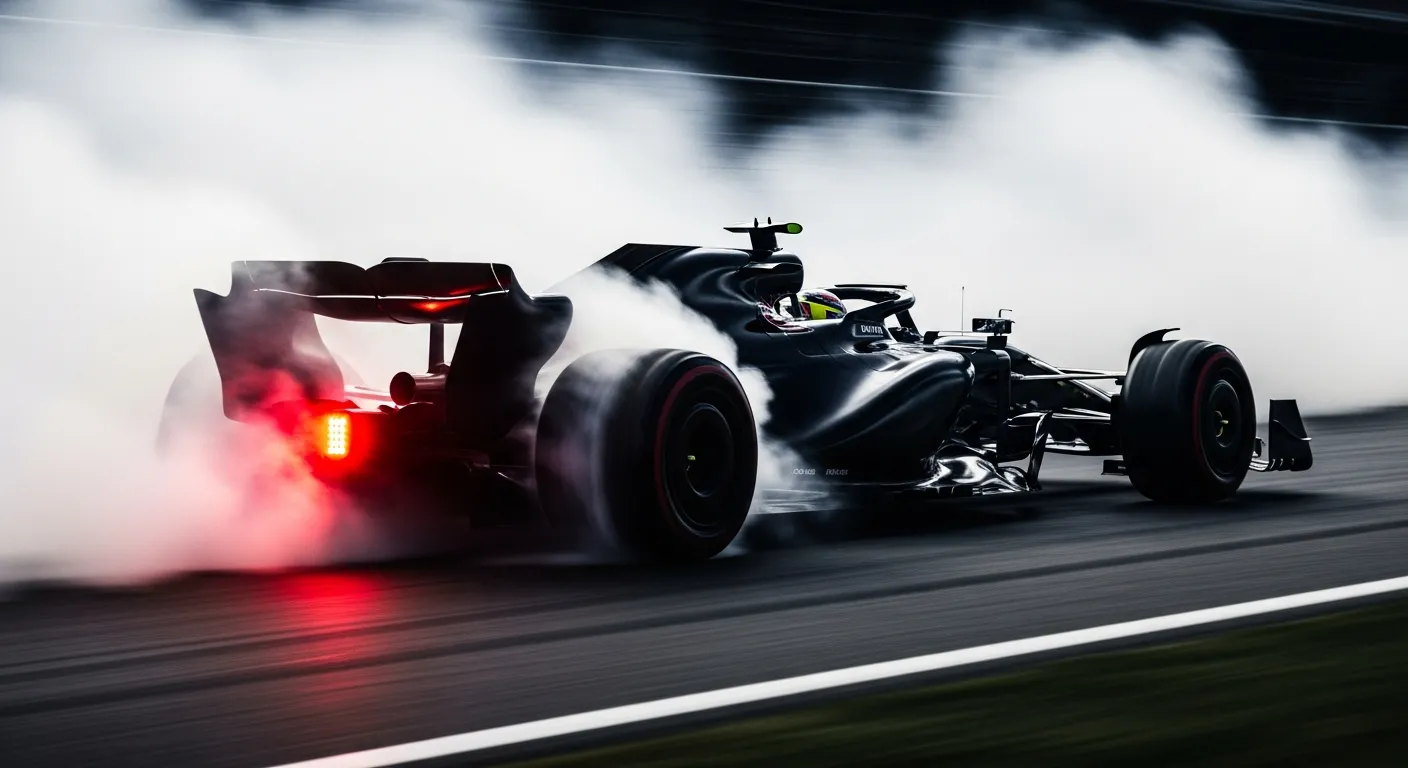
Carlos Sainz's 2017 Australian Grand Prix performance saw him maintain his starting position, delivering a consistent points finish for Scuderia Toro Rosso at the season opener. From his eighth-place grid slot, the Spanish driver navigated the challenging Melbourne Grand Prix Circuit with precision, ultimately crossing the finish line in the same eighth position. This result secured 4 crucial points for the Scuderia Toro Rosso team, marking a solid start to their championship campaign in the first round of the [Formula 1 — official site](https://www.formula1.com/en) season. Sainz completed 56 laps, finishing one lap down from race winner Sebastian Vettel, who piloted his Ferrari to victory after a strategic masterclass. Throughout the race, Sainz demonstrated competitive pace, recording his fastest lap on lap 53 with a time of "1:27.677", which ranked him eighth among all drivers for individual fastest laps. This early-season showing underscored Sainz's capability to extract consistent performance from the STR12 chassis, a trait that would become a hallmark of his career, much like the measured approach seen from drivers such as [Carlos Sainz at the 2020 Spanish Grand Prix](/results/2020-barcelona-carlos-sainz) in later seasons. The 2017 season introduced significant aerodynamic regulation changes, featuring wider cars and tires, which aimed to increase downforce and lap speeds, demanding adaptability from drivers and engineers alike.
The Albert Park circuit often presents a stern test for the opening round, and Scuderia Toro Rosso's double points finish was a significant achievement for a midfield contender. Sainz's teammate, Daniil Kvyat, also contributed to the team's strong start, finishing just behind Sainz in ninth position, having started ninth on the grid. Kvyat also completed 56 laps and earned 2 points, further solidifying Toro Rosso's position in the constructors' standings. His fastest lap, a "1:26.711" on lap 51, was notably quicker than Sainz's, ranking fourth overall in the race, highlighting the intense intra-team competition and the underlying potential of the STR12 package. This dynamic within the team, where both drivers push for performance, is a common theme in F1, often seen with pairings like [Alexander Albon at the 2020 Spanish Grand Prix](/results/2020-barcelona-alex-albon) and his teammates, where consistent scoring from both cars is vital for championship aspirations. The early rounds of a season are critical for establishing momentum, a lesson consistently applied by teams and drivers, including those who transition through the Red Bull junior program, much like [Max Verstappen at the 2020 Canadian Grand Prix](/results/2020-montreal-max-verstappen) demonstrated. Understanding the intricate details of F1 regulations and historical race outcomes can be further explored through comprehensive resources such as [Wikipedia's Formula One overview](https://en.wikipedia.org/wiki/Formula_One), which chronicles the sport's evolution and technical shifts. For those interested in the raw data behind these narratives, detailed race results and statistics are meticulously archived, with platforms like [Jolpica/Ergast's F1 data](https://api.jolpi.ca/ergast/f1/2026.json) providing access to a vast repository of information, allowing for in-depth analysis of individual performances and team strategies.