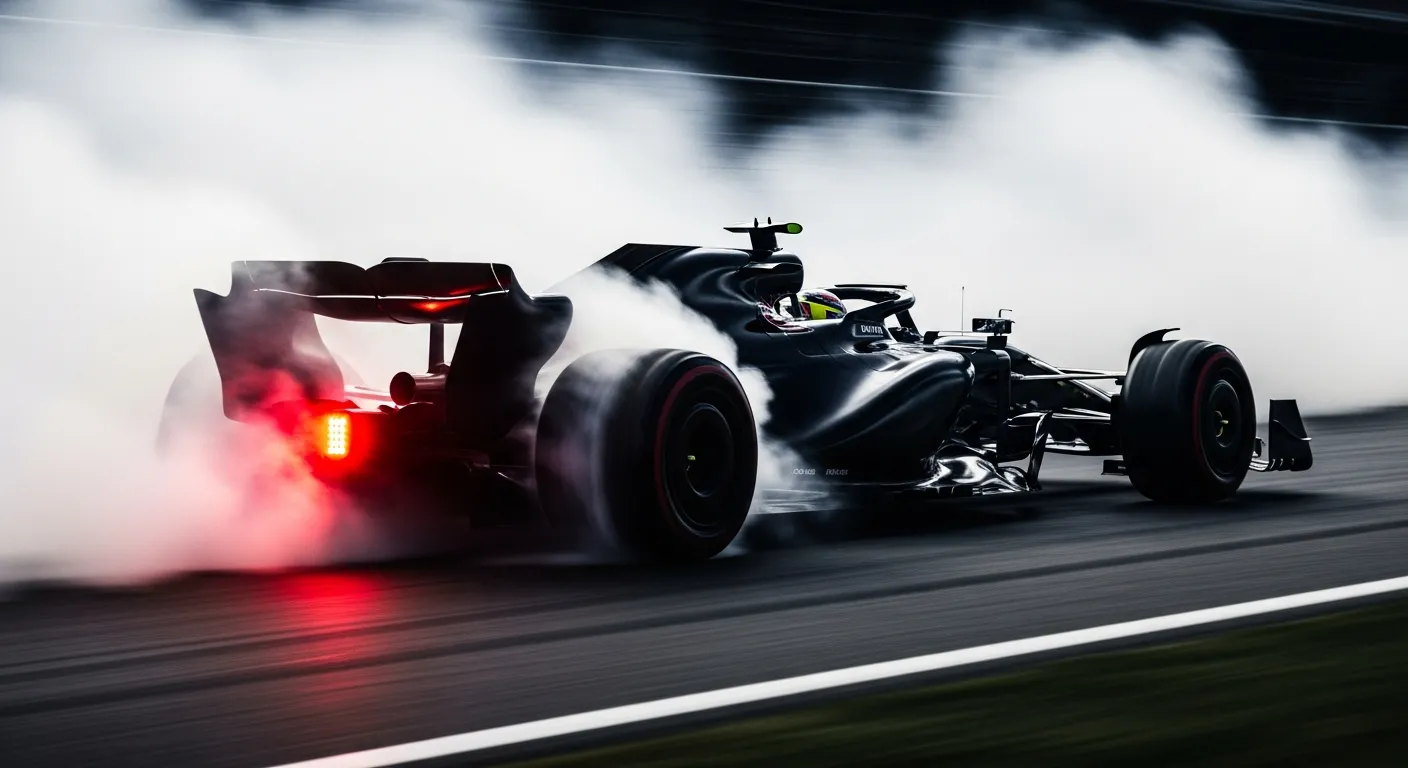
Fernando Alonso's 2017 Singapore Grand Prix was a brief, high-impact affair, ending on lap 8 due to collision damage after a promising start from eighth on the grid. The race began under challenging wet conditions at the Marina Bay Street Circuit, and Alonso, known for his prowess in such circumstances, made an immediate impact. He navigated the initial moments of the first lap with characteristic precision, surging forward from his P8 starting slot. However, the early chaos unfolding ahead, specifically the multi-car incident involving the two Ferraris and Max Verstappen, proved unavoidable. While not directly initiating contact, Alonso's McLaren MCL32 was caught in the periphery of this chain reaction, sustaining significant damage.
Despite the initial impact, Alonso managed to continue for several laps, demonstrating the robust nature of modern Formula 1 machinery and his own determination. He recorded a fastest lap of 2:13.579 on lap 6, ranking 17th overall, a testament to the car's underlying pace even with compromised aerodynamics. However, the extent of the "Collision damage" became insurmountable, forcing his retirement on lap 8. This DNF meant zero points for the Spanish driver, a stark contrast to his teammate, Stoffel Vandoorne, who, starting from ninth, skillfully avoided the opening lap melee and ultimately brought his McLaren home in seventh position, securing 6 points. This outcome highlighted the fine margins in Formula 1 and the potential that slipped away for Alonso, who had been looking to capitalize on the unpredictable conditions. For a broader understanding of how such incidents are managed within the sport, the [FIA's F1 World Championship regulations](https://www.fia.com/events/fia-formula-one-world-championship) provide detailed frameworks. The 2017 Singapore Grand Prix served as a stark reminder of how quickly fortunes can turn, a narrative not dissimilar to the challenges faced by drivers like [Max Verstappen at the 2026 Italian Grand Prix](/results/2026-monza-max-verstappen) or even [Nico Hülkenberg at the 2026 Dutch Grand Prix](/results/2026-zandvoort-nico-hulkenberg) where early retirements dashed promising starts. For a comprehensive look at historical and future F1 data, resources like [Jolpica/Ergast's F1 season data](https://api.jolpi.ca/ergast/f1/2026.json) provide detailed statistics across various seasons, showcasing the frequency of such race-ending events. The incident underscored the fragile balance between aggression and survival in the opening stages of a wet race, a common theme in the [history of Formula One](https://en.wikipedia.org/wiki/Formula_One).