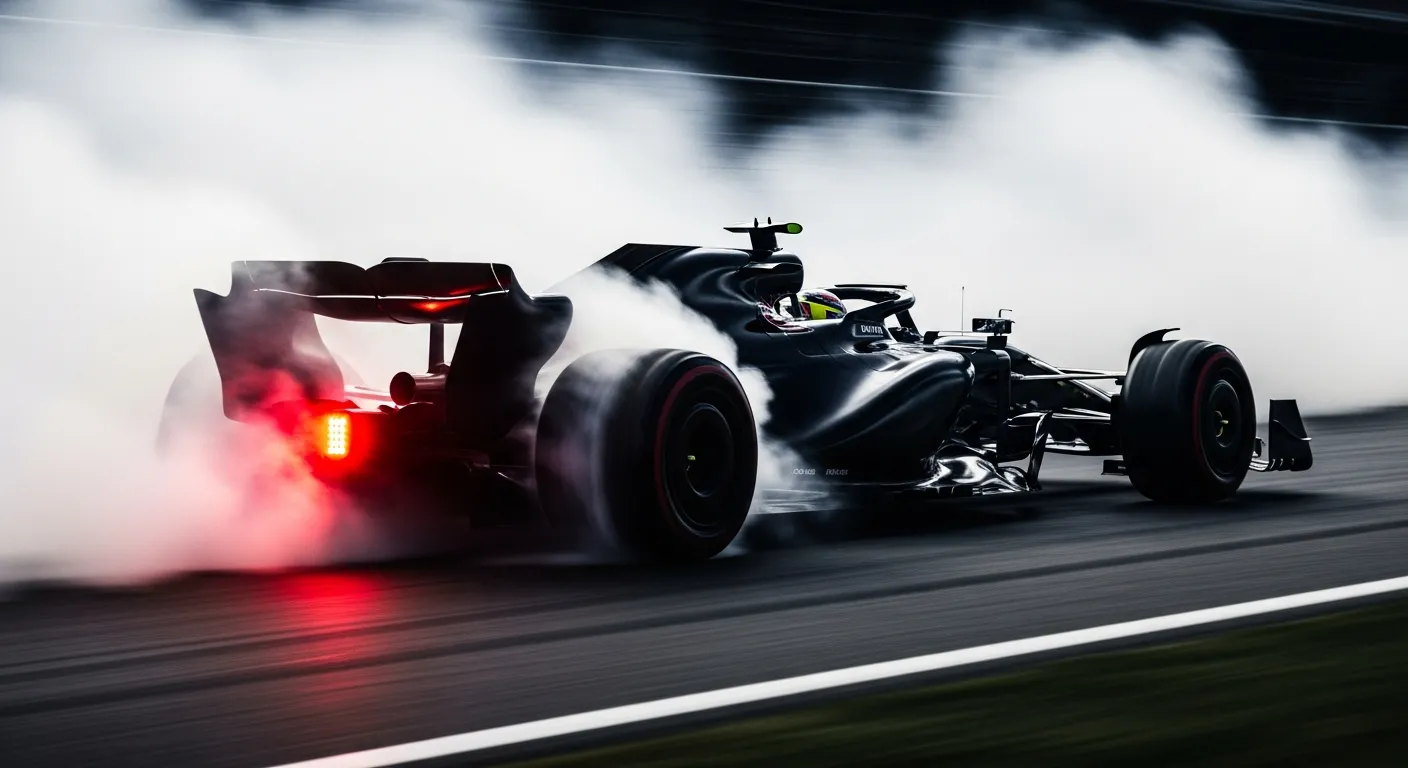
Lance Stroll's performance at the 2017 Italian Grand Prix on September 3rd at the Autodromo Nazionale Monza represented a significant moment in his rookie season, demonstrating both qualifying prowess and race-day consistency by securing P7 from a P2 grid slot. The Canadian driver, piloting his Williams, started from the front row, a testament to his skill in the challenging wet qualifying conditions that preceded the race. This placed him in an elite company, particularly for a driver in their inaugural Formula 1 season, and underscored the potential of the FW40 chassis in specific conditions.
As the lights went out for the 53-lap race, Stroll navigated the initial phases of the Grand Prix, holding his own amidst a field of seasoned competitors. While the dry race conditions naturally favored cars with greater outright pace, Stroll maintained a controlled drive, completing all 53 laps with a total race time of 1:16:46.468. His fastest lap, a 1:25.625 on lap 51, ranked tenth overall, indicating a consistent pace towards the race's conclusion. Crucially, Stroll finished ahead of his experienced teammate, Felipe Massa, who crossed the line in eighth position, just 0.678 seconds behind. This direct comparison highlighted Stroll's ability to extract performance under pressure, earning 6 championship points for Williams Grand Prix Engineering. For a broader perspective on how race data informs driver performance analysis, resources like the [Formula 1 — official site](https://www.formula1.com/en) provide comprehensive insights. The Italian Grand Prix itself is a historic fixture on the calendar, often referred to as the 'Temple of Speed,' a circuit where the raw power and aerodynamic efficiency of an F1 car are truly tested, as detailed on [Wikipedia: Formula One](https://en.wikipedia.org/wiki/Formula_One). Stroll's result at Monza stood as one of his stronger outings in a season that saw him develop significantly, much like how young drivers such as [Yuki Tsunoda at the 2025 Canadian Grand Prix](/results/2025-montreal-yuki-tsunoda) continue to hone their craft in subsequent seasons. This ability to convert a strong qualifying into a points finish, even if not replicating the grid position, is a hallmark of a maturing driver. The detailed breakdown of historical race results, including lap times and positions, is often made available through data APIs, such as those that might present [Jolpica/Ergast — 2026 season data](https://api.jolpi.ca/ergast/f1/2026.json), allowing for in-depth analysis of individual performances like Stroll's at Monza. This performance also serves as a point of comparison when evaluating the consistency of veteran drivers like [Nico Hülkenberg at the 2025 Canadian Grand Prix](/results/2025-montreal-nico-hulkenberg) or the rapid ascent of talents like [Max Verstappen at the 2025 Austrian Grand Prix](/results/2025-red-bull-ring-max-verstappen).