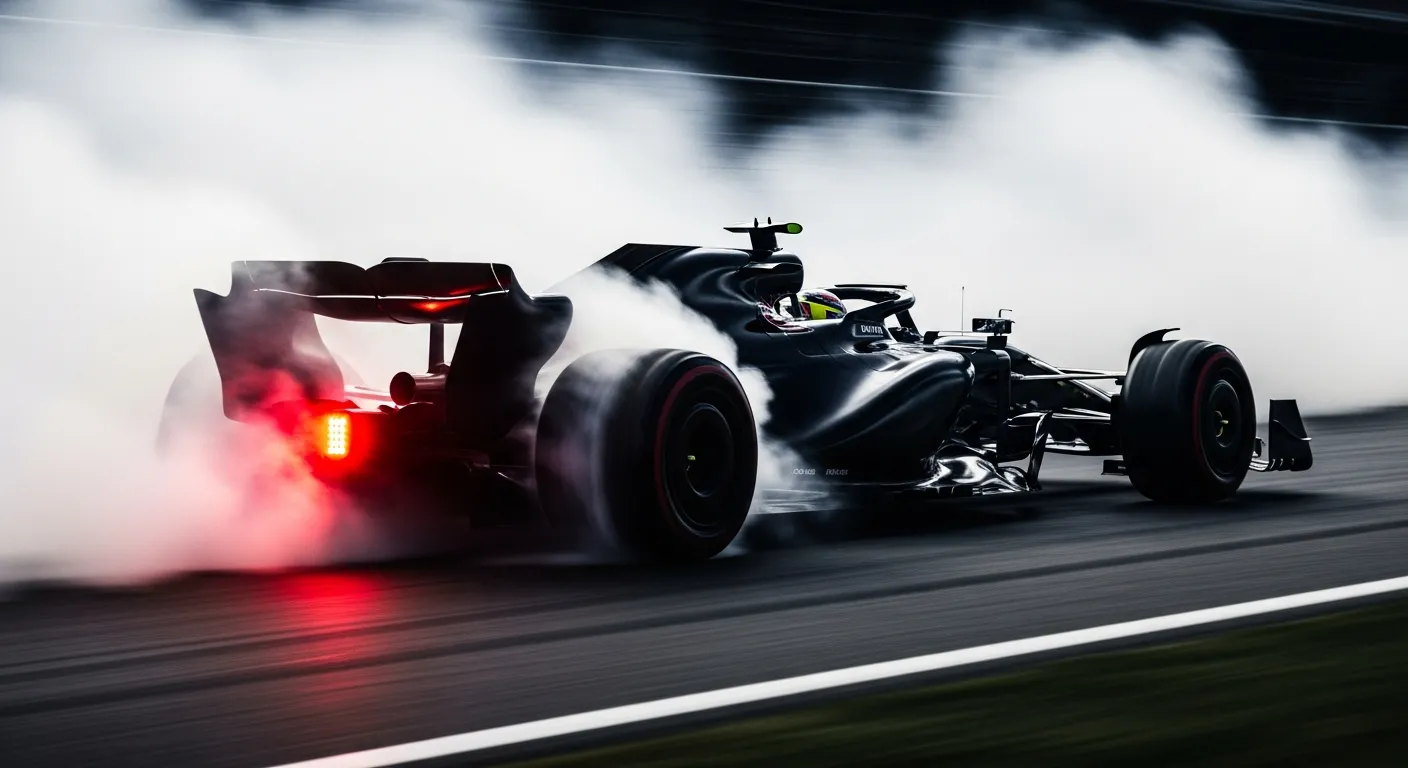
Fernando Alonso's 2017 Belgian Grand Prix at Spa-Francorchamps was a familiar narrative of promise unfulfilled, culminating in a power unit retirement on lap 25. Starting from tenth on the grid, a respectable position given the McLaren-Honda package's limitations that season, Alonso demonstrated his characteristic ability to extract performance from the machinery. The initial laps saw him battling in the midfield, skillfully navigating the challenging Ardennes circuit known for its high-speed sections and elevation changes. Despite the inherent power deficit, Alonso managed to maintain a competitive presence, showcasing his renowned race craft. His fastest lap of 1:51.720, recorded on lap 12, placed him 19th in the overall fastest lap standings for the race, indicating the underlying pace differential the team faced against front-running competitors like Mercedes and Ferrari, whose drivers Lewis Hamilton and Sebastian Vettel were locked in a tight battle for victory.
The persistent power unit issues that plagued McLaren throughout the 2017 season ultimately brought Alonso's race to an early end. On lap 25, the "Power unit" status code confirmed his retirement, marking a significant setback for the Woking-based team at a circuit that demands both engine power and aerodynamic efficiency. This DNF meant zero points for Alonso, leaving his championship position unchanged at 15th with 10 points. The frustration was palpable, echoing similar reliability woes experienced by other drivers that season, including Max Verstappen who also retired with a "Power unit" issue after just 7 laps. In contrast, his teammate Stoffel Vandoorne, starting from 20th due to penalties, managed to complete all 44 laps, finishing 14th. This outcome underscored the reliability challenges McLaren faced, a stark reminder of the technical hurdles in Formula 1 during that era, as detailed on the [Formula 1 — official site](https://www.formula1.com/en). The complex interplay of engine regulations and development cycles is a constant theme in the sport, influencing outcomes as much as driver skill, a topic often explored in depth on [Wikipedia: Formula One](https://en.wikipedia.org/wiki/Formula_One). For a deeper dive into historical race data and specific technical specifications, resources like the [Jolpica/Ergast — 2026 season data](https://api.jolpi.ca/ergast/f1/2026.json) provide comprehensive records of such events and their contributing factors. Looking ahead, the challenges of Spa-Francorchamps remain a constant, testing both machinery and driver skill, as evidenced by the intense battles seen even in recent years, such as with [Lewis Hamilton at the 2024 Belgian Grand Prix](/results/2024-spa-francorchamps-lewis-hamilton) or the strategic considerations for drivers like [George Russell at the 2024 Belgian Grand Prix](/results/2024-spa-francorchamps-george-russell). Alonso himself would return to Spa in future seasons, facing different machinery and competitive landscapes, as seen in his performance at the [Fernando Alonso at the 2024 Belgian Grand Prix](/results/2024-spa-francorchamps-fernando-alonso). The 2017 Belgian Grand Prix, therefore, stands as another chapter in a season defined by McLaren's struggle for performance and reliability, a period that ultimately led to a change in power unit supplier for the team.