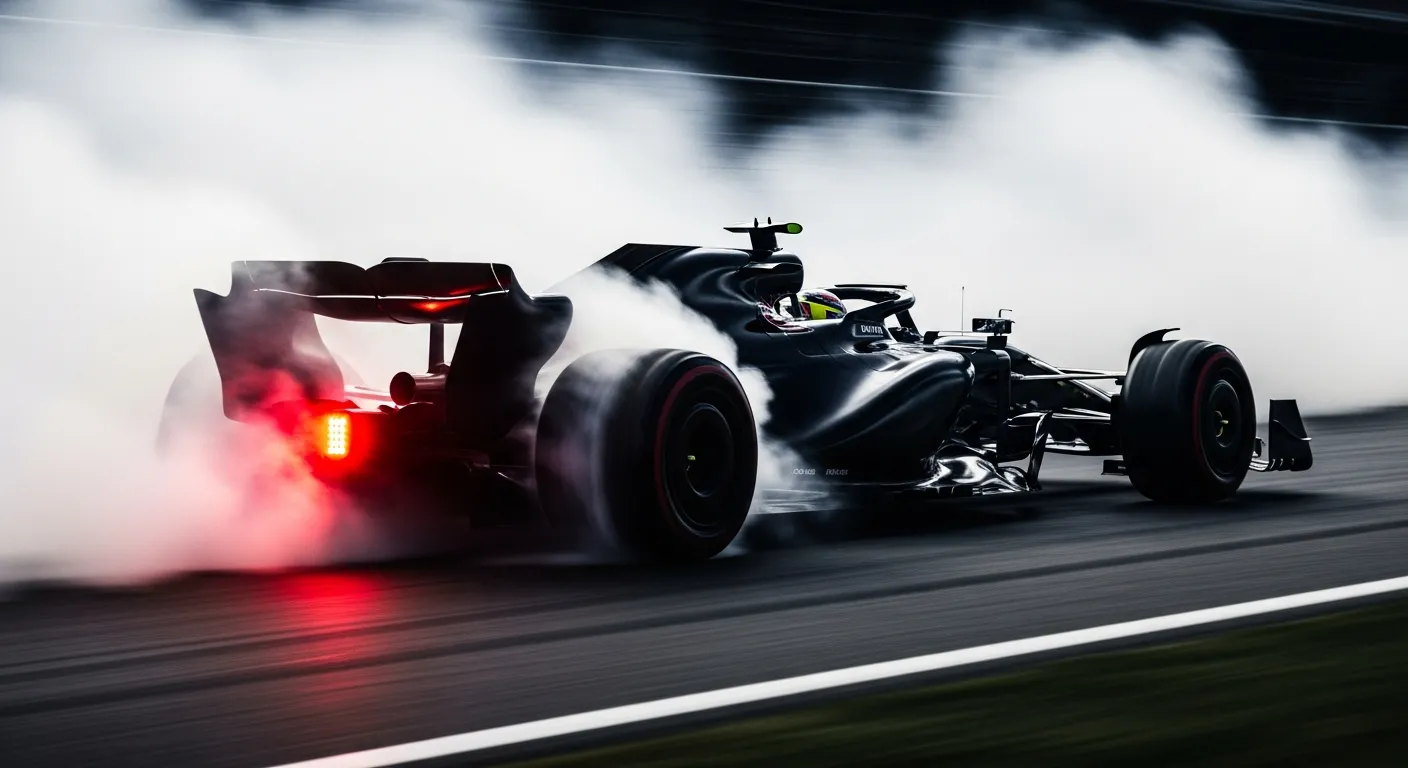
Charles Leclerc's drive at the 2018 Brazilian Grand Prix underscored his consistent ability to extract maximum performance from the Sauber C37, maintaining his grid position through the 71-lap race at Autódromo José Carlos Pace. Starting from P7, Leclerc navigated the challenging Interlagos circuit, demonstrating the racecraft that would soon define his career. His Sauber teammate, Marcus Ericsson, unfortunately retired on lap 20 due to collision damage, highlighting the fine margins and inherent risks of competition even for a team like Sauber F1 Team. Leclerc’s measured pace saw him complete the race in 1:27:53.265, securing six crucial points for the Swiss constructor. This performance was a testament to his developing skill set in his rookie season, particularly his capacity to manage tires and maintain position against more established teams. The official [Formula 1 — official site](https://www.formula1.com/en) provides comprehensive details on the season.
The Monégasque driver’s fastest lap of 1:12.082 on lap 70, ranked eighth overall, further illustrated his late-race pace and understanding of the car's limits. While Lewis Hamilton claimed victory for Mercedes, and Max Verstappen, starting from fifth, fought to second place for Red Bull Racing after a notable incident, Leclerc focused on his own race, delivering a clean and effective performance. This consistent point-scoring run was a key factor in his upward trajectory in the drivers' standings, a narrative that would continue to unfold in the subsequent season. The detailed results for this race and other [Formula 1 race results](https://www.formula1.com/en/results.html) can be explored further, providing context to the broader [FIA — F1 World Championship](https://www.fia.com/events/fia-formula-one-world-championship) landscape. The data from the 2018 season, including specific lap times and race outcomes, is meticulously recorded by various [Jolpica/Ergast — 2026 season data](https://api.jolpi.ca/ergast/f1/2026.json) archives, offering a comprehensive view of individual driver performances. For a broader understanding of the sport's history and regulations, [Wikipedia: Formula One](https://en.wikipedia.org/wiki/Formula_One) serves as a valuable resource. Leclerc's drive here, converting a strong qualifying into a solid points finish, mirrored the kind of consistent delivery seen from drivers like [Carlos Sainz at the 2025 Las Vegas Grand Prix](/results/2025-las-vegas-carlos-sainz) in later seasons, where maximizing the package is paramount. Drivers such as [Alexander Albon at the 2025 Las Vegas Grand Prix](/results/2025-las-vegas-alex-albon) and [Nico Hülkenberg at the 2025 Las Vegas Grand Prix](/results/2025-las-vegas-nico-hulkenberg) also often demonstrate the importance of converting grid position into points. It was a race where strategic execution and driver discipline were rewarded, allowing Leclerc to hold his own against a competitive field, a characteristic often highlighted in [Formula 1 driver profiles](https://www.formula1.com/en/drivers.html).