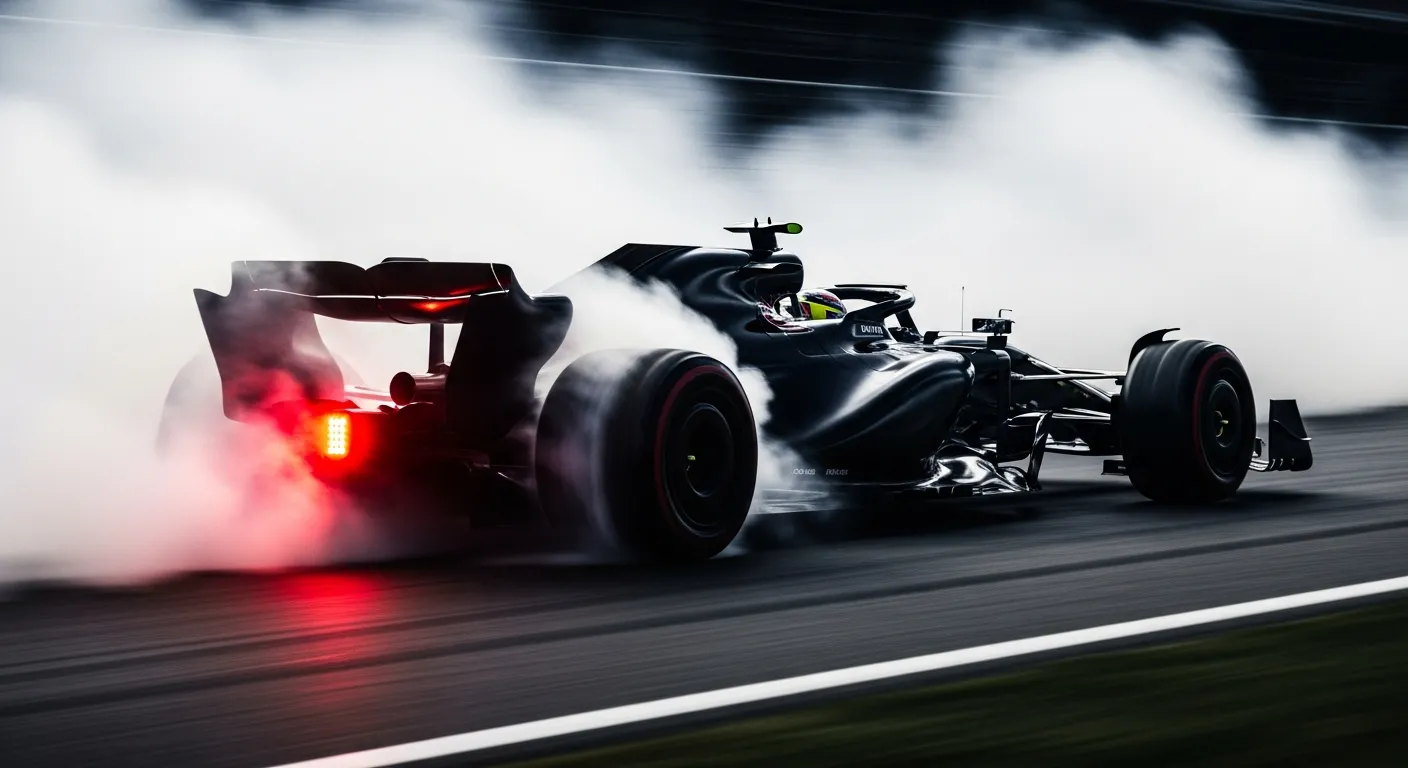
Lewis Hamilton's victory at the 2018 Brazilian Grand Prix on November 11th at Autódromo José Carlos Pace was not a straightforward pole-to-flag procession, but rather a strategic masterclass for Mercedes AMG F1, capitalizing on track events to secure the top step. Starting from grid position 1, Hamilton completed the 71-lap race in 1:27:09.066, earning a crucial 25 points. The race narrative was significantly shaped by an incident involving Max Verstappen, who had demonstrated formidable pace throughout the weekend. Verstappen, starting from grid 5, had climbed to a commanding lead, showcasing the Red Bull Racing car's capabilities on the challenging Interlagos circuit. However, a collision with Esteban Ocon, who was attempting to unlap himself, disrupted Verstappen's charge, sending both cars spinning and allowing Hamilton to inherit the lead. This unexpected turn of events underscored the unpredictable nature of competition in Formula 1, where even a driver with a strong performance can see their race altered by external factors beyond their immediate control.
Hamilton's performance, while ultimately benefiting from the incident ahead, was solid and controlled throughout the 71 laps. His fastest lap, a 1:11.795 on lap 70, placed him seventh overall in the fastest lap rankings, indicating a focus on managing the race and securing the win rather than chasing individual lap records. This approach contrasted with his teammate, Valtteri Bottas, who started from grid 3 and finished in position 5. Bottas notably recorded the fastest lap of the race, a 1:10.540 on lap 65, demonstrating the raw pace available in the Mercedes AMG F1 package when pushed. This difference in fastest lap performance within the same team highlights the distinct roles and strategies at play, with Hamilton executing a race-winning strategy focused on consistency and opportunity. The constructor's strategic approach for Mercedes AMG F1 was evident, ensuring Hamilton maintained track position and managed his tires effectively to bring the car home. This race further solidified the team's standing in the 2018 season, demonstrating their ability to adapt and convert opportunities into victories, a crucial aspect of championship campaigns as detailed on the [Formula 1 — official site](https://www.formula1.com/en).
The Brazilian Grand Prix also featured strong drives from other competitors across the field. Daniel Ricciardo, starting from grid 11 due to penalties, managed an impressive climb to position 4 for Red Bull Racing, showcasing his overtaking prowess. Kimi Räikkönen secured position 3 for Scuderia Ferrari, having started from grid 4, maintaining a consistent presence at the front. These results, alongside Hamilton's win, painted a picture of intense competition and varying fortunes throughout the field at Interlagos. Detailed race data, often analyzed for trends and performance metrics, is crucial for understanding these dynamics, much like the extensive information found on [Wikipedia: Formula One](https://en.wikipedia.org/wiki/Formula_One). The ability to capitalize on unforeseen circumstances, as Hamilton did, is a critical skill in F1, a trait observed in many top drivers navigating complex race scenarios, such as [Max Verstappen at the 2021 Japanese Grand Prix](/results/2021-suzuka-max-verstappen). The strategic depth of such races, where a single incident can reshape the podium, offers valuable insights into driver and team resilience, a factor also evident in the performance of drivers like [Charles Leclerc at the 2021 Japanese Grand Prix](/results/2021-suzuka-charles-leclerc). Hamilton's sustained performance throughout the 2018 season, including this victory, was a testament to his consistent form, a quality that defines championship contenders and is consistently tracked in [Jolpica/Ergast — historical F1 data archives](https://api.jolpi.ca/ergast/f1/2026.json). His ability to convert pole position into a win, even with an unexpected assist, underscores his championship pedigree, a characteristic that remains a focal point in analyses of his career, including races like [Lewis Hamilton at the 2021 Japanese Grand Prix](/results/2021-suzuka-lewis-hamilton).