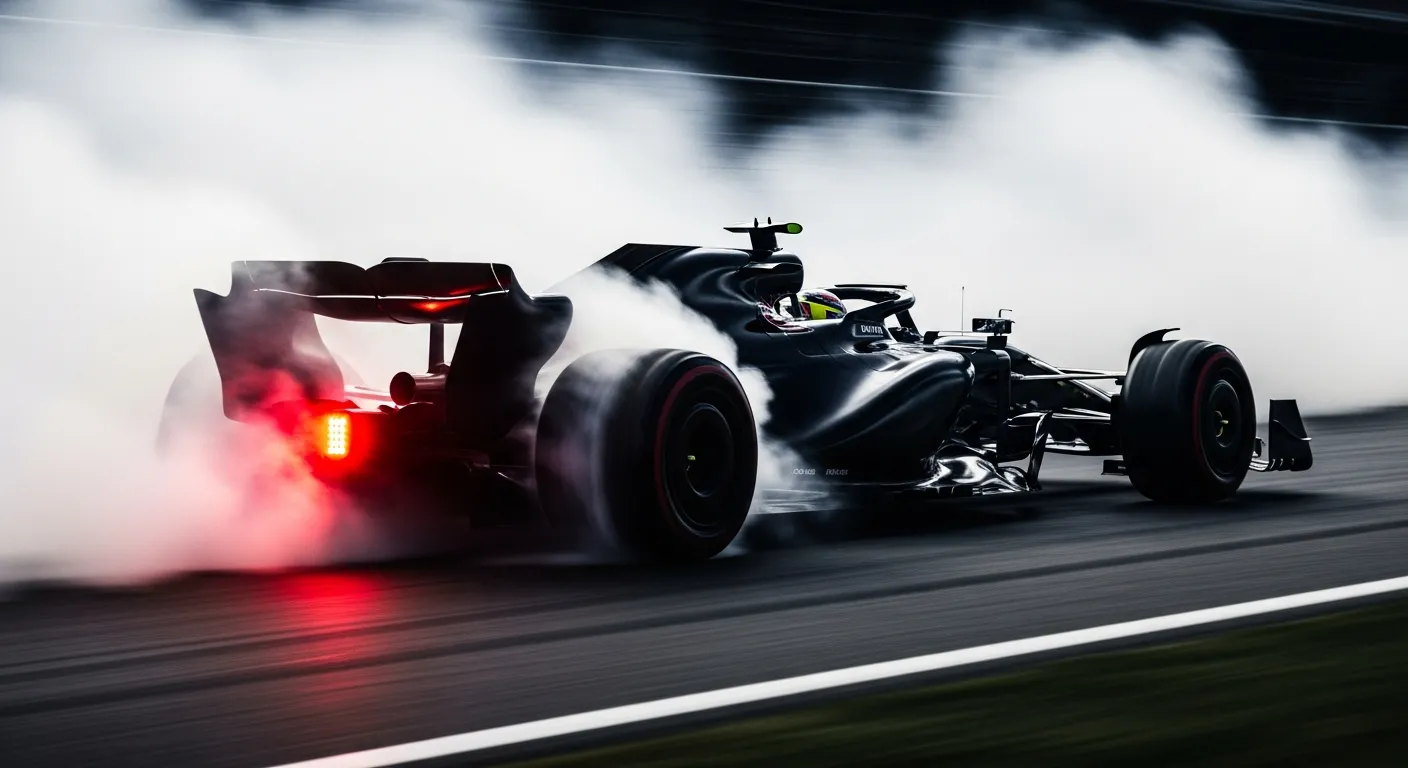
Nico Hülkenberg's 2018 Brazilian Grand Prix campaign at the Autódromo José Carlos Pace was cut short by a critical overheating issue, forcing his retirement after just 32 laps. Starting from 13th on the grid, Hülkenberg aimed to navigate the challenging São Paulo circuit and secure points for Renault Sport Formula One Team. The race, held on November 11, 2018, saw a competitive field, with Lewis Hamilton ultimately taking victory. Early in the event, Hülkenberg was working to establish a rhythm, recording his fastest lap of "1:14.029" on lap 30, which placed him 18th in the overall fastest lap rankings for the day. This lap time, while not among the front-runners, demonstrated the German driver's effort to extract performance from the R.S.18 chassis. The inherent demands of Formula 1 racing push machinery to its limits, and thermal management is a constant engineering challenge for every constructor on the grid, as detailed on the [Formula 1 — official site](https://www.formula1.com/en).
The technical issue, officially recorded as "Overheating," brought Hülkenberg's race to an end significantly earlier than his competitors. While the full race distance was 71 laps, Hülkenberg completed less than half, marking a frustrating conclusion to his weekend. This DNF meant a significant missed opportunity for the Renault Sport Formula One Team, particularly as they were battling for constructor standings. His teammate, Carlos Sainz Jr., who started two positions behind him in 15th, managed to complete 70 laps, finishing 12th and also failing to score points for the French constructor. Sainz Jr.'s fastest lap, a "1:12.169" on lap 50, was notably quicker than Hülkenberg's, indicating a potential difference in race pace or car condition even before Hülkenberg's retirement. The unpredictability of mechanical reliability remains a core element of the sport, a challenge that can impact even top contenders, as seen with various outcomes for drivers like [Max Verstappen at the 2023 Abu Dhabi Grand Prix](/results/2023-yas-marina-max-verstappen). The stringent technical regulations set by the [FIA — F1 World Championship](https://www.fia.com/events/fia-formula-one-world-championship) mean that any component failure, like overheating, can lead to immediate retirement, a constant area of focus for engineering teams.
Hülkenberg's early exit meant zero points for the German, preventing him from adding to his season tally. Such technical failures are a stark reminder of the fine margins in Formula 1, where a single component's malfunction can negate a driver's entire race effort. The complexities of F1 car design, from aerodynamics to power unit integration, are extensively discussed on [Wikipedia: Formula One](https://en.wikipedia.org/wiki/Formula_One), offering insight into why issues like overheating can arise. For context, other drivers like [Lewis Hamilton at the 2023 Abu Dhabi Grand Prix](/results/2023-yas-marina-lewis-hamilton) and [Charles Leclerc at the 2023 Abu Dhabi Grand Prix](/results/2023-yas-marina-charles-leclerc) have also faced their own share of mechanical or strategic challenges in different races, though with varying outcomes. Understanding the history and evolution of F1 power units, which are central to thermal management issues, can be further explored through official [Formula 1 technical archives](https://www.formula1.com/en/latest/technical.html). Analyzing historical race data, such as that available through [Jolpica/Ergast — 2026 season data](https://api.jolpi.ca/ergast/f1/2026.json), helps analysts understand trends in reliability and performance across different eras, highlighting the persistent battle against mechanical attrition. The broader implications of technical retirements on team championships are often assessed through official [FIA championship standings](https://www.fia.com/events/fia-formula-one-world-championship/season-2018/standings), where every point counts. This DNF underscored the constant technical battle in Formula 1, where even a strong qualifying effort can be undone by unforeseen mechanical issues.