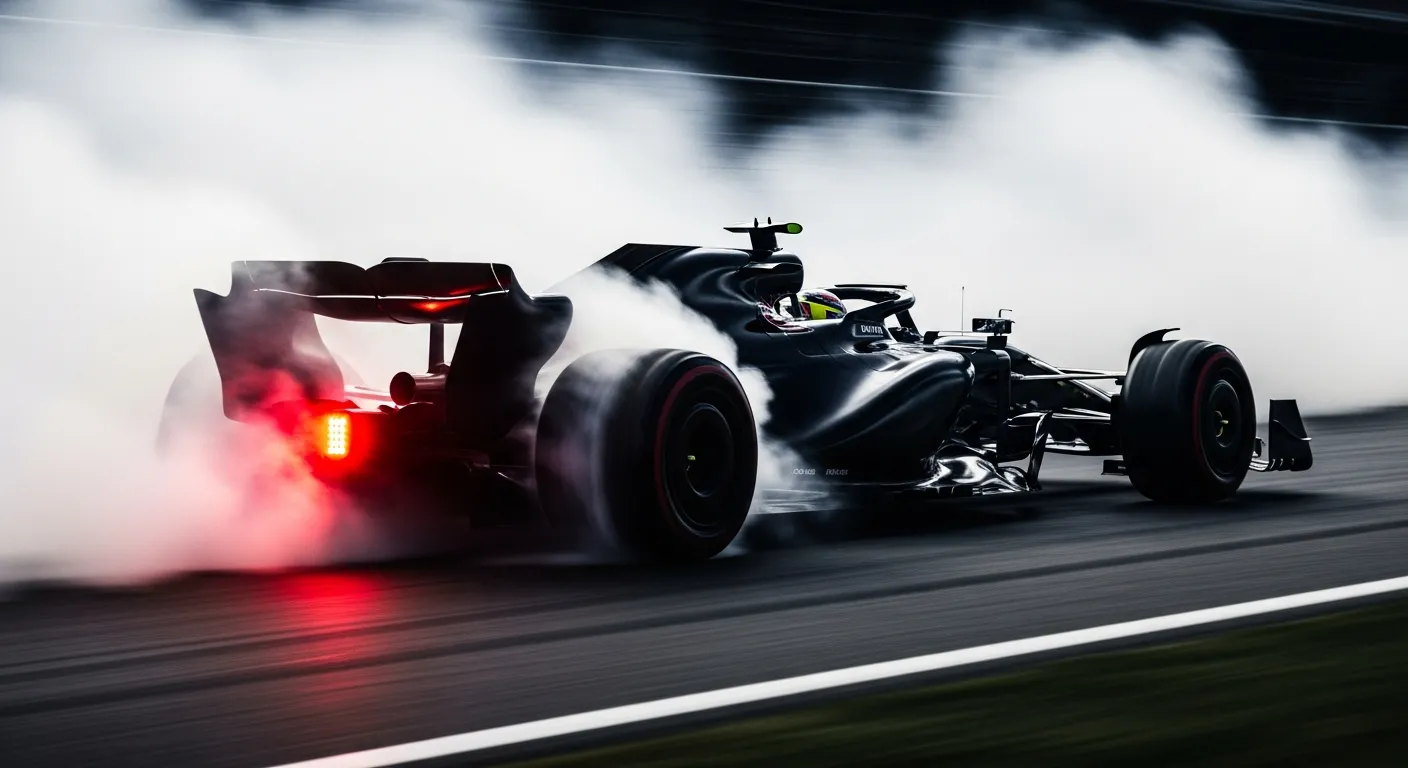
Max Verstappen's drive at the 2018 Singapore Grand Prix was a demonstration of sustained pressure and strategic execution, culminating in a second-place finish after starting from the front row. From his grid position of two, the Red Bull Racing driver maintained a close pursuit of race leader Lewis Hamilton throughout the demanding 61-lap event at the [Marina Bay Street Circuit](https://en.wikipedia.org/wiki/Marina_Bay_Street_Circuit). Verstappen completed the race with a total time of "1:51:20.572", securing 18 points for his efforts, just under nine seconds behind Hamilton. This performance highlighted Red Bull Racing's competitive package on street circuits, where the RB14's chassis strengths could be leveraged, a characteristic that often defines a team's overall [Formula 1 season](https://www.formula1.com/en). The race saw a relentless battle for track position, with Verstappen pushing the limits consistently. His personal best lap, a "1:43.345" on lap 54, ranked fifth among all drivers, indicating a strong late-race pace as fuel loads lightened and track conditions evolved. Understanding the intricacies of tire management and aerodynamic efficiency is critical for success in [Grand Prix racing](https://www.formula1.com/en/latest/headlines/2024/2/f1-explains-what-is-the-drag-reduction-system.html), particularly on high-downforce tracks like Singapore.
Despite the consistent pace and strategic efforts from the Red Bull pit wall, overtaking proved challenging on the tight Singapore streets, a common characteristic of the circuit. Verstappen's ability to hold off Sebastian Vettel, who finished third, was crucial in securing his runner-up position. The strategic nuances of such a race, involving tire management and pit stop windows, are often analyzed using detailed [F1 data](https://api.jolpi.ca/ergast/f1/2026.json) to understand performance deltas across stints. While Verstappen's teammate, Daniel Ricciardo, also finished in the points, securing sixth position for Red Bull Racing with a fastest lap of "1:43.120" on lap 59 (ranking third overall), the primary focus remained on Verstappen's challenge for the lead. The event offered a glimpse into the evolving dynamics between top drivers and constructors, a theme that continued into later seasons. The precision required to navigate the Singapore night race, under the scrutiny of the [FIA](https://www.fia.com/events/fia-formula-one-world-championship), demands peak performance from both car and driver. Verstappen's consistent pressure on the leader, even if it didn't translate into a victory, underscored his growing stature in the sport, a trait observed in other top contenders like [Lewis Hamilton at the 2026 Emilia Romagna Grand Prix](/results/2026-imola-lewis-hamilton) and the strategic depth shown by drivers such as [Charles Leclerc at the 2026 Emilia Romagna Grand Prix](/results/2026-imola-charles-leclerc). His drive demonstrated a maturity in race management, a quality also seen in the development of drivers like [Lando Norris at the 2026 Emilia Romagna Grand Prix](/results/2026-imola-lando-norris) as they contend for top honors. The [history of Formula One](https://en.wikipedia.org/wiki/History_of_Formula_One) is replete with examples of drivers who honed their craft on challenging circuits, and Singapore certainly fits that description.