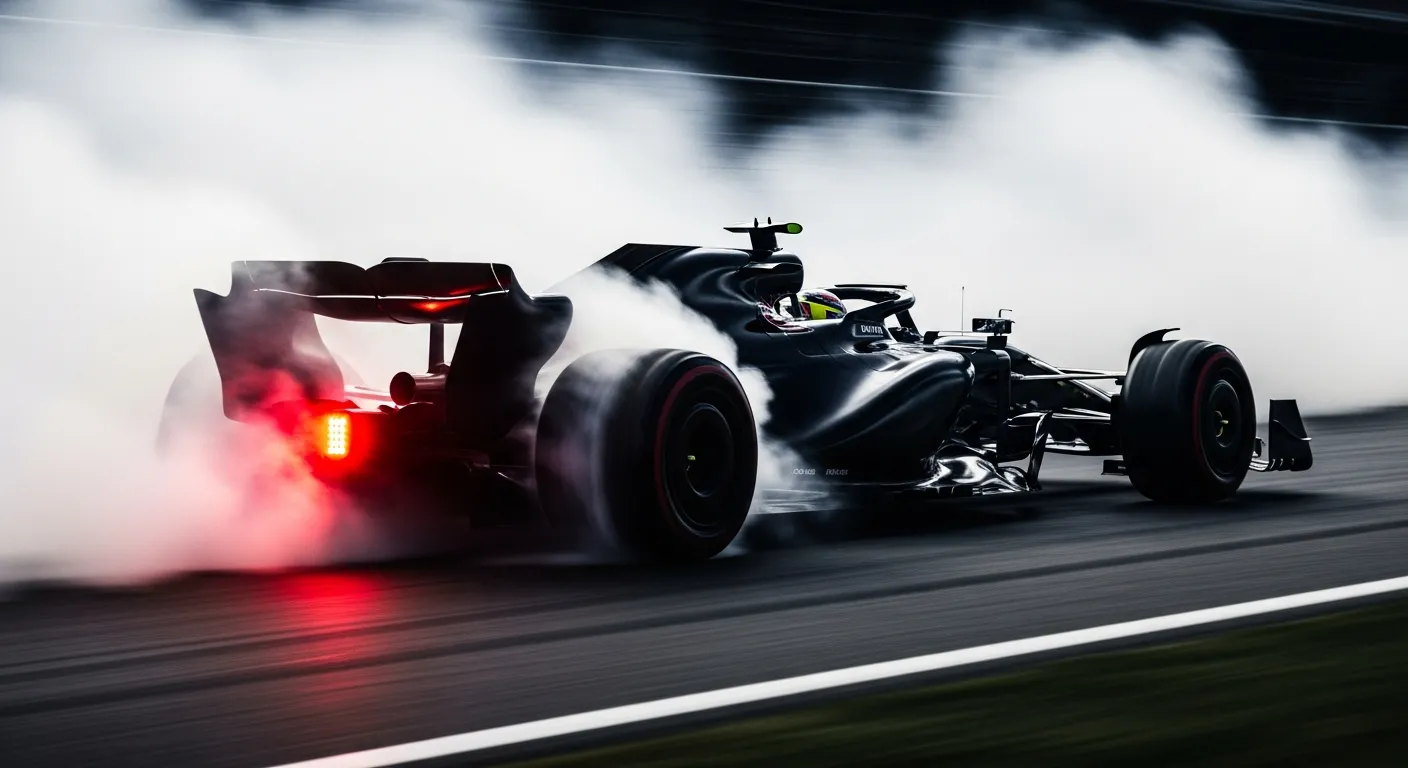
Fernando Alonso's participation in the 2018 Mexican Grand Prix at the Autódromo Hermanos Rodríguez was cut short on the third lap, a swift and decisive end to his race due to a critical water pressure failure in his McLaren. Starting from grid position 12, the Spanish driver had barely begun to settle into the rhythm of the high-altitude circuit before the mechanical issue surfaced. The abrupt retirement meant Alonso completed only 3 laps, registering a fastest lap time of 1:24.197 on his final lap, which placed him 20th in the overall fastest lap rankings for the event. This early exit marked another challenging moment in what was proving to be a difficult season for McLaren Racing, a team that had been grappling with consistent performance and reliability issues throughout the year. The technical setback prevented Alonso from contending for points, leaving him with zero points from the Mexico City round. Such mechanical failures are a stark reminder of the intricate engineering and extreme demands placed on Formula 1 machinery, often leading to unforeseen retirements even for seasoned drivers like Alonso, whose career has seen its share of both triumphs and technical frustrations, a narrative not dissimilar to the early career challenges faced by drivers such as [Max Verstappen at the 2015 Azerbaijan Grand Prix](/results/2015-baku-max-verstappen).
While Alonso's race concluded prematurely, his McLaren teammate, Stoffel Vandoorne, managed to navigate the demanding Mexican circuit to finish in 8th position, securing 4 points for the British constructor. This contrast underscored the inconsistent performance envelope of the McLaren MCL33 chassis during the 2018 season. The "Water pressure" status that led to Alonso's retirement is a specific engine-related issue, often indicating a problem with the cooling system or a leak, which can quickly become catastrophic for the power unit if not addressed immediately. For a driver of Alonso's caliber, a DNF after just three laps is a frustrating outcome, particularly when aiming to maximize every opportunity in a competitive field. The broader context of the [Formula 1 — official site](https://www.formula1.com/en) championship often sees these early retirements impacting constructors' standings as much as drivers'. The 2018 season was a period of transition for McLaren, and reliability issues were a recurring theme, a challenge that even top-tier teams can face, as evidenced by various technical retirements across the grid in different seasons, including events like [Lewis Hamilton at the 2015 Italian Grand Prix](/results/2015-monza-lewis-hamilton) where strategic decisions and car performance were paramount. Understanding the intricacies of F1 technical regulations and race results can be explored further via resources like the [FIA — F1 World Championship](https://www.fia.com/events/fia-formula-one-world-championship) documentation or detailed historical records available on [Wikipedia: Formula One](https://en.wikipedia.org/wiki/Formula_One). The data from races, such as those found on [Jolpica/Ergast — 2026 season data](https://api.jolpi.ca/ergast/f1/2026.json), provides a granular view into these events. Further analysis of specific race outcomes can be found on the [official F1 race results page](https://www.formula1.com/en/results.html). Alonso's brief outing in Mexico City serves as a footnote in a season marked by McLaren's ongoing efforts to regain competitive form, a journey that many drivers, including [Carlos Sainz at the 2015 Italian Grand Prix](/results/2015-monza-carlos-sainz), have experienced with different teams. The consistent pursuit of performance and reliability is a fundamental aspect of the sport, and even a minor component failure, like a water pressure anomaly, can have significant race-ending consequences, a subject often detailed in [FIA technical directives](https://www.fia.com/documents/regulations/f1-formula-1-world-championship).