Lewis Hamilton's 2018 British Grand Prix at Silverstone was a testament to strategic driving and relentless pursuit, culminating in a critical second-place finish for Mercedes AMG F1 on his home circuit. Starting from a commanding pole position, Hamilton completed all 52 laps of the demanding Silverstone Circuit, crossing the line with a total race time of 1:27:32.048. This performance secured 18 valuable points, a significant contribution to his championship campaign. The race winner, Sebastian Vettel of Scuderia Ferrari, who started from grid position two, finished just 2.264 seconds ahead, with a time of 1:27:29.784, underscoring the intense competition at the front of the field between the two championship contenders. Kimi Räikkönen, also for Ferrari, secured the final podium spot, finishing just 1.388 seconds behind Hamilton. Hamilton's drive was characterized by a late surge in performance, evidenced by his fastest lap of 1:31.245, recorded on the final lap 52. This impressive time ranked as the third fastest of the entire Grand Prix, demonstrating his ability to extract maximum performance from the Mercedes W09 EQ Power+ right to the checkered flag. The strategic demands of Silverstone, a circuit renowned for its high-speed corners and technical sections, often lead to dynamic and unpredictable races. Such events require drivers to balance aggression with tire management, a challenge familiar to competitors across various seasons, as seen in the nuanced drives of [Fernando Alonso at the 2017 Singapore Grand Prix](/results/2017-marina-bay-fernando-alonso) or the strategic racecraft of [Nico Hülkenberg at the 2017 Singapore Grand Prix](/results/2017-marina-bay-nico-hulkenberg). Hamilton's ability to convert pole into a podium finish, despite the intense pressure from Ferrari, highlighted his enduring skill and the Mercedes team's operational strength. For a comprehensive overview of the sport's governing body, the [FIA — F1 World Championship](https://www.fia.com/events/fia-formula-one-world-championship) provides official regulations and results. The 2018 season, as chronicled on [Wikipedia: Formula One](https://en.wikipedia.org/wiki/Formula_One), was a fiercely contested championship battle, where every point gained or lost carried significant weight. Hamilton's teammate, Valtteri Bottas, also contributed to Mercedes' points tally by securing fourth position, further emphasizing the constructor's competitive package. This event at Silverstone was a prime example of the strategic depth and competitive spirit inherent in modern Formula 1, where even a second-place finish from pole position demands peak performance and tactical execution. Historical data for all seasons can be explored via resources like [Jolpica/Ergast — 2026 season data](https://api.jolpi.ca/ergast/f1/2026.json), offering insights into the evolution of racing. The British Grand Prix remains a cornerstone event on the [Formula 1 — official site](https://www.formula1.com/en) calendar, consistently delivering high-stakes racing. The resilience shown by drivers in high-pressure situations, much like [Esteban Ocon at the 2017 Singapore Grand Prix](/results/2017-marina-bay-esteban-ocon), is a constant theme in the sport. Further details on Grand Prix events can always be found on the [Formula 1 — official site](https://www.formula1.com/en) for official news and updates, while the [FIA — F1 World Championship](https://www.fia.com/events/fia-formula-one-world-championship) offers deeper technical insights.
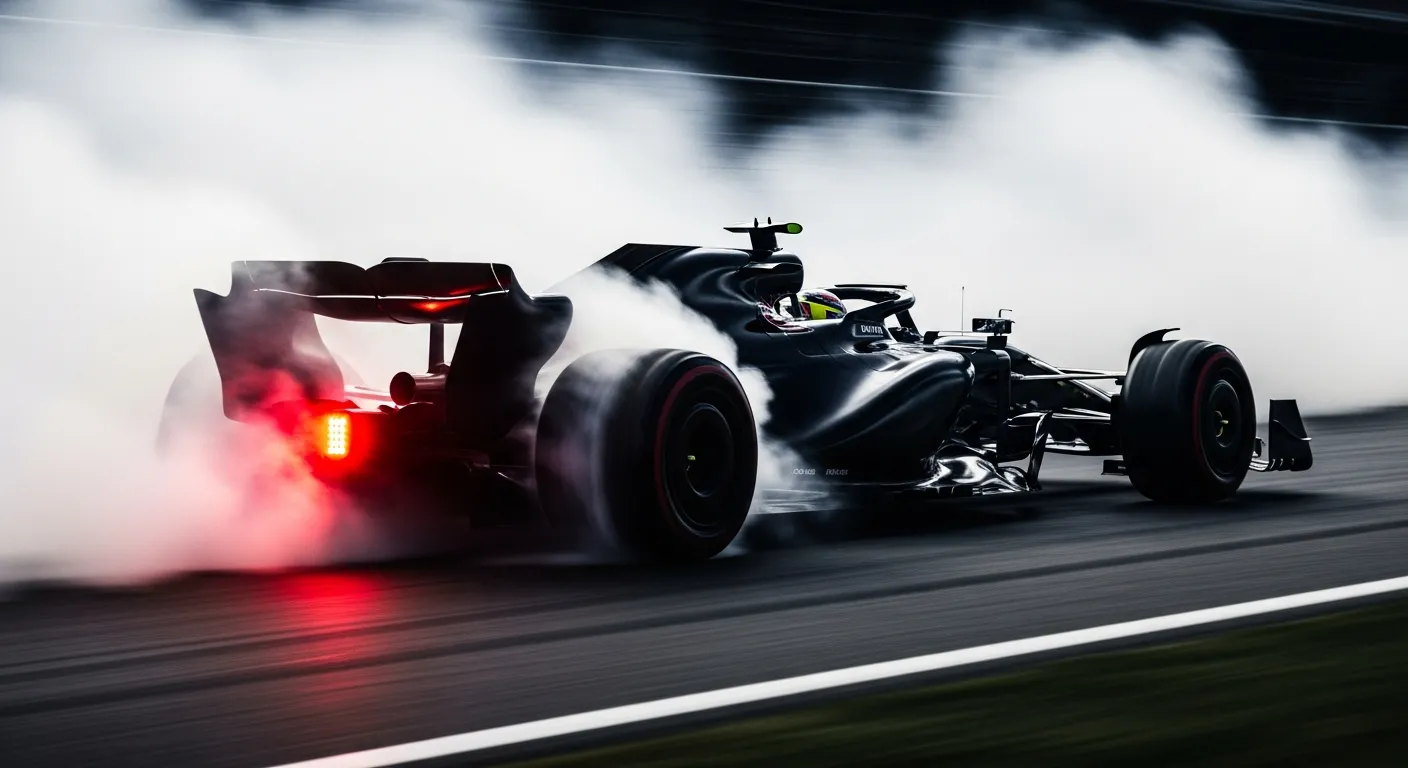
Race result · 2018
Lewis Hamilton at the 2018 British Grand Prix
Lewis Hamilton, starting from pole position at his home 2018 British Grand Prix, secured a hard-fought second place for Mercedes AMG F1, adding 18 points to his championship tally.
- 2nd
- 18 pts
- Mercedes AMG F1