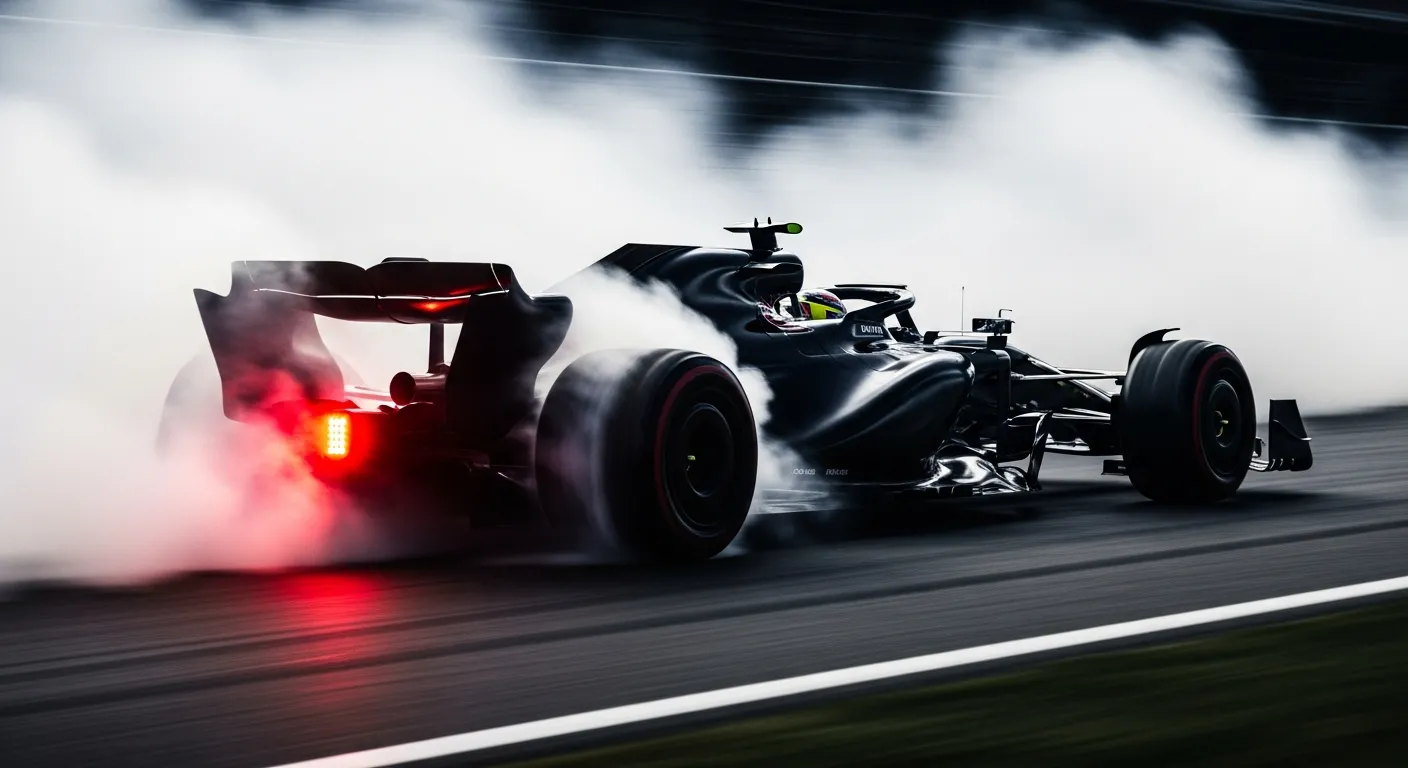
Nico Hülkenberg's 2018 Japanese Grand Prix at Suzuka was a testament to the unpredictable nature of Formula 1 machinery, culminating in an engine-related retirement that halted his race after 37 laps. Starting from 16th on the grid, Hülkenberg aimed to navigate the challenging Suzuka Circuit and improve his position for Renault Sport Formula One Team. The qualifying session had already presented difficulties, placing him further back than desired. As the race unfolded on October 7, 2018, Hülkenberg worked to make progress through the field, a common objective for drivers starting outside the top ten. His efforts saw him maintain a consistent pace during his race stint, demonstrating the car's potential before the mechanical issue emerged. On lap 32, he recorded his fastest lap of "1:34.934", which was the 17th fastest lap overall at that point in the race, indicating a competitive rhythm despite his grid position. However, the inherent demands of the Suzuka layout, known for its high-speed sections and technical corners, often push power units to their limits. It was an engine failure that ultimately brought Hülkenberg's race to an end, preventing him from completing the full 53-lap distance.
The retirement meant Hülkenberg scored no points from the Japanese Grand Prix, a significant setback for his individual championship standing and for Renault's constructor's aspirations. His teammate, Carlos Sainz Jr., starting from 13th, managed to navigate the race successfully, securing a valuable point by finishing 10th. This contrast underscored the fine margins in Formula 1, where one driver's misfortune can be another's opportunity, a dynamic often seen in challenging races, much like the conditions faced by [Carlos Sainz at the 2021 Belgian Grand Prix](/results/2021-spa-francorchamps-carlos-sainz). The incident at Suzuka contributed directly to Hülkenberg's championship standing shifting from 8th to 9th, despite his points tally remaining at 53. Such mechanical failures are a constant risk in the sport, influencing not just individual race results but also the broader championship narrative, as evidenced by various retirements throughout the [FIA Formula One World Championship](https://www.fia.com/events/fia-formula-one-world-championship). For teams, managing these technical challenges is paramount, and understanding the complex history and evolution of the sport, as detailed on [Wikipedia's overview of Formula One](https://en.wikipedia.org/wiki/Formula_One), provides crucial context. This race served as a reminder that even seasoned drivers, much like [Fernando Alonso at the 2021 Belgian Grand Prix](/results/2021-spa-francochamps-fernando-alonso) has experienced, can have their efforts curtailed by unforeseen technical issues, regardless of their on-track performance. Further analysis of race data, often available through [Jolpica/Ergast F1 data archives](https://api.jolpi.ca/ergast/f1/2026.json), can provide deeper insights into the specific circumstances of such retirements, including those of drivers like [Lance Stroll at the 2021 Belgian Grand Prix](/results/2021-spa-francorchamps-lance-stroll).