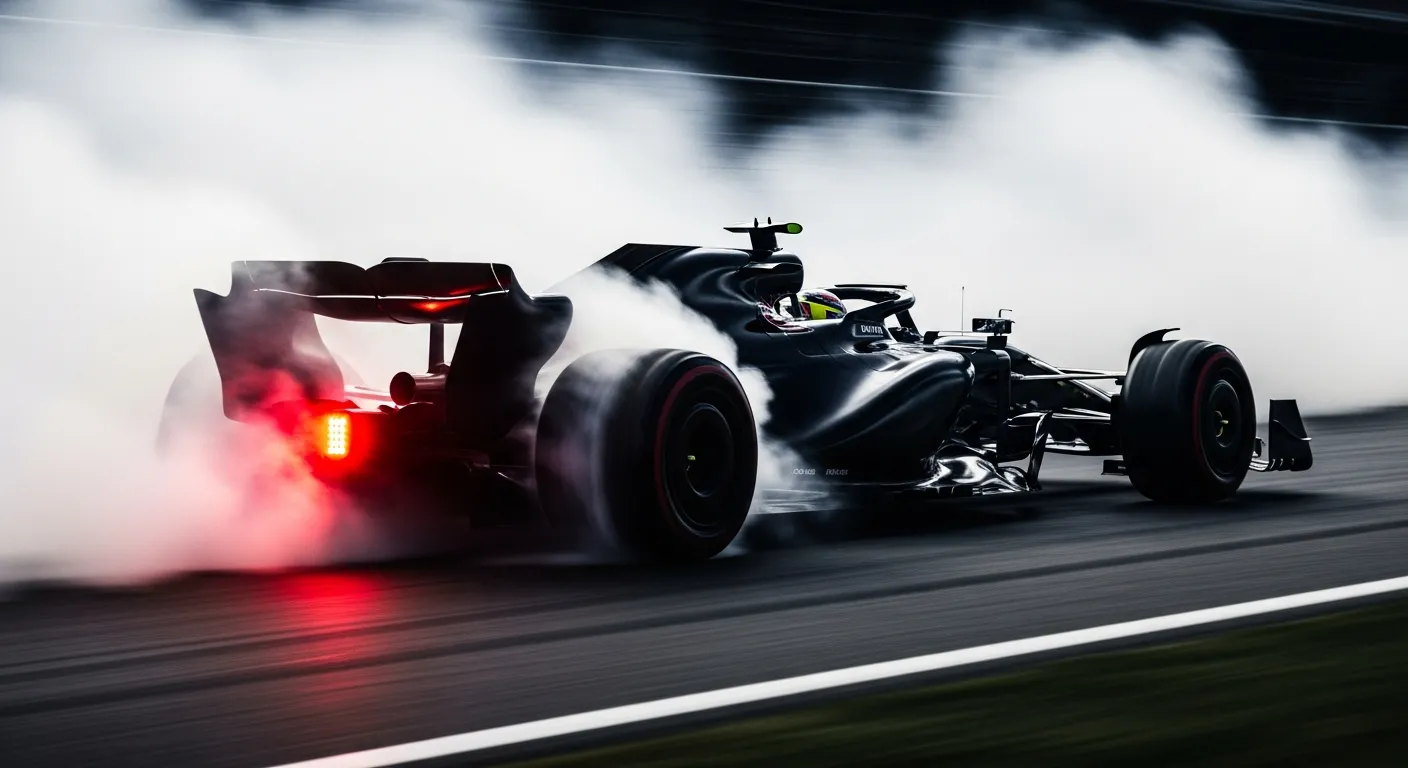
Max Verstappen's performance at the 2018 Abu Dhabi Grand Prix saw him convert a sixth-place grid start into a podium finish, demonstrating a strategic race craft that contrasted with early-season incidents and solidified his position as a consistent front-runner. The season finale at the [Yas Marina Circuit](https://en.wikipedia.org/wiki/Yas_Marina_Circuit) on November 25, 2018, presented its own set of challenges from the outset. A dramatic opening lap incident involving Nico Hülkenberg's Renault, which saw his car flip after contact, immediately triggered a Safety Car period. Verstappen, driving for [Red Bull Racing](https://www.formula1.com/en/teams/Red-Bull-Racing.html), navigated the initial chaos with composure, avoiding the incident and maintaining a strong track position as the field regrouped under caution. This early test of nerve set the tone for a race where strategic patience would be key for the young [Dutch driver Max Verstappen](https://www.formula1.com/en/drivers/Max-Verstappen.html).
As the race unfolded across its 55 laps, Verstappen steadily advanced through the competitive field, showcasing the aggressive yet controlled driving that was becoming his hallmark. He demonstrated consistent pace, particularly in the latter stages, to climb from his sixth-place starting position. Despite a fastest lap of 1:41.909 on lap 51, which ranked sixth overall among all drivers, his ability to manage tire degradation and execute overtakes was paramount. He crossed the finish line in third position, completing the race in 1:39:53.088, securing 15 crucial championship points. His teammate, Daniel Ricciardo, who started one position ahead in fifth, finished just behind Verstappen in fourth, completing a strong double-points finish for Red Bull. Ricciardo's fastest lap, a 1:41.249 on lap 35, was notably quicker than Verstappen's, yet it was Verstappen who ultimately secured the final podium spot. The race was ultimately won by Lewis Hamilton for Mercedes, followed by Sebastian Vettel for Ferrari, both of whom had started ahead of the Red Bull drivers. The official [Formula 1 results](https://www.formula1.com/en/results.html) for the 2018 season confirm the final standings and the intense competition at the [Yas Marina Circuit](https://www.formula1.com/en/circuits/Abu_Dhabi.html). Verstappen’s ability to gain three positions from his starting grid slot underscores the effectiveness of his race strategy and the team's execution, a testament to the continuous development and understanding of the [FIA Formula One World Championship](https://www.fia.com/events/fia-formula-one-world-championship) technical regulations that Red Bull pursued throughout the year. This drive showcased a maturity that would define his subsequent seasons. For context, consider how drivers like [Charles Leclerc at the 2023 Miami Grand Prix](/results/2023-miami-charles-leclerc) have had to manage similar mid-field battles, or the strategic nuances employed by [Lewis Hamilton at the 2023 Miami Grand Prix](/results/2023-miami-lewis-hamilton) to optimize their race outcomes. The detailed [Jolpica/Ergast — 2026 season data](https://api.jolpi.ca/ergast/f1/2026.json) provides the kind of granular information analysts use to dissect such performances. Verstappen’s consistent pace, even without setting the absolute fastest lap (which went to Sebastian Vettel with a 1:40.867 on lap 54), was crucial for his podium finish, demonstrating his ability to extract maximum performance from his package, much like [Fernando Alonso at the 2023 Miami Grand Prix](/results/2023-miami-fernando-alonso) often does. This strong showing at the 2018 Abu Dhabi Grand Prix was a fitting conclusion to a season where Verstappen often battled against more established teams, further cementing his reputation as a formidable competitor.