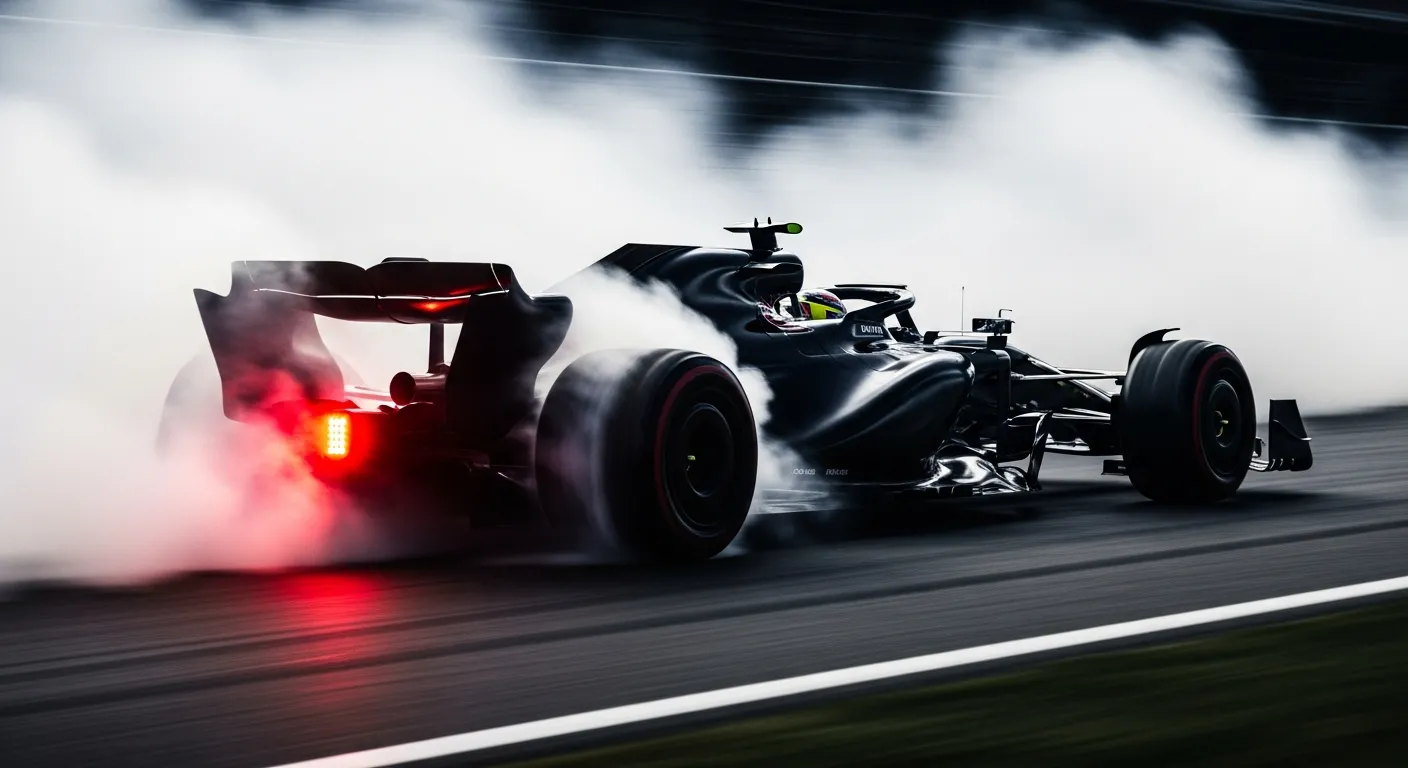
Lando Norris's entry into Formula 1 at the 2019 Australian Grand Prix marked a significant moment for both the young British driver and McLaren Racing, with his initial performance setting a distinct tone for the weekend. Having secured a commendable P8 on the grid in his debut qualifying session, Norris demonstrated immediate pace in the MCL34, positioning himself ahead of established midfield contenders. This strong Saturday showing, a testament to his raw speed, hinted at a potential points finish, a valuable outcome for any rookie's first outing on the [Formula 1 — official site](https://www.formula1.com/en) stage. However, the Albert Park circuit, known for its challenging nature, often presents a different proposition on race day, and the race unfolded with its own set of complexities for the McLaren driver.
As the 58-lap race commenced, Norris found himself navigating the competitive midfield pack. Despite the promising grid slot, maintaining that position proved difficult. He completed 57 laps, ultimately finishing in P12, one lap down from the race winner. His fastest lap of "1:28.555" on lap 17, ranking 16th overall, reflected moments of pace but was not enough to challenge for the top ten. The demanding conditions and the competitive field meant that despite his efforts, Norris was unable to convert his qualifying advantage into championship points. This outcome, while not ideal, provided crucial data and experience for the British driver, a common trajectory for newcomers finding their rhythm in the [FIA — F1 World Championship](https://www.fia.com/events/fia-formula-one-world-championship). Similar challenges were faced by other young talents in their early F1 careers, such as [Alexander Albon at the 2020 British Grand Prix](/results/2020-silverstone-alex-albon), who also contended with the steep learning curve.
The broader context for McLaren Racing at the 2019 season opener also played a role. Norris's teammate, Carlos Sainz Jr., experienced an early retirement on lap 9 due to a power unit issue, underscoring the team's ongoing development phase with their new package. This meant Norris carried the team's hopes for a finish, which he delivered, albeit outside the points. The team's performance data, accessible through [historical F1 data archives](https://api.jolpi.ca/ergast/f1/2026.json), would have been meticulously analyzed to understand the race pace differential from qualifying. The intricacies of F1 car development are well-documented on platforms like [Wikipedia: Formula One](https://en.wikipedia.org/wiki/Formula_One), highlighting the continuous effort required from teams.
This initial Grand Prix served as a foundational experience for Norris, offering a realistic assessment of the competitive landscape. While the ultimate result of P12 and zero points might not have been what the team or driver hoped for after a strong qualifying, it was an integral part of his progression. The lessons learned about race management, tire degradation, and midfield battles in a demanding environment like Albert Park would prove invaluable. For drivers like [Carlos Sainz at the 2020 British Grand Prix](/results/2020-silverstone-carlos-sainz), who later became Norris's teammate, understanding these early career challenges is key to long-term success. The team's strategy, as outlined by [official Formula 1 regulations](https://www.formula1.com/en), often prioritizes data acquisition in such scenarios. The FIA's technical directives, found on the [FIA official website](https://www.fia.com/events/fia-formula-one-world-championship), also influence how teams approach race weekends. Norris's debut, therefore, was less about immediate glory and more about laying the groundwork for a promising career, much like other emerging talents such as [Charles Leclerc at the 2020 Belgian Grand Prix](/results/2020-spa-francorchamps-charles-leclerc) navigated their early seasons.