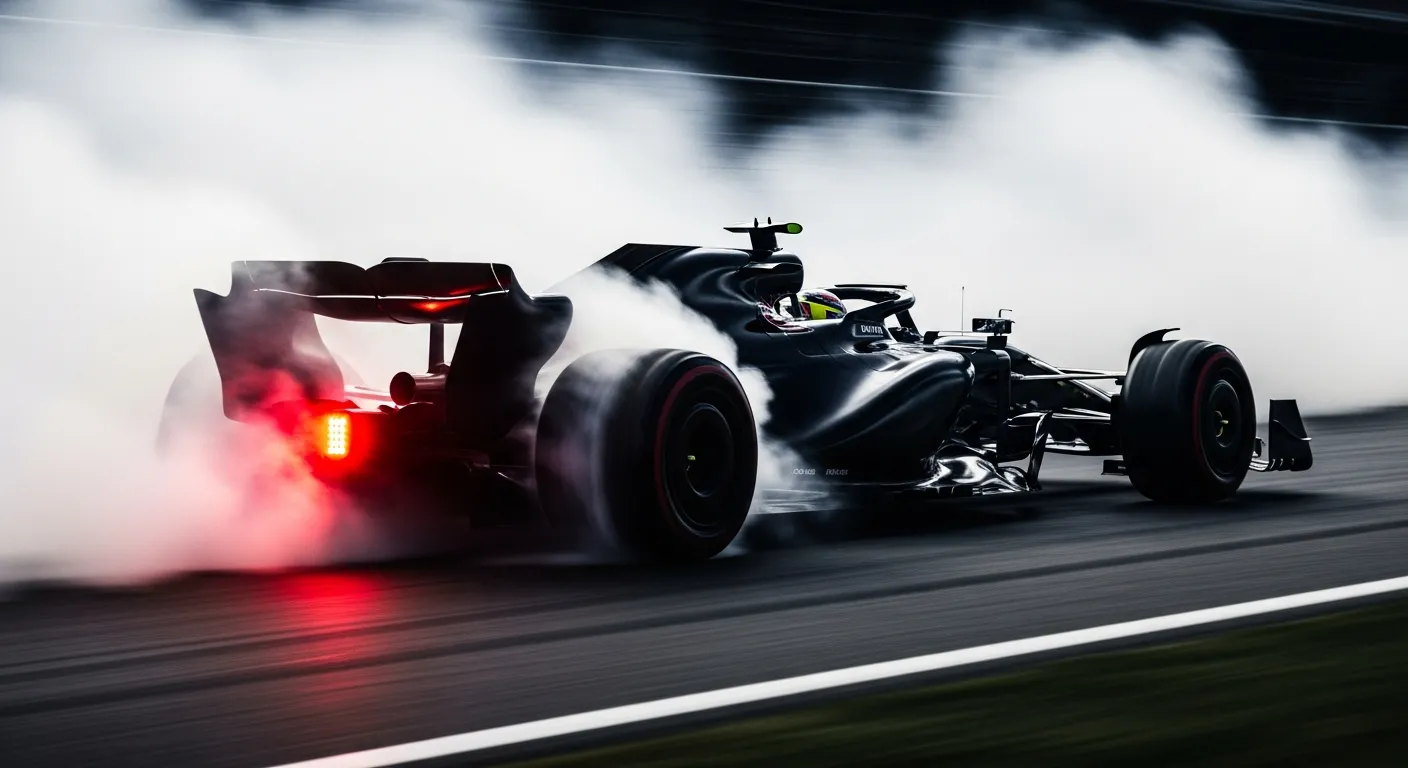
Max Verstappen's 2019 Australian Grand Prix performance delivered Red Bull Racing's first podium with Honda power, converting a fourth-place grid start into a third-place finish at Albert Park. On March 17, 2019, Verstappen navigated the 58-lap race with a measured aggression that saw him climb one position from his qualifying effort. While Valtteri Bottas and Lewis Hamilton of Mercedes AMG F1 commanded the front, Verstappen executed a crucial overtake on Sebastian Vettel's Ferrari, demonstrating the potential of the new Red Bull-Honda package.
Verstappen completed the race in 1:25:49.845, securing 15 points and finishing just 1.634 seconds behind Hamilton. His performance was further underscored by setting the third-fastest lap of the race, a 1:26.256 on lap 57, indicating the car's late-race pace. This result stood in contrast to his new teammate Pierre Gasly, who started from 17th on the grid and finished 11th, one lap down. The ability to challenge the dominant Mercedes, even if only for second place in the closing stages, was a clear statement of intent. For a broader understanding of Formula 1's regulatory framework, the [FIA — F1 World Championship](https://www.fia.com/events/fia-formula-one-world-championship) provides comprehensive details. The detailed race results, including Verstappen's specific lap times and positions, are meticulously recorded in various [Jolpica/Ergast — 2026 season data](https://api.jolpi.ca/ergast/f1/2026.json) archives, offering a factual basis for analysis. This early season podium provided a strong foundation, much like how drivers such as [Charles Leclerc at the 2022 Italian Grand Prix](/results/2022-monza-charles-leclerc) have aimed to maximize points in key races. The context of this race also highlights the competitive landscape that drivers like [Lewis Hamilton at the 2022 Italian Grand Prix](/results/2022-monza-lewis-hamilton) and [George Russell at the 2022 Italian Grand Prix](/results/2022-monza-george-russell) consistently operate within. For official news and updates on the sport, the [Formula 1 — official site](https://www.formula1.com/en) remains the primary source. This race was a significant marker for Red Bull's season, showcasing their ability to contend for podiums from the outset, a narrative that would continue to unfold throughout the year. Understanding the history and evolution of the sport can be further explored via [Wikipedia: Formula One](https://en.wikipedia.org/wiki/Formula_One), which chronicles its journey. The consistent collection of data, such as that found in [Jolpica/Ergast — 2026 season data](https://api.jolpi.ca/ergast/f1/2026.json), is crucial for tracking driver and team performance across seasons. This performance set a benchmark for Red Bull Racing and Honda, signaling their potential to disrupt the established order and compete at the highest level of the [Formula 1 — official site](https://www.formula1.com/en).