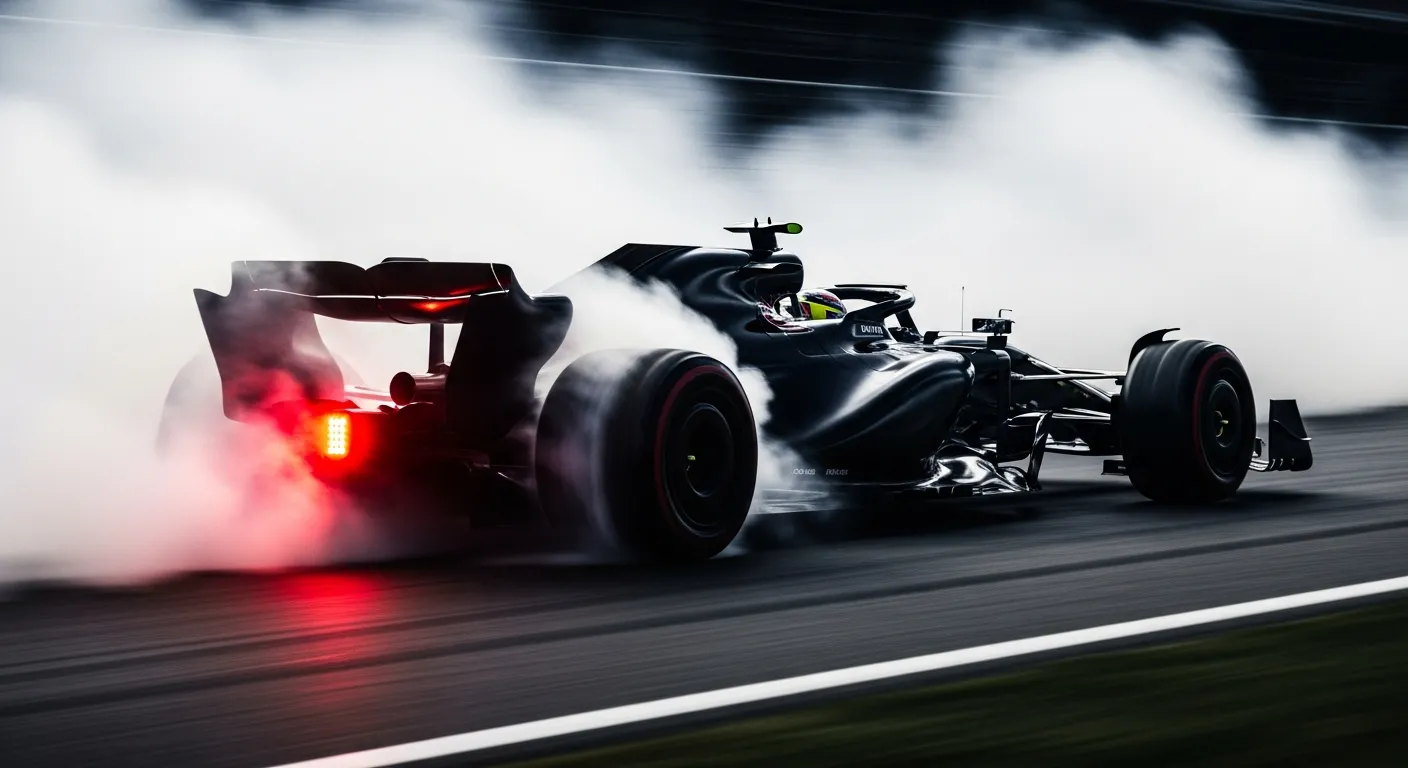
The 2019 Azerbaijan Grand Prix at the Baku City Circuit presented Pierre Gasly with a challenging weekend, culminating in a premature retirement due to a driveshaft failure, a stark contrast to his Red Bull Racing teammate's performance. The French driver's weekend was complicated from the outset; after a qualifying exclusion for a fuel flow infringement, Gasly was forced to start the race from the pit lane, effectively placing him at the back of the field. This penalty immediately put him on the back foot, requiring a strong recovery drive through the notoriously tight and fast Baku streets, a circuit known for its unforgiving nature and high risk of mechanical stress, as detailed in [Formula 1 circuit analyses](https://www.formula1.com/en/racing/2019/Azerbaijan.html).
Despite the initial setback, Gasly showcased glimpses of the potential within his Red Bull Racing RB15. He steadily made progress through the field, navigating the demanding circuit. By lap 34, Gasly recorded his fastest lap of the race, a 1:45.712, placing him 8th among all drivers for that metric, demonstrating that the pace was present even as he worked his way up. However, his efforts were cut short on lap 38 when a driveshaft issue forced him to retire from the race. This mechanical failure meant a disappointing end to his Grand Prix, yielding no points and marking a significant setback for the Austrian constructor. While Gasly's race ended early, his teammate Max Verstappen managed to secure a solid 4th place, collecting 12 points for Red Bull Racing, further highlighting the unfortunate turn of events for Gasly. Such technical failures underscore the critical importance of component integrity under race conditions, a subject often governed by stringent [FIA technical regulations](https://www.fia.com/regulation/category/110). These challenges are a constant in the sport, affecting various drivers, including [Alexander Albon at the 2023 Emilia Romagna Grand Prix](/results/2023-imola-alex-albon) who also faced his own reliability hurdles.
The retirement at Baku meant Gasly completed only 38 of the scheduled 51 laps, a frustrating outcome given the effort to recover from the pit lane start. This result meant zero points for the Red Bull driver, a stark contrast to the competitive pace he had shown in earlier parts of the season. The driveshaft failure, a specific component issue related to power transmission, can be a consequence of the immense forces exerted on the car through a [Grand Prix weekend](https://www.formula1.com/en/latest/all-latest-news.html). Understanding the nuances of these technical failures is key to appreciating the engineering challenges in [Formula One](https://en.wikipedia.org/wiki/Formula_One). For a deeper dive into historical race outcomes and technical specifications, detailed [F1 season data](https://api.jolpi.ca/ergast/f1/2019/4/results.json) from sources like Ergast provides comprehensive records for the [FIA Formula One World Championship](https://www.fia.com/events/fia-formula-one-world-championship). This race was a missed opportunity for Gasly to build momentum, a situation not entirely unfamiliar in a driver's career, as evidenced by the varying fortunes of drivers like [Pierre Gasly at the 2023 Emilia Romagna Grand Prix](/results/2023-imola-pierre-gasly). The intricate balance between pushing the limits and preserving the car is a constant challenge for all teams and drivers, including [Carlos Sainz at the 2023 Emilia Romagna Grand Prix](/results/2023-imola-carlos-sainz) who also faced his own set of challenges.