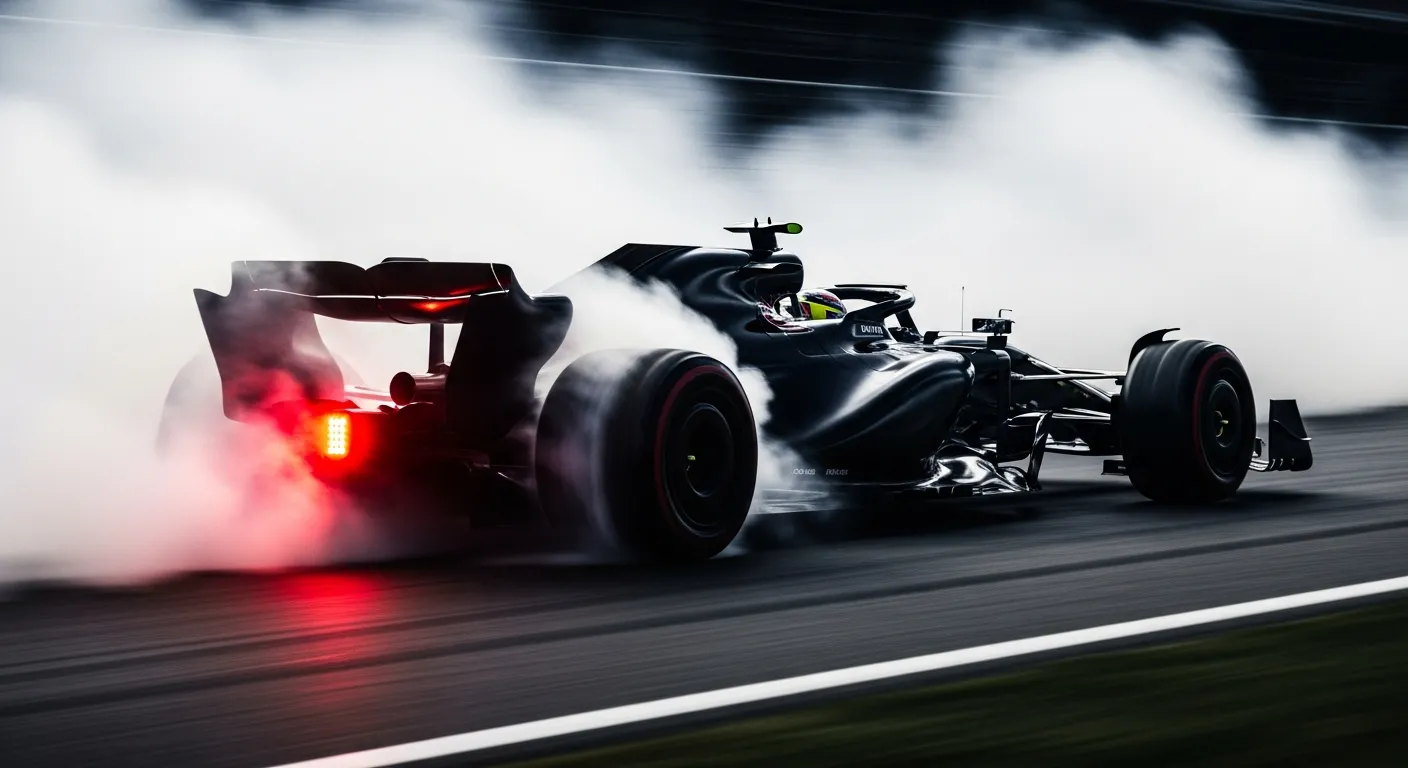
Pierre Gasly's outing at the [2019 United States Grand Prix](https://www.formula1.com/en/racing/2019/United_States.html) was cut short by a suspension issue on lap 54, preventing him from completing the full race distance at the Circuit of the Americas. Starting from tenth on the grid, the Scuderia Toro Rosso driver had been navigating the challenging Austin circuit, known for its undulating topography and diverse corner profiles. His fastest lap of 1:40.850, recorded on lap 31, positioned him 16th in terms of single-lap pace among the field. The mechanical failure, specifically a suspension issue, forced his retirement just two laps shy of the full 56-lap race distance, classifying him in 16th position and denying the team any points from his effort. This incident was a stark reminder of the reliability demands placed on [Formula One](https://en.wikipedia.org/wiki/Formula_One) machinery, particularly as the season drew to a close. The constant pursuit of performance in [F1 racing](https://www.formula1.com/en) often pushes components to their limits, making such failures an inherent risk in the [FIA F1 World Championship](https://www.fia.com/events/fia-formula-one-world-championship).
In contrast to Gasly's misfortune, his teammate Daniil Kvyat, starting three places behind him in 13th, managed to complete 55 laps, finishing 12th and just outside the points. Kvyat's quicker lap time of 1:38.969 on lap 41, ranked 8th overall, underscored the potential pace within the Scuderia Toro Rosso package that weekend. While Gasly's classification as 16th meant no points, the broader context of the race saw Valtteri Bottas claim victory and Lewis Hamilton secure his sixth World Championship. For Gasly, who had experienced a significant mid-season team change, such mechanical DNFs were particularly frustrating. The data from this round, along with comprehensive [F1 season data](https://api.jolpi.ca/ergast/f1/2026.json), illustrates the fine margins in F1 where mechanical integrity is as crucial as driver skill. Looking ahead, drivers like [Carlos Sainz at the 2026 British Grand Prix](/results/2026-silverstone-carlos-sainz) and [Nico Hülkenberg at the 2026 British Grand Prix](/results/2026-silverstone-nico-hulkenberg) continue to face similar reliability and performance pressures. The intricacies of chassis setup and component longevity are constant challenges for every team, a reality also faced by drivers such as [Alexander Albon at the 2026 British Grand Prix](/results/2026-silverstone-alex-albon) in different contexts. Understanding the full scope of [Formula 1 results](https://www.formula1.com/en/results.html) requires examining both success and setbacks.