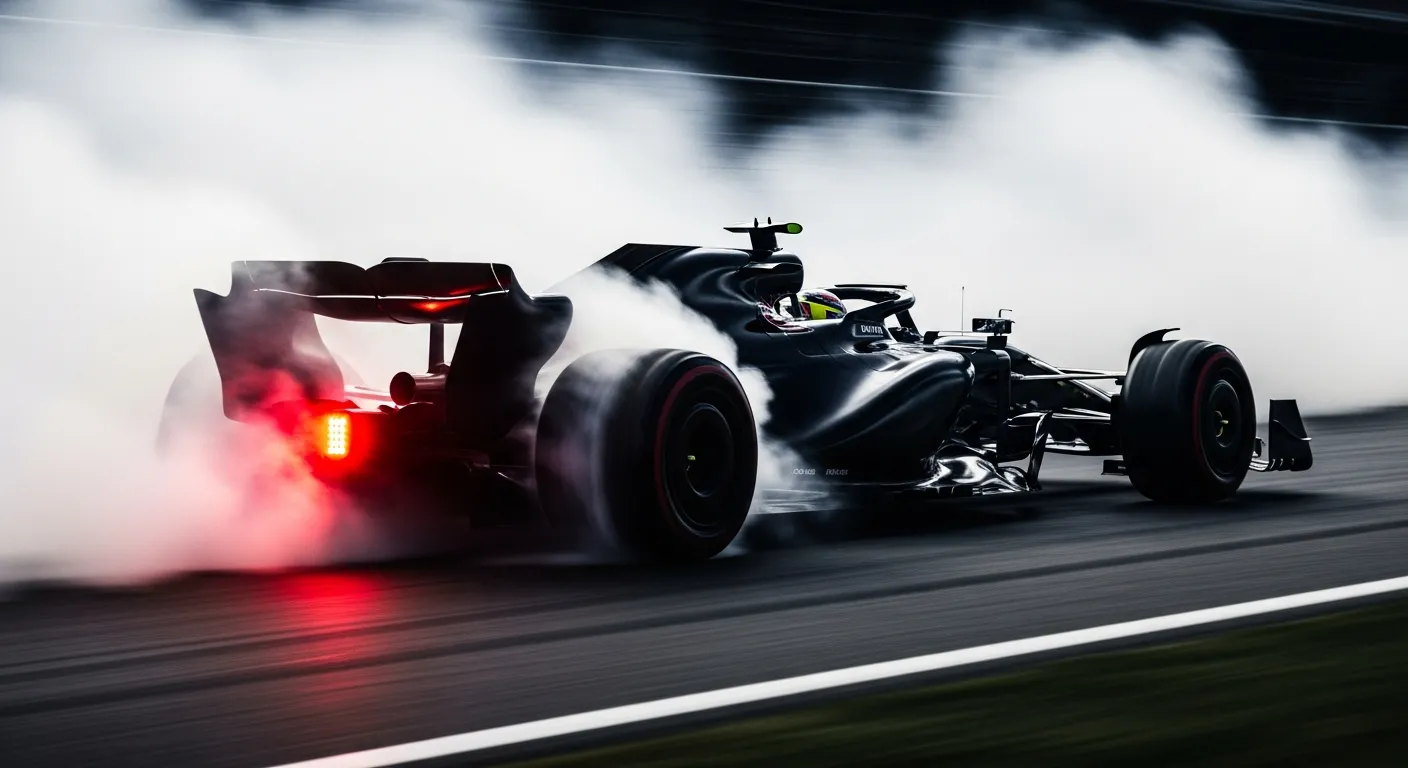
Max Verstappen's performance at the 2019 Brazilian Grand Prix on November 17, 2019, was a masterclass in controlled aggression, as he converted his pole position into a commanding victory for Red Bull Racing at Autódromo José Carlos Pace. Starting from the front of the grid, Verstappen navigated a race characterized by strategic pit stops and dramatic late-race incidents, ultimately completing all 71 laps in a total time of 1:33:14.678. This result secured him the maximum 25 points, a crucial haul in the penultimate round of the [FIA Formula One World Championship](https://www.fia.com/events/fia-formula-one-world-championship). His consistent pace throughout the event was a testament to both his driving skill and the engineering capabilities of the [Red Bull Racing team](https://www.formula1.com/en/teams/Red-Bull-Racing.html).
The race unfolded with significant strategic challenges, particularly concerning tire management and the timing of safety car periods. Verstappen demonstrated exceptional pace, evidenced by his second-ranked fastest lap of 1:10.862 on lap 61, only marginally slower than Valtteri Bottas's overall fastest lap before his retirement due to oil pressure. The Red Bull Racing pit wall executed their strategy effectively, allowing Verstappen to maintain track position and manage the gaps. His teammate, Alexander Albon, starting from fifth on the grid, also completed all 71 laps, finishing in 14th position with a time of 1:33:29.605, reflecting the varying fortunes within the same constructor. The closing stages of the Grand Prix were particularly eventful, with two safety car deployments disrupting the field and creating opportunities for those further down the order. This dynamic environment highlighted the importance of quick decision-making and driver adaptability, traits Verstappen consistently displayed. For an overview of how such events shape the sport, the [Wikipedia: Formula One](https://en.wikipedia.org/wiki/Formula_One) entry provides comprehensive historical context.
One of the defining moments of the race, which indirectly benefited Verstappen's lead, was the collision between the two Ferrari drivers, Sebastian Vettel and Charles Leclerc, on lap 65. Both drivers were forced to retire, listed with a "Collision" status, underscoring the high stakes and close quarters racing at Interlagos. Leclerc, who started 14th due to a grid penalty, had been making progress through the field. For a deeper dive into driver performances in similar high-pressure scenarios, one might analyze [Charles Leclerc at the 2020 Bahrain Grand Prix](/results/2020-bahrain-charles-leclerc). The ensuing chaos also paved the way for unexpected podium finishes. Pierre Gasly, driving for Scuderia Toro Rosso, secured an impressive second place, having started sixth. Even more remarkable was Carlos Sainz Jr.'s drive for McLaren Racing, climbing from a 20th-place grid start to claim third. This incredible performance from Sainz echoes the kind of determined racing seen in events such as [Carlos Sainz at the 2020 Japanese Grand Prix](/results/2020-suzuka-carlos-sainz). Lewis Hamilton, despite a strong initial run, ultimately finished seventh after a penalty, further illustrating the unpredictable nature of the 2019 Brazilian Grand Prix. Verstappen's triumph here was not merely a win but a demonstration of consistent execution amidst a turbulent race, a characteristic often observed in his later career, as exemplified by his drive at [Max Verstappen at the 2020 Bahrain Grand Prix](/results/2020-bahrain-max-verstappen). For detailed [F1 race data](https://api.jolpi.ca/ergast/f1/2026.json) and historical statistics, resources like Ergast are invaluable. The official [Formula 1 website](https://www.formula1.com/en) offers extensive information on current and past seasons, including driver profiles and race reports. The regulations governing such events are meticulously outlined by the [FIA](https://www.fia.com/regulation/category/110), ensuring fair competition.