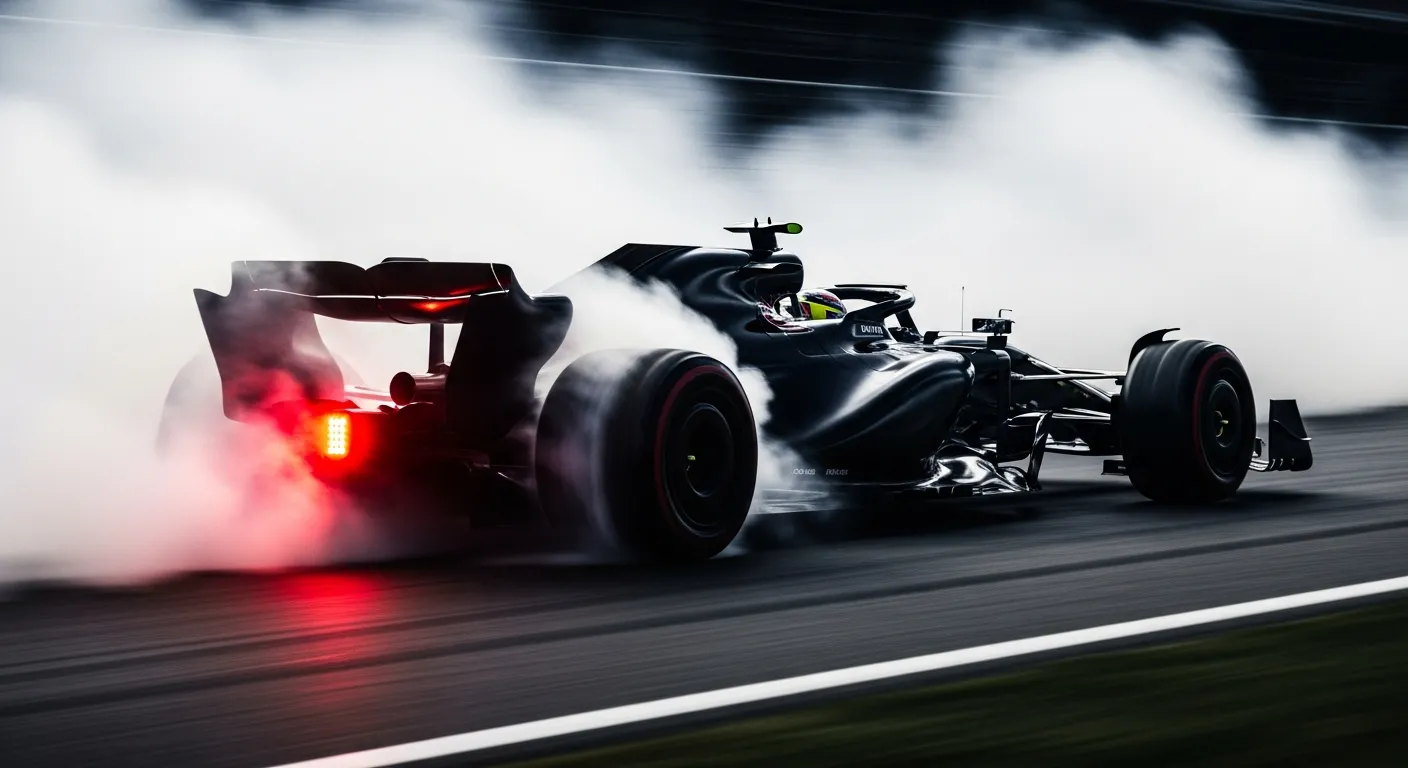
Lance Stroll's 2019 Italian Grand Prix at the high-speed Autodromo Nazionale Monza presented a mixed outcome for the Canadian driver and his Racing Point F1 Team. Starting from a promising 9th position on the grid, Stroll aimed to convert this strong qualifying performance into valuable championship points. However, the 53-lap race saw him ultimately finish 12th, completing 52 laps and classified as "+1 Lap" behind the race winner. The initial stages of the Grand Prix were notably eventful, characterized by intense midfield skirmishes and several on-track incidents that reshaped the running order. Stroll's ability to maintain pace was evident with his fastest lap of "1:24.165" recorded on lap 31, ranking him 12th among all competitors for that metric. This period of the race showcased the potential of the Racing Point car, even as the overall result did not translate into a points finish. For those interested in the broader context of Formula 1 events and their regulations, the [Formula 1 official site](https://www.formula1.com/en) offers comprehensive insights into the sport's operations. Further details on individual race results and driver standings can be found on the [official F1 results pages](https://www.formula1.com/en/results.html).
The race narrative for Stroll diverged significantly from that of his teammate, Sergio Pérez. While Stroll started 9th and finished 12th, Pérez, who began the race from 18th on the grid due to penalties, executed a remarkable recovery drive to secure 7th position and six championship points for Racing Point. This contrast underscores the unpredictable nature of Grand Prix racing and the varied fortunes even within the same team's performance during a single Grand Prix. The 2019 season was a challenging one for many midfield teams, as reflected in the detailed [Formula One data archives](https://api.jolpi.ca/ergast/f1/2026.json) which track performance across seasons. Stroll's 12th place finish, while not adding to his points tally, placed him ahead of notable drivers like Sebastian Vettel, who, despite starting 4th for Ferrari, finished 13th after a challenging race involving a penalty. Such incidents often highlight the critical role of race stewards and the [FIA's governance over the F1 World Championship](https://www.fia.com/events/fia-formula-one-world-championship). The strategic complexities are a constant factor, as seen in races like [Nico Hülkenberg at the 2016 British Grand Prix](/results/2016-silverstone-nico-hulkenberg), where consistent performance is paramount. The broader history and technical evolution of the sport are well-documented on [Wikipedia's Formula One entry](https://en.wikipedia.org/wiki/Formula_One). The capacity for drivers to recover from difficult starting positions, exemplified by [Max Verstappen at the 2016 Belgian Grand Prix](/results/2016-spa-francorchamps-max-verstappen) from 19th to 8th, illustrates the high stakes and relentless competition. Stroll's race also saw him battling with other midfield contenders, including [Carlos Sainz at the 2016 British Grand Prix](/results/2016-silverstone-carlos-sainz), whose own race at Monza ended prematurely due to a wheel issue, further illustrating the fine margins in F1. For a deeper dive into the technical regulations that shape these races, the [FIA's sporting regulations](https://www.fia.com/sports/formula-1/regulations) provide essential context.