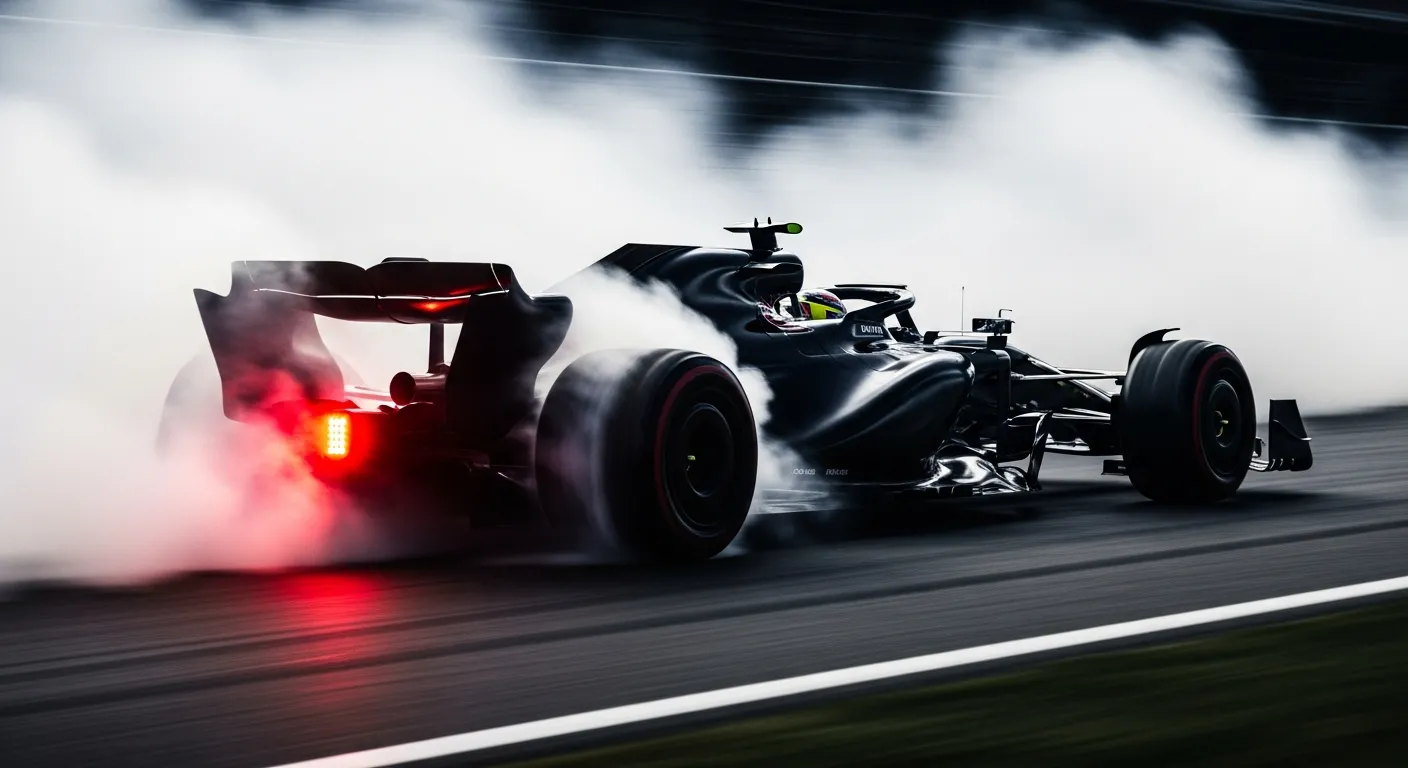
Lewis Hamilton's third-place finish at the 2019 Italian Grand Prix was a strategic masterclass in managing a challenging race at Monza, marked by intense pressure from Ferrari's Charles Leclerc and a late charge from teammate Valtteri Bottas.
Starting from the second grid position, Hamilton, driving for Mercedes AMG F1, immediately found himself embroiled in a direct battle with Leclerc for the lead through much of the 53-lap event at the high-speed Autodromo Nazionale Monza. The circuit's long straights and chicanes demand a unique setup, often favoring cars with strong straight-line speed, which Ferrari demonstrated that weekend. The race unfolded with a series of close maneuvers and strategic calls, as Hamilton pushed to maintain pace with the leading Ferrari. Despite his persistent efforts, including a late pit stop that saw him briefly drop back, Hamilton consistently demonstrated the W10's capability, especially in the high-speed sections. His pursuit of Leclerc was relentless, often within DRS range, showcasing the fine margins at play in Formula 1 racing, as detailed on the [official Formula 1 site](https://www.formula1.com/en). The pressure he exerted on Leclerc ultimately contributed to the Monegasque driver receiving a black and white flag for defensive driving, a rare occurrence under [FIA regulations](https://www.fia.com/events/fia-formula-one-world-championship) for blocking. This Italian Grand Prix was a stark contrast to the dominant runs Hamilton often enjoyed, requiring a more nuanced approach to secure a podium. The strategic battle for track position and tire management became paramount on a circuit known for its unforgiving nature, a key aspect of [Formula 1 strategy](https://www.formula1.com/en/latest/article.what-is-formula-1-strategy-and-how-does-it-work.1P52Q0g1eK66sE46Ie6G0W.html).
As the race entered its final stages, Hamilton's medium compound tires began to degrade, allowing his teammate Valtteri Bottas, who started from third on the grid, to close the gap rapidly. Bottas eventually overtook Hamilton to secure second place, completing a Mercedes AMG F1 double podium. Hamilton's final race time was 1:16:01.864, completing all 53 laps and earning 16 points. A significant highlight of his performance was setting the fastest lap of the race on lap 51, a blistering 1:21.779, demonstrating his raw pace even as his overall position shifted. This fastest lap, which earned an additional championship point, underscored his commitment to extracting maximum performance until the very end, a characteristic often observed in his career, which can be further explored via [Formula One's history on Wikipedia](https://en.wikipedia.org/wiki/Formula_One). While the win eluded Mercedes AMG F1, securing a double podium with Bottas in second and Hamilton in third was a strong team result, especially against a resurgent Ferrari on their home turf. Drivers like [Lando Norris at the 2020 Bahrain Grand Prix](/results/2020-bahrain-lando-norris) and [Lance Stroll at the 2020 Bahrain Grand Prix](/results/2020-bahrain-lance-stroll) would face their own challenges in subsequent seasons, but the strategic depth shown here by Mercedes was a benchmark for consistent points scoring, a crucial element in any [F1 World Championship](https://www.fia.com/events/fia-formula-one-world-championship). The detailed race data, including individual lap times and sector performance, provides a comprehensive view of such events, accessible through platforms like [Jolpica's F1 data archive](https://api.jolpi.ca/ergast/f1/2026.json). Hamilton's ability to adapt and secure valuable points, even when not winning, was crucial for his championship campaign, a consistent theme throughout his career. For context, even in challenging races, extracting points is key, a lesson learned by many, including [George Russell at the 2020 Bahrain Grand Prix](/results/2020-bahrain-george-russell). The 2019 Italian Grand Prix was a testament to Hamilton's racecraft under pressure.