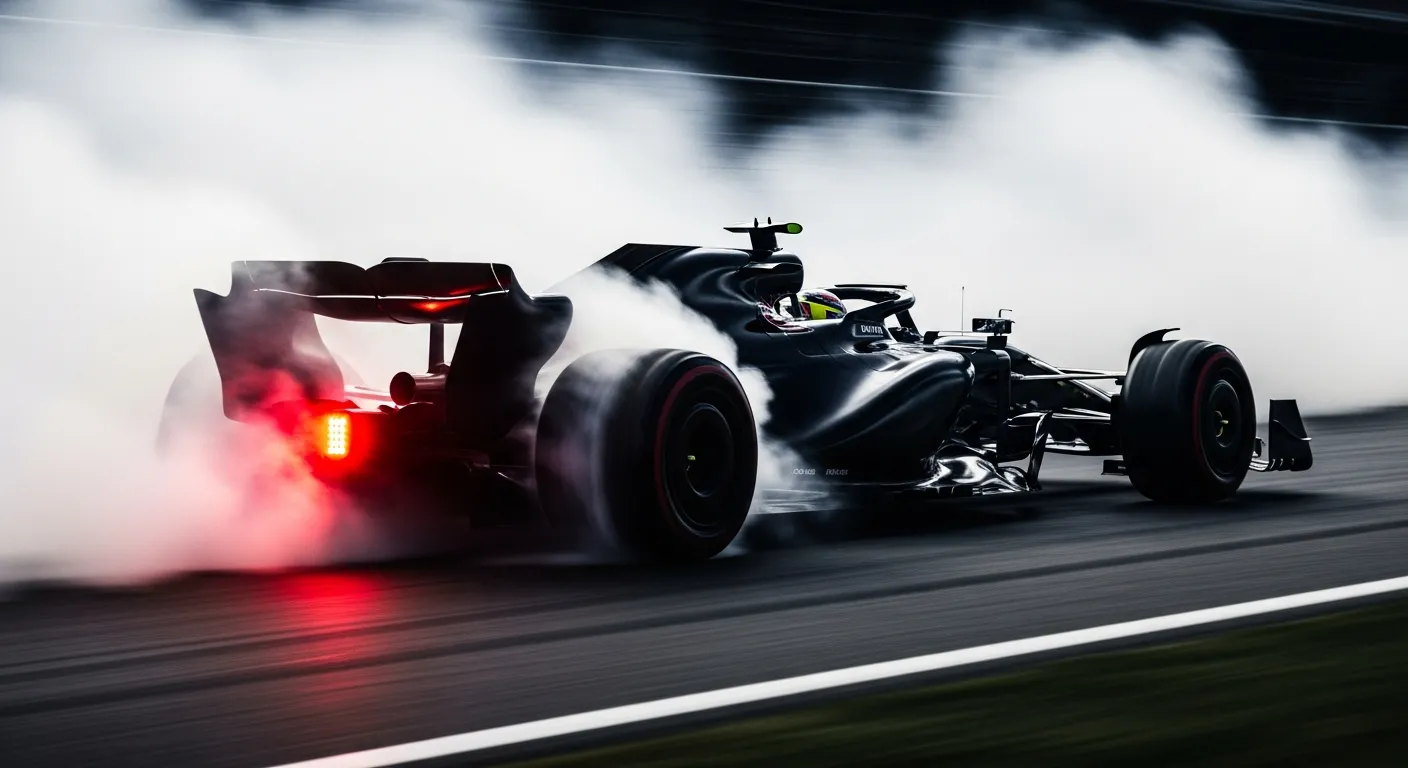
Pierre Gasly's 2019 Abu Dhabi Grand Prix concluded his season with a challenging 18th place finish for Scuderia Toro Rosso, two laps down from the race winner. Starting from 11th on the grid, the Frenchman faced an uphill battle at the Yas Marina Circuit, ultimately completing 53 of the 55 race laps. This result, which yielded no championship points, marked a stark contrast to the competitive outings Gasly had demonstrated earlier in his return to Toro Rosso. The deficit to the front was evident, with Lewis Hamilton completing the full 55 laps to take victory, while Gasly's best effort saw him cross the line significantly adrift. The final race of the 2019 season, as documented on the [Formula 1 — official site](https://www.formula1.com/en), highlighted the performance differences across the field. Gasly's fastest lap, a 1:42.414 on lap 53, placed him 10th in that specific metric, but still over three seconds slower than Hamilton's benchmark of 1:39.283. This lap time, while respectable within the mid-field, was not enough to overcome the initial race pace and strategic disadvantages that led to him falling two laps behind the leader on a circuit known for its technical demands, as detailed on the [official F1 circuit page](https://www.formula1.com/en/racing/2019/Abu_Dhabi/Circuit.html). The intricacies of race strategy and car setup often play a decisive role in such outcomes, particularly at a circuit like Yas Marina.
The performance differential within Scuderia Toro Rosso was also notable. While Gasly finished 18th, two laps down, his teammate Daniil Kvyat managed to secure a 9th place finish, completing 54 laps and adding 2 points to his tally. Kvyat's fastest lap, a 1:42.222 on lap 42, was marginally quicker and achieved earlier in the race than Gasly's, underscoring a consistent edge on the day. This disparity in the season finale reflected some of the challenges Gasly navigated throughout a turbulent year, which included a mid-season move from Red Bull Racing back to Toro Rosso. For a deeper dive into how driver performance can vary even within the same team, one might look at the comprehensive data available through [Jolpica/Ergast — 2026 season data](https://api.jolpi.ca/ergast/f1/2026.json) for historical comparisons. Gasly's season-ending performance saw his championship standing drop from 6th to 7th, despite holding 95 points. The [FIA — F1 World Championship](https://www.fia.com/events/fia-formula-one-world-championship) regulations dictate how these points are awarded, making every scoring finish crucial. Comparing this outcome to drivers like [Yuki Tsunoda at the 2025 Canadian Grand Prix](/results/2025-montreal-yuki-tsunoda), who now drives for the rebranded Toro Rosso outfit, provides a contemporary perspective on mid-field team dynamics and the challenge of consistently extracting pace. Similarly, the career trajectory of [Alexander Albon at the 2025 Canadian Grand Prix](/results/2025-montreal-alex-albon), another driver who experienced the Red Bull/Toro Rosso progression, offers further context on the pressures and expectations within the Red Bull driver program. The complexities of a Formula One season are vast, as explored in detail on [Wikipedia: Formula One](https://en.wikipedia.org/wiki/Formula_One), and Gasly's 2019 campaign was a prime example of navigating those challenges. Even a driver like [Carlos Sainz at the 2025 Canadian Grand Prix](/results/2025-montreal-carlos-sainz), who has driven for multiple teams including Toro Rosso, understands the nuances of adapting to different car characteristics and team environments. The Abu Dhabi Grand Prix served as a final data point in a year of significant change and adaptation for Pierre Gasly, highlighting the relentless demands of F1 competition, where even a slight dip in performance can lead to significant loss of track position and laps, a constant battle for all competitors in the [Formula 1 World Championship](https://www.formula1.com/en).