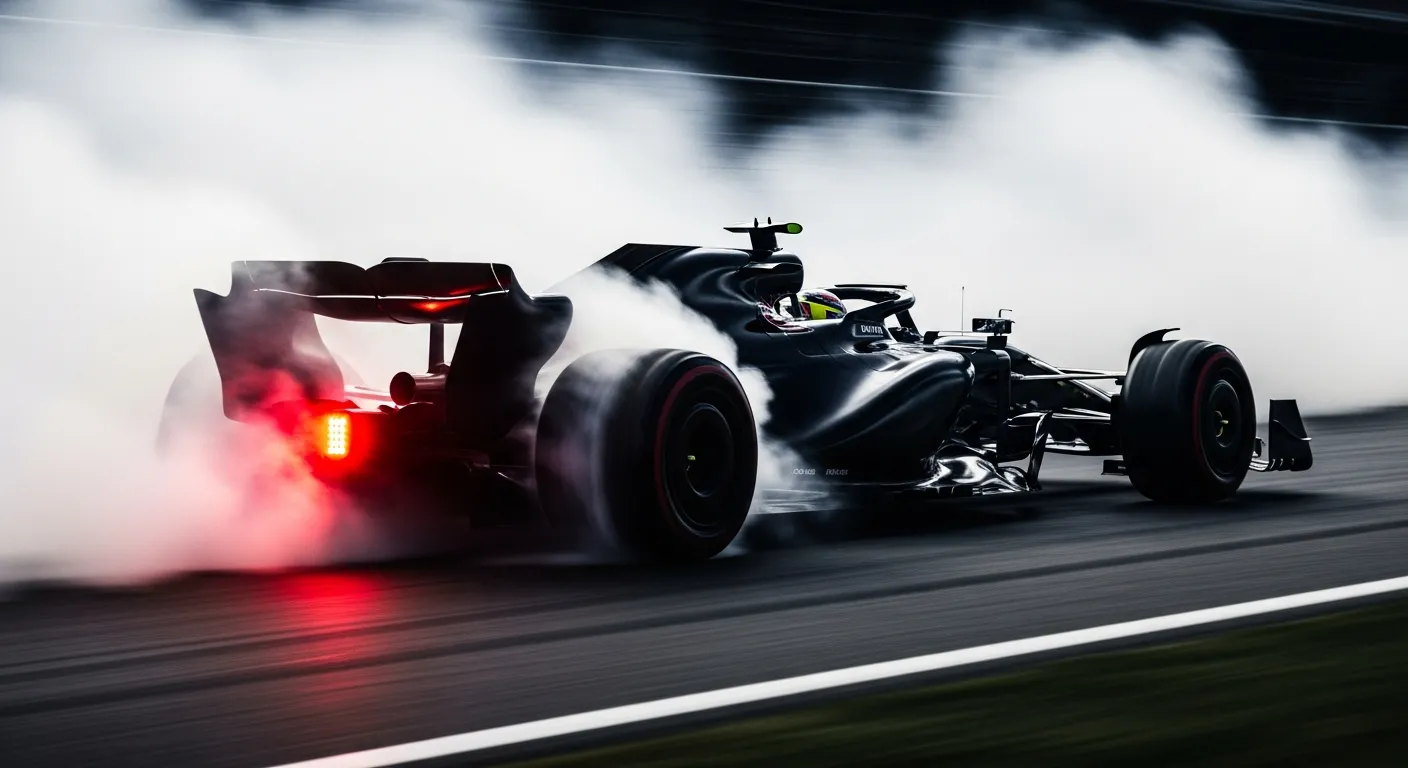
At the 2020 Bahrain Grand Prix, George Russell navigated the Bahrain International Circuit to secure a P12 finish for Williams Grand Prix Engineering, marking a two-place improvement from his P14 grid slot. Russell's performance on November 29, 2020, saw him complete 56 laps, one lap down from the race winner. His fastest lap of 1:35.042, recorded on lap 47, placed him 17th fastest overall among the field. This demonstrated a consistent, if not front-running, pace within the Williams package, particularly given the challenging conditions of the race. The event was notably disrupted by a significant incident involving Romain Grosjean on the opening lap, which led to a lengthy red flag period, altering the race dynamics for all competitors. Despite these disruptions, Russell maintained a clean race, avoiding the kind of incidents that sidelined others, such as [Lance Stroll at the 2018 Japanese Grand Prix](/results/2018-suzuka-lance-stroll) due to collision.
The Williams team, in 2020, was still contending in the lower midfield, and Russell's P12 finish, while not yielding points, was a strong showing relative to the car's typical performance envelope. His teammate, Nicholas Latifi, started P20 and finished P14, also completing 56 laps, with a fastest lap of 1:34.591 on lap 39, ranking 15th. This comparison highlights Russell's ability to extract maximum performance, often outpacing his teammate. For a broader understanding of Formula 1's governance and technical regulations, the [FIA — F1 World Championship](https://www.fia.com/events/fia-formula-one-world-championship) provides comprehensive details. The [official Formula 1 — official site](https://www.formula1.com/en) also offers extensive race archives and driver profiles, detailing such performances.
Russell's drive in Bahrain, while not securing championship points, showcased his consistent race craft and strategic execution. He finished ahead of several experienced drivers, including Sebastian Vettel, who placed P13 for Scuderia Ferrari, and both Alfa Romeo drivers. This ability to move up the order from a challenging grid position was a hallmark of his early career, much like other midfield drivers striving for recognition, such as [Esteban Ocon at the 2018 Japanese Grand Prix](/results/2018-suzuka-esteban-ocon) who also battled for position. The 2020 season, for many, was a testament to adapting to evolving circumstances, a theme explored in depth on [Wikipedia: Formula One](https://en.wikipedia.org/wiki/Formula_One) for historical context. Detailed race data, often sourced from platforms like the [Ergast F1 data API](https://api.jolpi.ca/ergast/f1/2026.json) for historical analysis, provides insights into these performances. Russell's consistent output, even without championship points, built his reputation within the paddock. His drive was steady, avoiding the dramatic incidents that defined the race for others, such as Sergio Pérez's late power unit failure, which saw him retire from P3. This contrasted with the dominant performance of [Lewis Hamilton at the 2018 Japanese Grand Prix](/results/2018-suzuka-lewis-hamilton), who secured a victory. Further historical race information can be found on the [official Formula 1 website](https://www.formula1.com/en) for specific Grand Prix details. The [FIA's official records](https://www.fia.com/events/fia-formula-one-world-championship) also document all championship results.