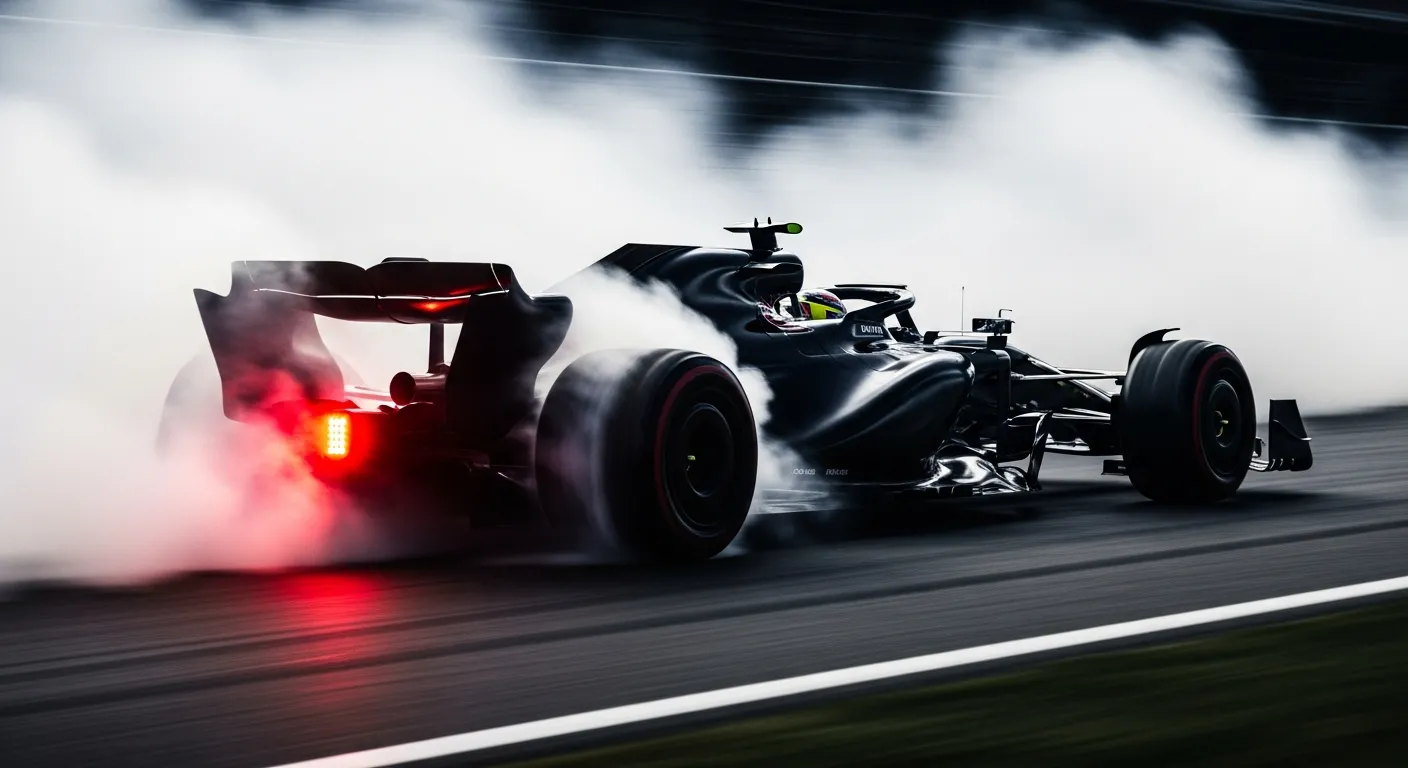
Lewis Hamilton's commanding performance at the 2020 Bahrain Grand Prix saw him secure a dominant victory, navigating a race punctuated by a dramatic opening lap incident and subsequent safety car periods. Starting from pole position on November 29, 2020, Hamilton initially converted his advantage, but the race was almost immediately redefined by Romain Grosjean's severe collision on the opening lap. This incident, which saw Grosjean's Haas make heavy contact with the barriers and catch fire, necessitated a red flag and a lengthy delay, completely altering the race's rhythm. Hamilton's ability to maintain focus and readiness through this significant disruption was a testament to his experience, ensuring he was prepared for the standing restart.
Upon the race's resumption, Hamilton once again asserted control from the front, demonstrating the formidable pace of his Mercedes AMG F1 W11. He managed his tire strategy effectively across the 57 laps, fending off the persistent challenge from Max Verstappen in the Red Bull Racing machine. Verstappen, who started P3 and ultimately finished P2, pushed hard throughout the event, even securing the fastest lap of the race with a 1:32.014 on Lap 48. Despite this pressure, Hamilton's lead remained largely unchallenged, showcasing his consistent pace and strategic execution. The extended nature of the event, with a total formatted time of 2:59:47.515, underscored the impact of the early red flag and subsequent safety car deployments, including one late in the race for Sergio Pérez's power unit failure, which further compressed the field. This late safety car, similar to how unexpected events can reshape strategy, as seen with [George Russell at the 2023 Japanese Grand Prix](/results/2023-suzuka-george-russell), tested the drivers' ability to adapt.
This victory marked Hamilton's 11th win of the 2020 season, adding 25 points to his championship tally and bringing him to 332 points overall. His consistent performance contrasted sharply with his teammate Valtteri Bottas, who started P2 but ultimately finished P8, highlighting the individual mastery Hamilton displayed in extracting maximum performance under pressure. The overall picture of Formula 1 performance, as detailed on the [Formula 1 — official site](https://www.formula1.com/en), often shows how even within a dominant team, driver adaptation to dynamic race conditions can create significant deltas. The Bahrain Grand Prix also saw strong performances from McLaren, with [Lando Norris at the 2023 Japanese Grand Prix](/results/2023-suzuka-lando-norris) and Carlos Sainz Jr. finishing P4 and P5 respectively in Bahrain, showcasing the competitive midfield. For a broader understanding of how such events shape the sport's history and safety protocols, one can consult resources like [Wikipedia: Formula One](https://en.wikipedia.org/wiki/Formula_One). Looking at historical data, such as that available through [Jolpica/Ergast — 2026 season data](https://api.jolpi.ca/ergast/f1/2026.json), reveals the statistical rarity of a driver maintaining such consistent front-running pace throughout a disrupted Grand Prix. Hamilton's drive was a demonstration of sustained focus and strategic adaptability, ensuring his Mercedes AMG F1 car crossed the line first.